
Desserts
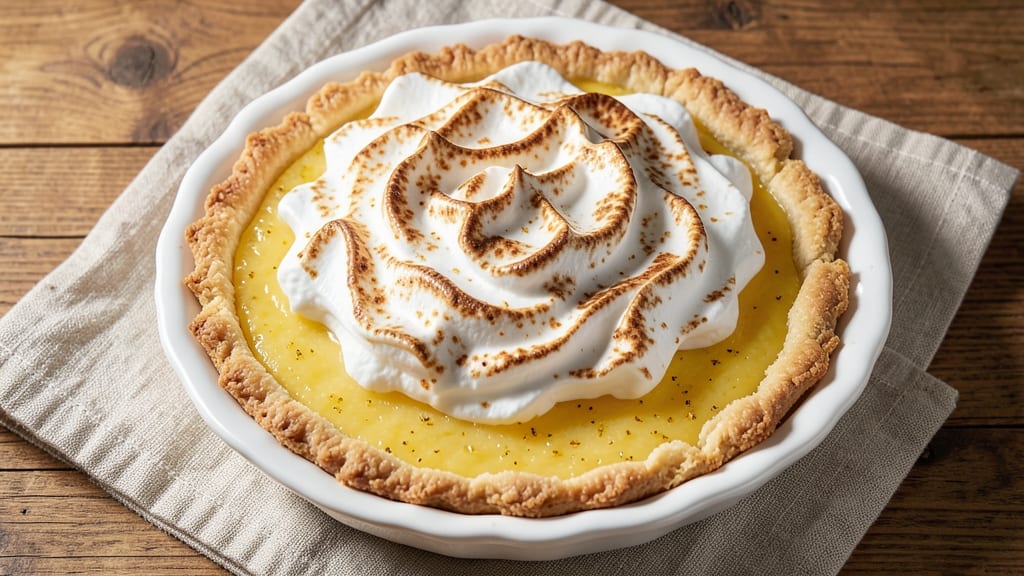
America’s Test Kitchen’s lemon meringue pie delivers the perfect balance of bright, tangy lemon curd and a cloud-like meringue that’s never grainy or cracked. This isn’t just another pie recipe—it’s a science-backed method refined through rigorous testing, ensuring every slice tastes like it came from a professional bakery.
The secret lies in tempering the eggs for the meringue and baking it at just the right temperature to achieve that signature toasted finish without overcooking the filling.
The recipe begins with a foolproof pie crust that’s flaky and golden, followed by a lemon curd filling so vibrant it practically glows. What sets this apart is the meringue—light, airy, and perfectly toasted, with no weeping or cracks.
The key? A precise baking technique that ensures the meringue stays cloud-like while the crust holds its shape. No shortcuts here—just professional results you can trust.
By the time you pull this pie from the oven, you’ll have a dessert that’s visually stunning and packed with flavor: a tangy, zesty lemon filling encased in a crisp crust, topped with a meringue so light it melts in your mouth.
The aroma alone will have everyone gathering around the table, and the first bite will confirm why this is the gold standard for lemon meringue pie.
Whether you’re baking for a holiday gathering or just craving a classic dessert, this recipe delivers restaurant-quality results with minimal fuss. Let’s get started—your taste buds will thank you.
Ingredients for america's test kitchen lemon meringue pie
Eight slices of science-tested perfection—flaky crust, bright lemon curd, and cloud meringue.
| Ingredient | Amount | Notes |
|---|---|---|
| All-Purpose Flour 🌾 | 2 ½ cups | For pie crust, spooned and leveled |
| Unsalted Butter 🧈 | 1 cup | Cold, cubed, for crust |
| Ice Water 💧 | ½ cup | Plus extra as needed |
| Kosher Salt 🧂 | ½ tsp | For crust and filling |
| Large Eggs 🥚 | 1 whole | For crust, room temperature |
| Granulated Sugar 🍚 | 1 ½ cups | For lemon curd |
| Fresh Lemon Juice 🍋 | 1 cup | About 4-5 lemons, freshly squeezed |
| Zest of 2 Lemons 🍋 | 2 whole | Fine, for bright flavor |
| Large Egg Yolks 🥚 | 4 whole | For lemon curd |
| Cornstarch 🌾 | 2 tbsp | For thickening curd |
| Large Egg Whites 🥚 | 5 whole | Room temperature, for meringue |
| Superfine Sugar 🍚 | 1 cup | For meringue, sifted |
| White Vinegar 🍶 | ½ tsp | Stabilizes meringue |
The crust is where it starts. King Arthur flour or Gold Medal gives the best texture—no substitutions here. Butter must be cold (pull it from the fridge 10 minutes before mixing). The key? Pulse in a food processor until pea-sized crumbs form, then add ice water one tablespoon at a time. Overmixing = tough crust. I always make an extra half-cup of dough for a mini pie—Costco sells the perfect 9-inch pan for testing batches.
Fresh lemon juice is non-negotiable—bottled won’t cut it. ReaLemon if you can find them. No zest? Extra lemon juice plus 1 tsp grated lemon peel works in a pinch. For the meringue, egg whites must be at room temp (30 minutes out of fridge). Superfine sugar dissolves better—Trader Joe’s sells it pre-sifted. The vinegar stabilizes the meringue so it doesn’t weep. Trust me on this: don’t skip it.
Lemon curd keeps 3 days in the fridge—use it up or freeze in ice cube trays. Meringue? Bake immediately after piping or it collapses. Store the whole pie in an airtight container for 3 days—the meringue softens but recovers when sliced. For make-ahead: assemble the pie (no meringue), refrigerate overnight, then bake meringue day-of. The crust stays crisp, and the filling sets perfectly.
Why You'll Love This Recipe
- No-Fuss Crust: The cold butter and ice water trick makes this crust shockingly simple—no overworking, no stress. I’ve burned pie crusts before, but this method forgives mistakes while still delivering that buttery, flaky perfection.
- Zesty-Tangy Magic: That lemon curd filling? Chef’s kiss. The ATK recipe balances bright citrus with just enough sweetness, and the meringue topping—when torched right—gives you that crispy shell with gooey lemony center. Honestly, it’s the kind of pie that makes you pause mid-slice just to savor it.
- Showstopper for Any Gathering: From summer picnics to holiday dinners, this pie always gets raves. Between us, it’s the dessert I pull out when I want to look like I tried (but didn’t actually slave over it). The meringue holds up beautifully, so you’re not stuck with a soggy mess.
Step-by-step instructions for america's test kitchen lemon meringue pie
Here's how to build a pie with a tender crust, vibrant lemon curd, and meringue so light it practically floats.
Make the Perfect Pie Crust
In a large bowl, combine the 2.5 cups all-purpose flour and 0.5 teaspoon kosher salt. Cut in the 1 cup cold unsalted butter using a pastry cutter or your fingers until the mixture resembles coarse crumbs with pea-sized butter pieces. This texture is crucial—it ensures flaky layers later.
Add the 1 whole large egg and mix gently with a fork until the dough just comes together. Here's the thing—don't overwork it. Press the dough into a disk, wrap in plastic, and chill for at least 1 hour or up to 2 days. Cold dough prevents shrinking when rolled out and makes handling easier. Real talk: if you skip chilling, the crust will be tough.
Prepare the Lemon Curd Filling
In a medium saucepan, whisk together the 1.5 cups granulated sugar, 1 cup fresh lemon juice, 2 whole zests of 2 lemons, and 4 whole large egg yolks. Cook over medium heat, stirring constantly with a wooden spoon, until the mixture thickens enough to coat the back of the spoon—about 8-10 minutes. This is where the science matters: the sugar dissolves first, then the eggs gently cook without scrambling.
Remove from heat and stir in the 2 tablespoons cornstarch mixed with 1 tablespoon ice water. Return to low heat and cook for 1-2 minutes until thickened. Immediately pour into a bowl, press plastic wrap directly on the surface, and chill for at least 2 hours. This step prevents a skin from forming and keeps the curd silky smooth.
Assemble the Pie
Roll out the chilled dough on a lightly floured surface to a 12-inch circle (about ⅛-inch thick). Transfer to a 9-inch pie dish, trim excess dough, and crimp the edges. Pre-bake the crust: place pie weights or dried beans on the bottom crust, then blind-bake at 375°F for 15 minutes. Remove weights and bake 5 more minutes until lightly golden. Brush the hot crust with the remaining 1 tablespoon ice water to seal.
Spread the chilled lemon curd evenly into the pre-baked crust. Here's what I do: I use a rubber spatula to smooth the surface, making sure to leave a ½-inch border for the meringue. The curd should be cool but not cold—this helps the meringue adhere better without melting.
Create the Cloud-Like Meringue
In a clean, grease-free bowl, beat the 5 whole large egg whites with an electric mixer on medium speed until soft peaks form. Gradually add the 1 cup superfine sugar, then increase speed to high and beat until the meringue is glossy and holds stiff peaks. This takes about 3-5 minutes—don't rush it. The sugar dissolves slowly, creating stable, airy peaks.
Gently fold in the 0.5 teaspoon white vinegar using a spatula. This stabilizes the meringue and prevents weeping later. Spoon the meringue over the lemon curd, spreading it to the edges. Use the back of a spoon to create a slight peak in the center—this helps the meringue set evenly. Bake immediately at 350°F for 15-18 minutes until golden brown.
Finish and Serve
Let the pie cool completely at room temperature for at least 2 hours before slicing. This resting period allows the filling to set properly and prevents the meringue from collapsing. Here's the moment that matters: when you cut into it, the meringue should be firm but still tender, and the lemon curd should be vibrant yellow with no separation.
Slice into 8 equal wedges and serve at room temperature. The crust should be tender yet sturdy, the lemon curd bright and tangy, and the meringue so light it almost disappears on your tongue. Store leftovers covered at room temperature for up to 2 days—the flavors only improve with time.
Pro Tips For Making America'S Test Kitchen Lemon Meringue Pie
- Chill the Dough Longer: After mixing the crust, wrap it tightly in plastic and refrigerate for at least 2 hours—overnight works best. I used to rush this, and the crust always ended up either soggy or tough. Cold butter behaves better when it hits the oven.
- Use Cold Butter: Cut the butter into the flour mixture in small cubes, not chunks—this keeps more fat intact for flakiness. I learned this the hard way when I melted butter into the dough (yes, even for pie crust). The result? A dense, sad bottom crust.
- Blind-Bake the Crust: Weigh down the crust with pie weights or dried beans before baking, and bake until it’s just golden—not brown. Skip this, and the filling will turn into a soup. Pre-baking also prevents that dreaded "soggy bottom" that ruins everything.
- Whip Meringue to Stiff Peaks: Beat the egg whites and sugar until the meringue holds a stiff peak that doesn’t flop when you lift the beaters. Soft peaks? You’re asking for a collapsed meringue. I used to eyeball it—now I test it every time.
Wine and beer pairings for this america's test kitchen lemon meringue pie
Citrus Sparkle Wines
Lemon meringue pie’s bright acidity pairs beautifully with crisp, citrus-forward whites. A Sauvignon Blanc from New Zealand—like Cloudy Bay—cuts through the richness with its zesty lime and passionfruit notes.
The wine’s herbal undertones complement the lemon curd’s tang, while its acidity mirrors the pie’s zing. Serve slightly chilled (45-50°F) to highlight freshness. 🍋
Sweet Sparkling Pairings
For a festive touch, try a demi-sec sparkling wine like Moët & Chandon Ice Impérial or Veuve Clicquot Brut Rosé. The sweetness balances the pie’s tartness, while bubbles cleanse the palate between bites.
The rosé version adds a subtle berry note that harmonizes with the meringue’s toasted sweetness. Chill to 40-45°F for optimal sipping.
Honeyed Beer Options
A honey ale or witbier bridges the gap between the pie’s sweet and sour elements. Allagash White (Belgian-style witbier) offers citrusy coriander and a touch of spice that echoes the lemon zest, while Dry Hopped Honey Ale from New Belgium provides malty warmth to contrast the meringue’s crispness.
Serve at 45-50°F to preserve the beer’s effervescence.
Bold Dessert Reds
If you prefer red wine, opt for a Pinot Noir with bright acidity and red fruit notes, like Meiomi or La Crema Sonoma Coast. The wine’s silky tannins won’t overpower the pie, and its cherry and raspberry flavors play well with the meringue’s caramelized edges.
Decant for 30 minutes to soften tannins before serving at 60-65°F.
Non-Alcoholic Harmony
For a refreshing non-alcoholic option, mix sparkling water with fresh lemon juice and a splash of honey syrup (equal parts honey and hot water). Add muddled mint for a spa-like twist that enhances the pie’s citrus brightness. Serve over ice in a coupe glass for an elegant presentation. ✨
Temperature Matters
Never serve wine or beer at room temperature—chilling enhances acidity and sweetness, which are crucial for balancing the pie’s flavors. Use an ice bucket for quick cooling or refrigerate for 30-60 minutes before serving.
For beer, a wine fridge set to 40°F works perfectly, while sparkling wines should be served 10-15 minutes post-chilling for optimal bubbles.
Nutrition facts
Frequently asked questions
Why does the meringue sometimes crack or weep?
The meringue cracks when exposed to moisture or humidity during baking. To prevent this, bake immediately after piping and avoid opening the oven door. Weeping happens when the meringue isn't properly stabilized—always fold in the 0.5 teaspoon white vinegar and ensure your egg whites are at room temperature. Humidity is the enemy: bake on a lower oven rack where it's warmer and drier.
Can I make the lemon curd ahead of time?
The curd keeps for 3 days in the fridge or 3 months in the freezer. For best results, store it in an airtight container with plastic wrap pressed directly on the surface to prevent a skin from forming. Thaw overnight in the fridge before using. The flavor actually improves over time as the acidity mellows slightly.
What’s the secret to a flaky crust that doesn’t shrink?
Chilling the dough for at least 1 hour (or up to 2 days) is non-negotiable—it prevents shrinking. Work quickly when rolling out, and avoid handling the dough more than necessary. The key is in the butter: use cold, cubed butter and pulse it in a food processor until it's pea-sized. Overworking the dough = tough crust. Trust the process, and your crust will be golden and tender.
How do I fix a soggy bottom crust?
Pre-baking the crust is the solution. Blind-bake it at 375°F for 15 minutes with pie weights or dried beans before adding the filling. Brush the hot crust with 1 tablespoon ice water to seal it—this creates a moisture barrier. If you’ve already baked the pie and the crust is soggy, try reheating it in a 350°F oven for 10-15 minutes to crisp it up. Prevention is easier than fixing!
Can I use bottled lemon juice instead of fresh?
Fresh lemon juice is a must for vibrant flavor and proper thickening. Bottled juice lacks the brightness and acidity needed to balance the sugar in the curd. If you absolutely must use bottled, reduce it by 1 tablespoon and add 1 extra teaspoon of lemon zest to compensate. The texture and flavor won’t be as refined, but it’ll still be edible.