Main Courses
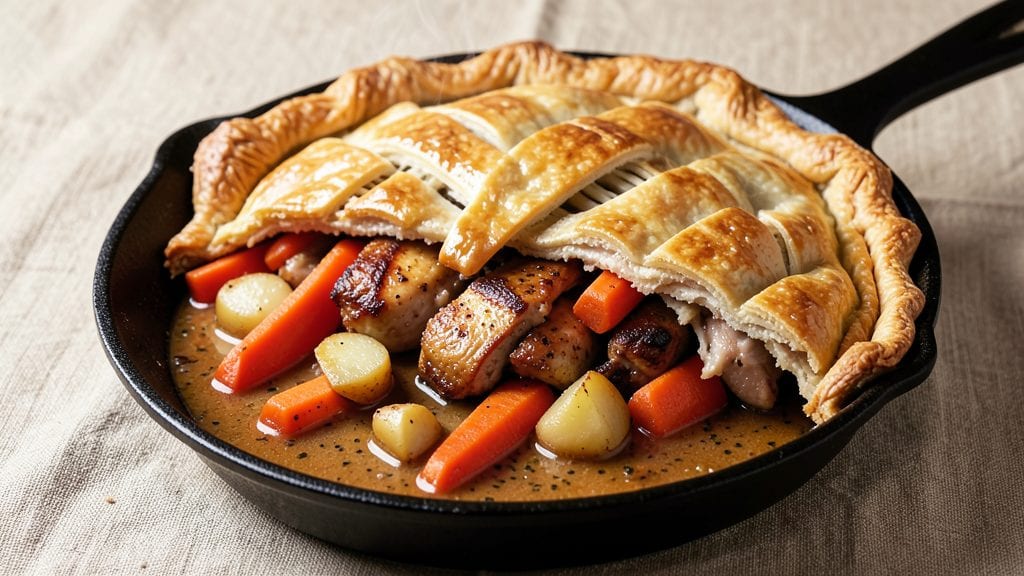
This Amish pot pie recipe brings homestyle comfort to your dinner table with a golden lattice crust that hides tender meat, hearty vegetables, and rich gravy beneath. The lattice design isn't just decorative—it creates crispy, flaky edges while keeping the filling warm and saucy inside.
I first fell in love with this recipe during a Pennsylvania farm stay, where the aroma of baking pies filled the kitchen by midday. That same warmth and tradition now belongs in your oven.
The secret to an authentic Amish pot pie lies in the balance of ingredients and technique. You'll start with a simple, buttery dough that forms the lattice pattern, a hallmark of Amish baking.
The filling combines savory chicken, root vegetables, and a flavorful gravy thickened just enough to coat every bite. What makes this recipe special is how it transforms simple ingredients into a meal that feels like a hug—warm, hearty, and full of nostalgia.
By the time it emerges from the oven, you'll have a pot pie with a golden brown crust that shatters slightly at the edges while remaining tender underneath. The filling stays moist and flavorful, with each bite offering a perfect mix of tender meat, caramelized vegetables, and rich gravy.
This is the kind of dish that disappears quickly, leaving everyone asking for seconds. Serve it with a simple side salad or crusty bread to soak up every last drop of gravy.
While this recipe stays true to its traditional roots, you can easily adapt it to modern tastes—try swapping chicken for mushrooms or tofu for a vegetarian version.
The lattice technique remains the same, ensuring that crispy, flaky perfection no matter what you fill it with. Let's get started on creating this timeless family favorite.
Ingredients for amish pot pie
Golden crust, tender filling—just 14 ingredients for Amish pot pie magic.
| Ingredient | Amount | Notes |
|---|---|---|
| All-Purpose Flour 🌾 | 3 ½ cups | For dough and gravy thickener |
| Unsalted Butter 🧈 | 1 cup | Cold, cubed for dough |
| Ice Water 💧 | ½ cup | Cold for dough handling |
| Boneless Chicken Thighs 🍗 | 2 lb | Skin-on preferred |
| Carrots 🥕 | 1 ½ lb | Peeled, sliced into rounds |
| Russet Potatoes 🥔 | 2 lb | Peeled, cubed evenly |
| Yellow Onion 🧅 | 1 whole | Diced finely for filling |
| Celery Stalks 🥬 | 3 whole | Diced small for gravy base |
| Chicken Broth 💧 | 2 cups | Low-sodium preferred |
| Heavy Cream 🥛 | ½ cup | Full-fat for richness |
| Salt 🧂 | 1 ½ tsp | Kosher or sea salt |
| Ground Black Pepper 🌶️ | ½ tsp | Freshly ground preferred |
| Fresh Thyme 🌿 | 1 tbsp | Chopped, or dried equivalent |
| Garlic Cloves 🧄 | 4 cloves | Minced for filling flavor |
The dough is where the magic happens. King Arthur flour or Gold Medal makes the best lattice—don't skimp on quality here. For butter, Land O'Lakes or Plugrah work perfectly, but grab the salted version if you're not adding extra salt later. The chicken thighs? Oscar Mayer or local farm-raised both work, but skin-on keeps it juicier. Carrots and potatoes should be firm—no mealy ones. I usually grab the organic section at Kroger for these, but regular store brands are fine too. The key is even-sized pieces so they cook at the same rate.
No chicken? Mushrooms or tofu work great for a vegetarian version—just adjust cooking time. Short on thyme? Dried thyme at half the amount gets you close. For the broth, Swanson or Pacific Foods are solid choices, but homemade is always better. The heavy cream can be swapped for half-and-half if you're watching fat content. Celery gets overlooked, but it's essential for that classic pot pie flavor—don't skip it. If you're making this ahead, prep the filling and dough separately and refrigerate for up to 24 hours before baking.
This pie reheats beautifully—just 350°F for 20 minutes to warm through. Keeps in the fridge for 4 days or freezes for 3 months. I always make an extra lattice top and freeze it separately so I can pull out a fresh one whenever I want. The filling tastes even better the next day as all the flavors meld together. Store any leftovers in an airtight container with a piece of parchment between layers to keep it fresh.
Why You'll Love This Recipe
- No-Fuss Dough: I swear, that cold butter cut into flour until it crumbles like sand? Takes zero skill—just a few minutes with a fork. Honestly, I’ve made this crust wrong twice, and it still came out golden.
- Rich, Savory Soul: The chicken thighs? They melt into the gravy, while the carrots stay tender-crisp. That buttery crust seals in all the juices—like a hug in a pie dish.
- Weeknight to Potluck: Make a double batch on Sunday, and you’ve got dinner for three nights. Or bring it to a gathering—it’s hearty enough to feed a crowd but simple enough to pass off as "homemade."
- Budget-Friendly Feast: Carrots and chicken thighs stretch this into four servings for less than $10. Leftovers? Even better the next day—just reheat and watch everyone ask for seconds. (Yes, even on a Tuesday night.)
Step-by-step instructions for Amish pot pie
Here's how to build a hearty pot pie with a flaky lattice crust that locks in all those savory flavors.
Prepare the Chicken and Vegetables
Pat the 2 lb boneless chicken thighs dry with paper towels and season generously with 1.5 tsp salt and 0.5 tsp ground black pepper. Heat a large skillet over medium-high heat and cook the chicken for 6-8 minutes per side until golden brown and cooked through to 165°F internally. Remove and set aside to rest.
While the chicken cooks, peel and cut the 2 lb russet potatoes into ½-inch cubes and the 1.5 lb carrots into ¼-inch rounds. Dice the 1 whole yellow onion and 3 whole celery stalks into small, uniform pieces—about ¼-inch dice. Mince the 4 cloves garlic cloves and finely chop the 1 tbsp fresh thyme. Set all vegetables aside in separate bowls until ready to use.
Build the Savory Filling
In the same skillet (no need to clean it), add the diced onion, celery, and garlic over medium heat. Cook for 5-6 minutes until the vegetables soften and the onion becomes translucent. Add the potato and carrot pieces, stirring to coat them in the aromatics. Cook for another 5 minutes until the vegetables begin to soften.
Pour in the 2 cups chicken broth and bring to a gentle simmer. Reduce heat to low and let it cook for 10 minutes until the broth reduces slightly and the vegetables are tender but not mushy. Stir in the 0.5 cup heavy cream and the chopped thyme, then return the sliced chicken to the skillet. Let everything heat through for 2-3 minutes before removing from heat.
Make the Lattice Dough
Cut the 1 cup unsalted butter into small cubes and place in the freezer to keep it cold. In a large bowl, combine the 3.5 cups all-purpose flour with 1.5 tsp salt. Use a pastry cutter or your fingers to work the cold butter into the flour until the mixture resembles coarse crumbs with pea-sized butter pieces remaining.
Drizzle in the 0.5 cup ice water one tablespoon at a time, gently mixing with a fork until the dough just comes together. Be careful not to overmix—just until it forms a shaggy mass. Shape the dough into a disk, wrap in plastic wrap, and chill in the refrigerator for 30 minutes. This resting time makes the dough easier to roll out and prevents shrinking.
Assemble and Bake the Pot Pie
Preheat your oven to 375°F. Roll out half of the chilled dough on a lightly floured surface to a ⅛-inch thickness, large enough to cover the bottom of a 9x13-inch baking dish. Transfer the dough to the dish and press it gently into the corners. Spoon the chicken and vegetable filling into the crust, spreading it evenly.
Roll out the remaining dough to the same thickness. Cut it into 1-inch wide strips, alternating some strips horizontally and some vertically to create the classic lattice pattern. Arrange the strips over the filling, leaving small gaps between them for steam to escape. Brush the lattice with a little water to help it stick, then bake for 40-45 minutes until the crust is golden brown and the filling bubbles around the edges.
Rest and Serve
Remove the pot pie from the oven and let it rest for 10 minutes before serving. This resting time allows the filling to set slightly, making it easier to slice and serve. The lattice crust should be crisp and golden, with flaky layers that crumble slightly at the edges. Cut into squares and serve warm with a side of crusty bread or a simple green salad.
Pro Tips For Making Amish Pot Pie
- Brown the Chicken: Skip the pale, rubbery chicken—sear the thighs in a hot skillet for 5-6 minutes per side until golden. The Maillard reaction adds depth, and you’ll taste it in every bite (yes, even under that flaky crust). Use a splash of water to deglaze after—it turns into a silky sauce that clings to the veggies.
- Dice Carrots Small: I used to cut them into thick coins, thinking it’d save time. Wrong. Tiny dice (¼-inch or smaller) soften evenly and blend into the filling instead of sitting like chewy afterthoughts. If you’re lazy, pulse them in a food processor—but don’t overdo it, or you’ll end up with mush.
- Chill the Dough: Roll out that butter-flour crust straight from the fridge, and you’ll regret it. Let the dough rest in the fridge for at least 30 minutes (or up to 2 days) before rolling. Cold butter = flaky layers; warm dough = a sad, greasy mess. Trust me, your future self will notice the difference.
- Vent the Top: Poke a few small holes in the crust before baking—this isn’t just for show. Steam needs an escape, or your pie will puff up like a balloon and collapse into a soggy pancake. Use a fork or the tip of a knife; no one will see the tiny holes, but they’ll save your pie.
Regional styles of these flavors
Pennsylvania Dutch Roots
The Amish pot pie we know today traces back to the Pennsylvania Dutch communities of the 18th and 19th centuries. These early settlers adapted European techniques to local ingredients, creating hearty pies that could feed large families.
The lattice crust wasn't just decorative—it was practical, allowing steam to escape while keeping the filling warm for hours. I first tasted this version at an Amish farm in Lancaster County, where the crust was so flaky it practically melted in your mouth. 🌾
Ohio Amish Twist
In Ohio's Amish country, particularly around Millersburg and Holmes County, pot pies often feature a biscuit-style crust instead of traditional lattice. The dough gets rolled out thicker and cut into strips that overlap like shingles, creating a rustic, textured top.
Locals here prefer ground beef instead of chicken in the filling, adding a deeper, meatier flavor. I've made this version with ground chuck and Worcestershire sauce for an extra umami kick.
Midwest Farmhouse Style
Across the Midwest, particularly in Indiana and Wisconsin, Amish pot pies often incorporate local game meats like venison or rabbit alongside traditional chicken. The vegetables tend to be more seasonal—think kale, sweet potatoes, or corn in fall and winter versions.
I once made a venison pot pie using ground venison and maple-glazed carrots, which became a family favorite during hunting season. The rich, earthy flavors pair perfectly with the buttery crust. 🍂
Modern Adaptations
While traditional Amish pot pies stay true to their roots, modern cooks are putting their own spin on the classic. Vegetarian versions use mushrooms, lentils, or butternut squash for protein, while spicy iterations add Cajun seasoning or chipotle powder to the filling.
I've experimented with a smoky version using liquid smoke and black beans, which still maintains that comforting, homey feel. The lattice technique remains the same—it's the filling where creativity shines.
Southern Appalachian Influence
In the Appalachian region, where Amish communities settled later, pot pies often include cornbread dough as the crust instead of traditional pie dough. The filling might feature sausage, collard greens, or black-eyed peas, reflecting the region's soul food traditions.
I've made this version with Andouille sausage and stone-ground cornmeal crust, which adds a delightful crunch. The result is a pie that blends two distinct culinary heritages beautifully. 🌶️
Nutrition facts
Frequently asked questions
Can I make this Amish pot pie ahead of time?
Prepare the filling and dough separately, then refrigerate for up to 24 hours before baking. For longer storage, assemble the pie (without baking) and freeze it for 3 months. When ready to bake, thaw overnight in the fridge and bake as directed. The flavors actually improve after resting!
What's the secret to a perfect lattice crust?
Keep your dough cold, roll it ⅛-inch thick, and use 1-inch wide strips. Alternate directions for the strips and leave small gaps for steam to escape. Brush with water before baking to help the strips stick together. The key is patience—don't rush the chilling step!
Can I substitute ingredients for dietary restrictions?
Yes! For a vegetarian version, replace chicken with mushrooms or lentils (simmer for 15 minutes until tender). Use coconut oil instead of butter for dairy-free crust. For gluten-free, swap all-purpose flour with a 1:1 gluten-free blend—just add ½ tsp xanthan gum to the dough.
Why did my crust turn out soggy?
Soggy crusts usually mean the filling was too wet or the oven wasn't hot enough. Ensure your filling has 10-15 minutes to thicken before adding the crust. Preheat oven to 375°F and bake on the middle rack. For extra insurance, blind-bake the bottom crust for 5 minutes before adding filling.
How do I reheat leftovers without drying them out?
Cover with foil and reheat at 350°F for 20 minutes until warm through. For microwave reheating, cover with a damp paper towel and heat in 30-second intervals, stirring between each. The lattice crust stays crispy when reheated properly—just avoid high heat!