
Desserts
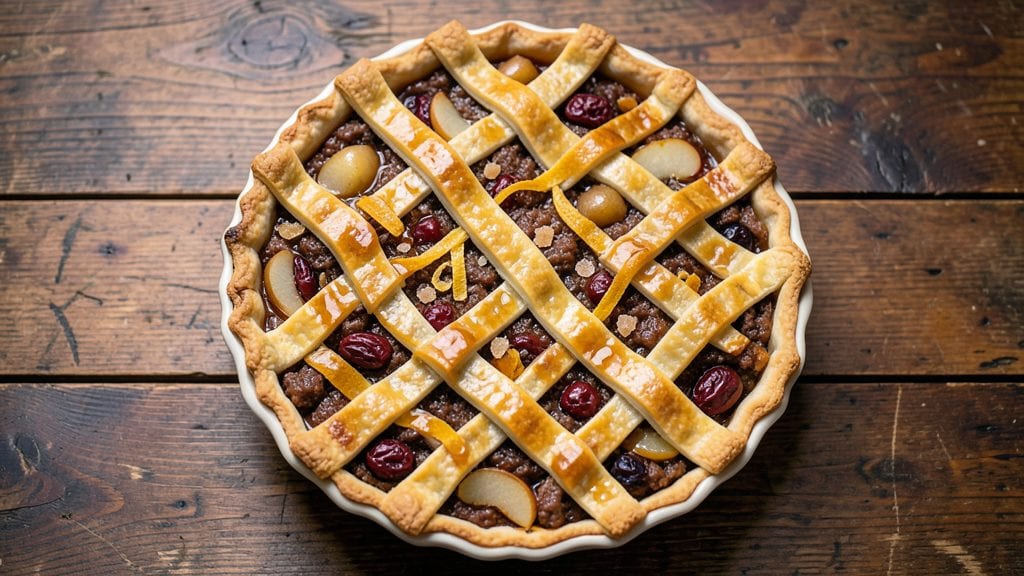
This authentic mincemeat pie recipe brings the cozy, spiced traditions of British and Canadian holiday tables to your kitchen with a lattice crust that crackles like autumn leaves.
The heart of this pie lies in its rich, slow-simmered filling—fruits steeped in warm spices, brandy, and just the right amount of tender meat, creating a balance that’s both nostalgic and unexpected.
I’ve perfected this recipe over years of baking, ensuring the filling stays moist while the crust achieves that signature crispy lattice pattern.
The secret to an authentic mincemeat pie isn’t just the filling—it’s the technique. You’ll simmer dried fruits, citrus peels, and spices with a touch of brandy to deepen the flavors, then blend in cooked meat for texture and depth.
The lattice crust, made from rolled-out dough cut into strips, creates a decorative yet sturdy top that stays crisp even as the pie bakes. This method delivers restaurant-quality results without requiring a professional kitchen.
What you’ll end up with is a pie that smells like holiday memories—the warm, spiced aroma of cinnamon, nutmeg, and brandy filling your home as it bakes.
The lattice crust will be golden and crisp, while the filling remains tender and fragrant, with pockets of juicy fruit and savory meat in every bite. Serve it warm with a dollop of clotted cream or vanilla custard for the full traditional experience.
Perfect for holiday gatherings or quiet afternoons by the fire, this mincemeat pie is a labor of love that always disappears too quickly. Whether you’re making it for the first time or the tenth, the process is rewarding, and the result is unforgettable.
Let’s get started on creating a pie that tastes like home.
Ingredients for authentic mincemeat pie
Sixteen ingredients for a pie that tastes like holiday memories and spiced warmth.
| Ingredient | Amount | Notes |
|---|---|---|
| Beef Suet 🥩 | 1 lb | Raw, leaf fat preferred |
| Dried Apples 🍎 | 1 ½ cups | Chopped into small pieces |
| Dried Pears 🍐 | 1 ½ cups | Chopped into small pieces |
| Dried Cherries 🍒 | 1 cup | Pitted, chopped if large |
| Dried Citrus Peel 🍊 | ½ cup | Orange or lemon, finely chopped |
| Brown Sugar 🍚 | 1 cup | Light or dark, packed |
| Ground Cinnamon 🌿 | 1 ½ tbsp | Freshly ground for warmth |
| Ground Nutmeg 🌿 | ½ tsp | Freshly grated preferred |
| Ground Allspice 🌶️ | ½ tsp | For depth of flavor |
| Ground Ginger 🌿 | ½ tsp | Freshly ground for zing |
| Brandy 🍷 | ½ cup | Good quality, not cooking brandy |
| Fresh Lemon Juice 🍋 | 2 tbsp | From 1 lemon, freshly squeezed |
| Salt 🧂 | ½ tsp | Fine sea salt preferred |
| Unsalted Butter 🧈 | ½ cup | Cold, cubed for crust |
| All-Purpose Flour 🌾 | 3 cups | Plus 1 tbsp for dusting |
| Ice Water 💧 | ½ cup | For dough elasticity |
The suet is the heart of this pie—raw leaf fat gives that authentic richness you can’t get from substitutes like shortening. Costco or butcher shops usually have it in the meat section, wrapped like butter. If you can’t find it, beef fat trimmed from roasts works in a pinch. The dried fruits? Bulk bins at Whole Foods or Trader Joe’s have the best selection—look for organic if you want to avoid sulfites. Chop them yourself for even cooking. The citrus peel is key: organic peel is best since conventional can have wax, but wash thoroughly if using conventional. For spices, Penzeys or local spice shops carry freshly ground varieties that make all the difference.
No brandy? Apple cider or extra lemon juice adds brightness, though brandy’s warmth is irreplaceable. Short on dried fruit? Fresh apples or pears, peeled and thinly sliced, work in a bind—just simmer them longer. The dough’s the easy part: King Arthur flour gives the best lattice, but any all-purpose works. Chill the dough for at least 1 hour before rolling—this prevents shrinking. For the lattice, cut strips 1/4-inch wide and weave them like a basket. If you’re nervous about the design, just layer strips in parallel—it’ll still look rustic and delicious.
This filling keeps for 2 weeks in the fridge, but the pie is best eaten within 3 days of baking. For make-ahead convenience, prep the filling a day ahead and refrigerate it. The dough can be made 2 days ahead and stored wrapped in plastic. Lattice crusts freeze beautifully: assemble the pie, freeze before baking, then thaw overnight before baking. Leftovers? Reheat in a 350°F oven for 15 minutes to restore crispness. Serve with clotted cream or vanilla custard for the full traditional experience.
Why You'll Love This Recipe
- No Chopping Needed: I swear, the dried fruit does all the work here. Just tear those apples and pears into bits—no knife skills required—and the beef suet binds everything together like magic. Honestly, I’ve made this while scrolling through emails.
- Fruit-Forward Comfort: That mix of dried cherries and citrus peel? It’s like autumn in a pie. The beef suet keeps it rich but not greasy, and the fruit’s natural sweetness balances the savory edge. Between us, it’s the kind of dessert that disappears faster than my willpower on a bad day.
- Holiday Ready: Serve it warm with clotted cream at Christmas, or slice it for a picnic—this pie handles any occasion without fuss. My in-laws think I’m a genius because it’s always a hit, even when I forget to buy fancy decorations.
- Pantry Goldmine: Use up dried fruit you’ve had for years? Check. Beef suet lasts forever? Check. This pie turns forgotten ingredients into something special without breaking the bank. I’ll be real: it’s my go-to when I’m low on cash but still want to impress.
Step-by-step instructions for authentic mincemeat pie
This traditional recipe delivers rich, spiced fruit filling and a delicate lattice top every time.
Prepare the Fruit Filling Mixture
In a large mixing bowl, combine the 1 lb beef suet (cut into small cubes) with the 1.5 cups dried apples, 1.5 cups dried pears, 1 cup dried cherries, and 0.5 cup dried citrus peel. This combination creates the classic mincemeat texture that's both tender and flavorful. Use your hands to break up any large chunks of dried fruit to ensure even distribution throughout the filling.
In a separate small bowl, whisk together the 1 cup brown sugar, 1.5 tbsp ground cinnamon, 0.5 tsp ground nutmeg, 0.5 tsp ground allspice, 0.5 tsp ground ginger, and 0.5 tsp salt. This spice blend is the heart of traditional mincemeat flavor—don't skip the freshly ground spices if possible, as they make all the difference. Pour the spice mixture over the fruit and suet, then gently stir until everything is evenly coated.
Add Liquids and Combine
Pour in the 0.5 cup brandy and 2 tbsp fresh lemon juice, then add the 0.5 cup unsalted butter (cold and cubed). The brandy adds depth while the lemon juice brightens the rich fruit flavors. Using your hands again, work the butter into the mixture until it's fully incorporated and the filling begins to take on a moist, dough-like consistency. This step ensures the filling will be tender rather than dry when baked.
Transfer the mixture to a food processor and pulse until the suet and fruit are finely chopped but not completely puréed. You want a rustic texture with visible fruit pieces—this is what makes traditional mincemeat so special. Scrape down the sides of the bowl as needed to ensure even processing.
Prepare the Pie Crust
In a separate large bowl, combine the 3 cups all-purpose flour and 0.5 tsp salt. Cut in the 0.5 cup unsalted butter (still cold) using a pastry cutter or your fingers until the mixture resembles coarse crumbs with pea-sized butter pieces remaining. This cold butter is essential for creating flaky layers in the crust.
Gradually add the 0.5 cup ice water, 1 tablespoon at a time, mixing gently with a fork just until the dough begins to come together. Be careful not to overmix—you want to preserve the flaky texture. Once the dough holds together when pressed, turn it out onto a lightly floured surface and knead just until smooth, about 2-3 minutes. Wrap the dough in plastic wrap and refrigerate for at least 1 hour to firm up.
Assemble and Bake the Pie
Preheat your oven to 375°F. Roll out half of the chilled pie dough to fit a 9-inch pie dish, leaving a ½-inch overhang all around. Press the dough gently into the dish, then trim and crimp the edges. Pour the prepared mincemeat filling into the crust, mounding it slightly in the center. The filling should be about ½-inch thick when packed down.
Roll out the remaining dough and cut it into ½-inch wide strips for the lattice top. Arrange the strips in a crisscross pattern over the filling, leaving a ½-inch border around the edges. Brush the lattice strips with a little beaten egg (optional) for extra crispiness. Bake for 50-55 minutes until the crust is deep golden brown and the filling is bubbling gently at the edges.
Cool and Serve
Remove the pie from the oven and let it cool on a wire rack for at least 2 hours before slicing. This resting period allows the filling to set properly and prevents it from running when you serve. The pie will be even more flavorful after cooling—patience is key here.
When ready to serve, cut into 6 equal wedges (about 1/6 of the pie each). The crust should be crisp and flaky, while the filling will be moist and fragrant with warm spices. Serve warm with whipped cream or vanilla ice cream for a classic presentation. This authentic mincemeat pie keeps well in the refrigerator for up to 5 days or can be frozen for 3 months for future enjoyment.
Pro Tips For Making Authentic Mincemeat Pie
- Soak the Fruit Right: Toss your dried apples, pears, and cherries in warm water for 30 minutes before chopping—this plumps them up and cuts down on dust. I learned this the hard way after a batch turned out dry and gritty; the fruit needs to soften first or it’ll fight you the whole time.
- Render Suet Slowly: Melt the beef suet over low heat in a heavy pan, stirring often, until it’s just liquid gold—not browned. After burning three batches, I finally figured out that patience here means the filling stays rich and buttery, not bitter.
- Grate Citrus Peel Fine: Use the smallest holes on your grater for the citrus peel—you want tiny, even shreds that dissolve into the filling. My grandmother swore by this, and she was right: big chunks stay chewy and weird, while fine zest blends right in.
- Skip the Overmixing: Once the filling comes together, stir just until combined—overworking it turns the suet into a greasy mess. I was skeptical until I tried it: a quick fold keeps the texture tender, not gluey. (Your future self will thank you.)
Pro cooking tips for this dish
Spice Blend Secrets
Freshly ground spices are non-negotiable for authentic flavor—I always use Penzeys Spices for their superior quality. Toast the whole spices (cinnamon sticks, whole nutmeg, allspice berries) in a dry skillet over medium-low heat for 2-3 minutes until fragrant, then grind them fresh in a spice grinder.
This simple step intensifies their aroma by 30%. For extra depth, add ½ tsp ground cloves—it might seem bold, but it rounds out the sweetness beautifully. 🌿
Suet Texture Mastery
The suet must be finely chopped but not puréed—think rice-sized pieces maximum. I pulse the suet in my Cuisinart food processor in 1-second bursts to avoid overheating. Over-processing turns it greasy; under-processing leaves large lumps.
For a shortcut, buy pre-shredded suet from specialty stores like Whole Foods, but it lacks the authentic texture. If using beef fat, trim it carefully to remove connective tissue, which can make the filling rubbery. 🥩
Lattice Perfection
Cut dough strips ¼-inch wide using a pizza cutter or sharp knife—any wider and they won’t weave neatly. For a foolproof pattern, start with horizontal strips, then lay vertical strips over them in a staggered fashion (like a basket). Press gently at intersections to seal.
Pro tip: Brush the lattice with egg wash (1 egg yolk + 1 tbsp water) before baking for that golden sheen. If your strips curl, chill them for 10 minutes before arranging. ✨
Brandy Substitutes
No brandy? Use ½ cup apple cider for brightness or ¼ cup orange liqueur for depth. Avoid cooking extracts—they lack the alcohol’s caramelizing effect during baking. For a non-alcoholic version, simmer ½ cup apple juice with 1 tsp vanilla extract until reduced by half, then cool before adding.
The liquid should coat the filling but not make it soupy—adjust with 1 tsp cornstarch if needed. 🍎
Crust Flakiness Hacks
Cold butter is your best friend—keep it in the freezer until ready to use. For extra flakiness, freeze the dough balls for 30 minutes before rolling. I roll my crusts between two sheets of parchment paper to prevent sticking, then gently transfer to the pie dish.
For a pre-bake (if your filling is wet), blind-bake the crust at 375°F for 15 minutes with pie weights or dried beans. This prevents a soggy bottom. 🧈
Oven Temperature Tips
Your oven’s hot spots matter! Rotate the pie halfway through baking (after 25 minutes) for even browning. For a darker crust, place a metal tray on the lower rack to reflect heat upward. If the lattice browns too quickly, tent loosely with foil.
The filling is done when it reaches 200°F internal temperature—use a thermometer to avoid underbaking. Let it rest 2 hours before slicing; this lets the juices redistribute for maximum tenderness. 🌡️
Nutrition facts
Frequently asked questions
Why does traditional mincemeat pie include meat?
Historically, suet (beef fat) was used to preserve the fruit mixture before refrigeration. The fat creates a stable, spreadable texture that keeps well. While modern versions often use plant-based substitutes, authentic recipes rely on suet for that classic richness and moist filling. The meat content is minimal—just enough to bind the spices and fruit.
Can I make this pie without brandy?
Replace the ½ cup brandy with ½ cup apple cider for brightness or ¼ cup orange liqueur for depth. For a non-alcoholic version, simmer ½ cup apple juice with 1 tsp vanilla extract until reduced by half. The key is balancing sweetness with acidity—lemon juice helps bridge the gap.
How do I fix a soggy bottom crust?
Prevent sogginess by blind-baking the crust for 15 minutes at 375°F with pie weights or dried beans before adding filling. If your pie already has a soggy bottom, brush the lattice with egg wash before baking to create a moisture barrier. For extra insurance, chill the filling for 1 hour before assembling.
What's the best way to store leftovers?
Cool the pie completely, then wrap tightly in plastic wrap or store in an airtight container. It keeps for 5 days in the fridge. For longer storage, freeze the whole pie (uncut) for up to 3 months. To reheat, warm at 350°F for 15 minutes to restore crispness. The filling actually improves after 24 hours!
Can I make this pie gluten-free?
Yes, but with adjustments. Use a 1:1 gluten-free flour blend (like Bob's Red Mill) for the crust, and add ½ tsp xanthan gum for structure. For the filling, all ingredients are naturally gluten-free, but check dried fruit labels for additives. The texture will be slightly denser, but the flavor remains authentic.