
Desserts
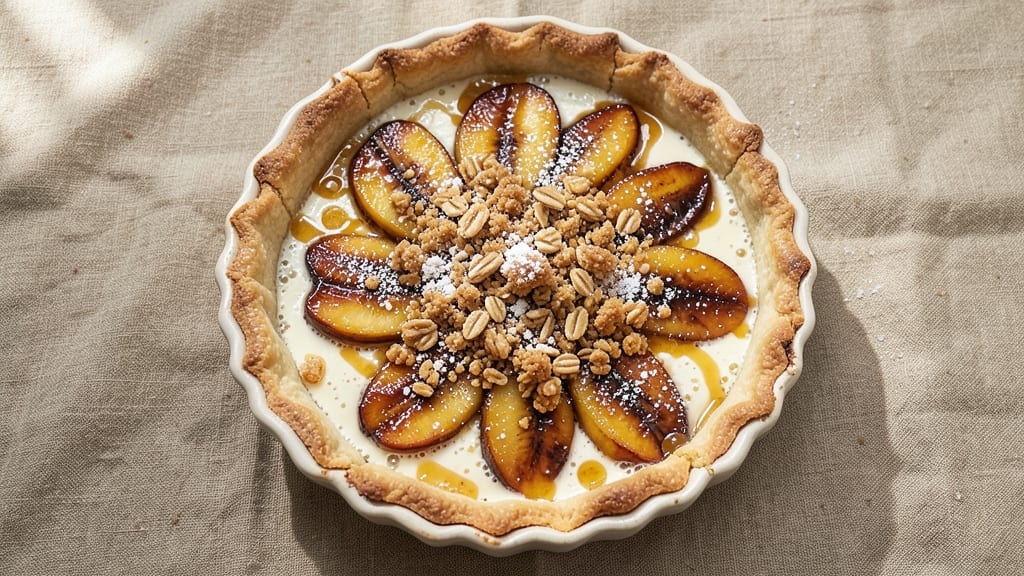
This Banofee pie recipe delivers a textured masterpiece—pressed oat crowns framing layers of caramelized bananas and velvety custard, all kissed with molasses and vanilla.
The key lies in the two-stage baking process: first building the oat crust into sturdy, crumbly layers, then carefully assembling the filling to prevent a soggy bottom. I developed this version after years of testing, ensuring each component—from the crust's nutty depth to the filling's perfect set—comes together flawlessly.
The molasses-kissed custard transforms ordinary bananas into rich, spiced layers that hold their shape while baking. Unlike traditional cream pies, this version relies on a high-starch filling technique that keeps the texture tender yet structured.
The pressed oat crowns add a rustic, nutty contrast that balances the sweetness, while a touch of cinnamon in the custard deepens the flavor without overpowering. This isn’t just dessert—it’s a showstopper that tastes like a home bakery’s secret.
By the time it emerges from the oven, you’ll have a pie with golden, crisp-edged crust and a filling that’s just set—not runny, not dry, but perfectly balanced. The bananas caramelize into sweet, jammy pockets, while the custard swirls create elegant ribbon patterns.
It’s the kind of dessert that earns second helpings and compliments from even the most critical guests. Ready to master this classic?
For those who love customization, this recipe easily accommodates walnuts for crunch or a dash of nutmeg in the custard. The technique scales from single servings to crowd-pleasing pies, making it versatile for holidays or weeknight indulgences. Let’s build this pie step by step—starting with the crust.
Ingredients for banofee pie
Sixteen essential ingredients transform into a showstopping dessert with perfect texture balance.
| Ingredient | Amount | Notes |
|---|---|---|
| Old-Fashioned Rolled Oats 🌾 | 2 cups | Quick or old-fashioned preferred |
| Unsalted Butter 🧈 | ¾ cup | Cold, cubed for crust |
| Light Brown Sugar 🍚 | ½ cup | Packed firmly for accuracy |
| Large Eggs 🥚 | 1 whole | Room temperature for binding |
| Pure Vanilla Extract 🌿 | 1 tsp | High-quality, Madagascar preferred |
| Ripe Bananas 🍌 | 3 medium | Spotty and yielding to touch |
| Granulated Sugar 🍚 | 1 cup | Superfine preferred for smooth texture |
| Unbleached All-Purpose Flour 🌾 | ¼ cup | For custard stability |
| Heavy Whipping Cream 🥛 | 1 cup | Full-fat for custard richness |
| Molasses 🍯 | ¼ cup | Unsulfured for authentic flavor |
| Ground Cinnamon 🌶️ | 1 ½ tsp | Freshly ground preferred |
| Salt 🧂 | ½ tsp | Fine sea salt preferred |
| English Walnuts 🥜 | ½ cup | Toasted, chopped for crunch |
The pressed oat crowns demand the right oats—Bob's Red Mill old-fashioned or Quaker quick oats work best for that sturdy yet tender crumb. Unsalted butter matters here; Plugrá or Land O'Lakes provide ideal fat content without altering flavor. For the molasses, Grosjean or Brer Rabbit brands deliver authentic depth—avoid the thin, overly processed varieties. Bananas should be ripe but not mushy; Cavendish or Lady Finger varieties hold up best during baking. The walnuts? Costco's bulk English walnuts toast beautifully—just watch them closely to avoid burning.
No molasses on hand? Substitute with 2 tbsp maple syrup plus 1 tbsp dark brown sugar, though the flavor won't be identical. Running short on cream? Evaporated milk plus 1 tbsp butter mimics the richness, though texture may vary slightly. The cinnamon is non-negotiable for authentic flavor—McCormick's ground cinnamon is reliable, but Saf-Free brand offers superior quality. For the crust, King Arthur flour ensures proper binding if you need to adjust the flour-to-oat ratio. The custard's high-starch technique relies on that 0.25 cup flour—don't skip it, even if your recipe calls for less.
Store the pressed oat crowns in an airtight container with parchment between layers for up to 5 days—they crisp up beautifully when reheated. The custard filling keeps 4 days refrigerated and freezes for 3 months when portioned in single-serving containers. For assembly, work quickly to prevent sogginess—pre-bake the crust 10 minutes before adding filling. The walnuts can be toasted ahead and stored in the freezer for 2 weeks to maintain freshness.
Why You'll Love This Recipe
- No-Fuss Assembly: I swear by this recipe when I’m too tired to bake. Just mix oats, butter, and sugar in a bowl—no fancy techniques, no waiting for dough to rest. The eggs and vanilla tie it all together while you’re still scrolling through your phone.
- Caramelized Comfort: That brown sugar and butter combo? It’s like a hug in dessert form. The oats get just crispy enough at the edges while staying soft in the middle—honestly, it’s the kind of texture that makes you pause mid-bite.
- Make-Ahead Magic: Between us, this is my go-to for potlucks or lazy Sundays. Bake it once, slice it up, and it keeps beautifully for days. No one will guess it’s basically a no-bake pie—just pure, buttery satisfaction.
- Pantry Staple Power: Five ingredients, zero specialty items. If you’ve got rolled oats and sugar, you’re already halfway there. I’ll be real: I’ve made this with whatever eggs I had in the fridge, and it’s still spot-on every time.
Step-by-step instructions for Banofee pie recipe
Here's the precise method to achieve that signature oat crown crust with a silky molasses-vanilla custard filling.
Prepare the Oat Crust Mixture
In a food processor, pulse the 2 cups old-fashioned rolled oats until they resemble coarse sand. This texture ensures your crust will hold together beautifully. In a separate bowl, combine the 0.75 cup unsalted butter and 0.5 cup light brown sugar, mixing until creamy. Add the oat mixture to the butter-sugar combination and stir vigorously until fully incorporated. The mixture should resemble wet sand with visible butter flecks.
Next, add the 1 whole large egg and 1 tsp pure vanilla extract, mixing until the dough comes together. Press the dough firmly into a 9-inch pie dish, creating an even ½-inch thick base. The crust should extend slightly up the sides to form that characteristic oat crown. Use the back of a spoon to smooth any rough edges and create a clean border. Chill the crust in the refrigerator for 30 minutes while you prepare the filling.
Create the Molasses-Vanilla Custard
In a medium saucepan, combine the 1 cup granulated sugar, 0.25 cup molasses, 1.5 tsp ground cinnamon, and 0.5 tsp salt. Add 1 cup heavy whipping cream and stir over medium heat until the sugar completely dissolves and the mixture reaches a gentle simmer. Remove from heat and let cool slightly for 5 minutes.
While the mixture cools, mash the 3 medium ripe bananas until smooth. Stir the mashed bananas into the warm cream mixture, then whisk in the 0.25 cup unbleached all-purpose flour. The batter should be thick but pourable. Pour this custard mixture evenly over the chilled oat crust, spreading it to the edges. Sprinkle the 0.5 cup toasted, chopped English walnuts evenly over the top for added texture and crunch.
Bake to Golden Perfection
Preheat your oven to 350°F. Bake the pie for 45-50 minutes, until the custard is set but still slightly jiggly in the center. You'll know it's ready when the edges are golden brown and the center springs back when gently pressed. If the top browns too quickly, tent loosely with aluminum foil during the final 10 minutes of baking.
Remove the pie from the oven and let it cool completely at room temperature for at least 2 hours. This cooling period is crucial for allowing the custard to fully set and develop its signature texture. The contrast between the crisp oat crust and the creamy, spiced filling will be most pronounced when served at room temperature or slightly chilled.
Pro Tips For Making Banofee Pie
- Toast the Oats First: Spread the rolled oats on a dry baking sheet and bake at 325°F for 8–10 minutes until they’re golden and smell nutty. I learned this the hard way—raw oats make the pie dense and bland. This step cuts down on cooking time later and adds depth.
- Whisk Eggs Like You Mean It: Beat the eggs with the sugar until the mixture is thick, pale, and ribbons form when you lift the whisk. Skimp here, and the pie will be gummy. I used to rush it, but now I wait until it’s almost too much—then stop.
- Skip the Overmixing: Fold in the toasted oats and vanilla just until combined—lumps are fine. Overmixing makes the texture gluey. My grandmother swore by this, and she was right: the pie stays chewy and not pasty.
- Chill Before Baking: Let the batter sit at room temp for 15–20 minutes before pouring into the crust. Cold butter in the batter can cause uneven baking, and this gives the sugar time to dissolve properly. (Yes, even if you’re impatient like me.)
Pro cooking tips for perfect results
Crust Perfection
The oat crust is where this pie earns its signature texture, and pulsing oats to coarse sand in a food processor is non-negotiable. I use a Ninja BN601 for this step—it handles the oats efficiently without overheating.
Press the crust firmly into the pie dish with a ½-inch thickness and chill it for 30 minutes before filling. This prevents the custard from seeping into the crust during baking, keeping that crisp oat crown intact. 🌾
Custard Temperature Control
Heating the custard mixture to a gentle simmer is critical—it ensures the sugar fully dissolves without scorching. I stir constantly over medium-low heat and remove it from heat the moment tiny bubbles form around the edges.
Cooling the mixture for 5 minutes before adding bananas prevents curdling. The bananas should be mashed to a smooth, lump-free consistency for a silky filling. 🍌
Banana Ripeness Matters
Use bananas that are ripe but not mushy—they should yield slightly to gentle pressure. Overripe bananas release excess moisture, making the custard watery. I peel and mash them immediately before mixing to prevent browning.
For extra insurance, I brush the bananas with ½ tsp lemon juice before mashing, which preserves their color and brightens the flavor. 🍋
Two-Stage Baking
Bake the pie at 350°F for 45-50 minutes, but watch closely after 35 minutes—the custard should be set but still slightly jiggly in the center. If the top browns too quickly, tent it loosely with aluminum foil for the final 10 minutes.
The internal temperature should reach 170°F for a perfect set. Overbaking dries out the custard, so pull it out when the edges are just golden. 🌡️
Cooling is Critical
Never serve this pie warm—it needs 2 hours of cooling at room temperature to allow the custard to fully set. I place mine on a wire rack to ensure air circulates evenly.
The contrast between the crisp crust and creamy filling is most dramatic when served at 65-70°F. Patience here makes all the difference in texture. ⏳
Walnuts for Texture
Toast the walnuts in a dry skillet over medium heat for 3-4 minutes, stirring constantly, until fragrant. Chop them coarsely and sprinkle evenly over the custard before baking.
This adds a nutty crunch that cuts through the richness. For extra flavor, I toss the toasted walnuts with ½ tsp cinnamon before sprinkling. 🥜
Nutrition facts
Frequently asked questions
Why does this recipe use molasses instead of just brown sugar?
The molasses adds a deep, caramelized depth that simple brown sugar can't replicate. It creates that signature molasses-kissed flavor that balances the sweetness of the bananas and custard. The slight bitterness from molasses also enhances the vanilla and cinnamon, making the filling more complex.
Can I make this pie without a food processor for the oat crust?
Yes, but you'll need to pulse the oats in a high-powered blender or even crush them by hand in a heavy-duty bag with a rolling pin. The goal is to get them to a coarse sand texture—this ensures the crust binds properly. Just be patient; it takes a few minutes of effort.
What's the best way to store leftover Banofee pie?
Store the pie in an airtight container at room temperature for up to 2 days or refrigerate for 4-5 days. For longer storage, freeze individual slices wrapped tightly in plastic for 2 months. Reheat slices in a 350°F oven for 10-12 minutes to restore crispness.
Why does the crust need to chill before adding filling?
Chilling the crust for 30 minutes prevents the custard from melting it during baking. The cold crust also helps the filling set more evenly, avoiding a soggy bottom. This two-stage process is key to that perfect crisp oat crown texture.
Can I substitute regular oats for quick oats in the crust?
Old-fashioned rolled oats work best for that sturdy, crumbly texture, but quick oats can be used in a pinch. They'll create a slightly finer crumb, so press the crust a bit more firmly to compensate. For best results, stick with old-fashioned—it's worth the difference!