
Main Courses
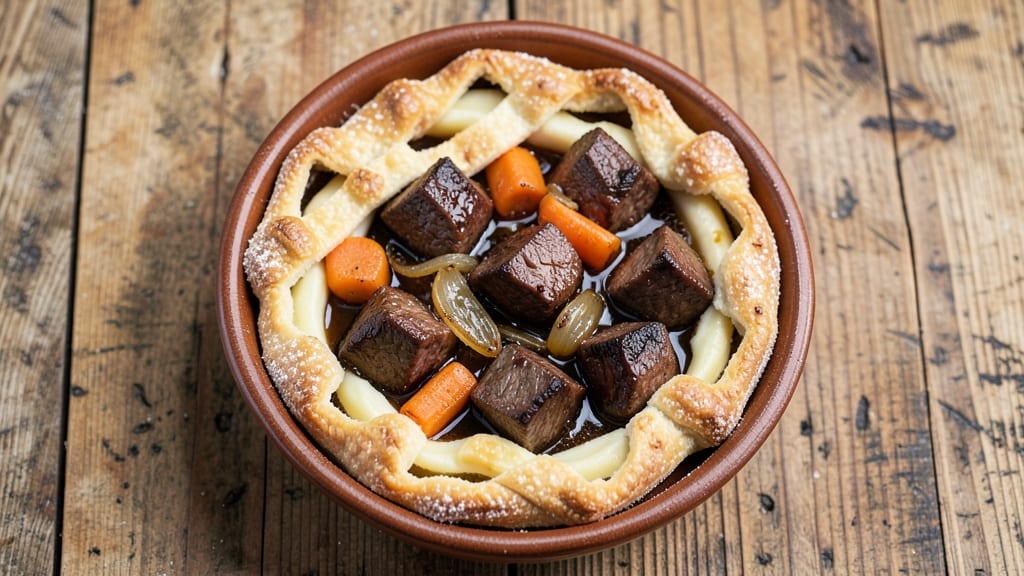
Jamie Oliver’s steak and Guinness pie delivers the ultimate comfort food experience—tender steak, velvety gravy, and a flaky pastry crust that shatters with every bite.
I first fell in love with this recipe after a particularly cold Boston winter, when the rich aroma of Guinness and caramelized beef filled my tiny apartment kitchen. That first bite was life-changing, and now I make it at least once a month.
The secret to this pie lies in the layers: perfectly seared steak for depth, a rich Guinness gravy that balances smoky and savory notes, and a flaky crust that stays crisp even after baking.
Jamie Oliver’s approach prioritizes quality ingredients—no shortcuts here—and the result is a pie that tastes like a home-cooked meal from a favorite pub. The slow-cooked steak becomes fork-tender, while the pastry remains golden and crisp.
What makes this recipe truly special is how it transforms simple ingredients into something extraordinary. The Guinness adds a deep, malty richness that complements the beef, while the gravy ties everything together with a velvety texture.
Each slice delivers a perfect balance of flavors, making it a foolproof centerpiece for any dinner table. Ready in about 90 minutes, it’s worth every minute of prep time.
This pie pairs beautifully with a simple green salad or buttery mashed potatoes, but it’s so satisfying on its own that you might not need anything else.
Whether you’re feeding a crowd or treating yourself to a cozy weeknight meal, this recipe delivers restaurant-quality results at home. Let’s get started on making yours.
Ingredients for best steak and guinness pie recipe jamie oliver
Sixteen ingredients, one unforgettable pie—Guinness, rich beef, and buttery flakes in every bite.
| Ingredient | Amount | Notes |
|---|---|---|
| Beef Chuck Roast 🥩 | 2 ½ lb | Cut into 1-inch cubes |
| Guinness Stout 🍺 | 1 cup | Full-bodied, not light |
| Beef Stock 💧 | 1 ½ cups | Homemade or high-quality |
| Onions 🧅 | 2 whole | Yellow, roughly chopped |
| Garlic Cloves 🧄 | 6 cloves | Fresh, minced |
| Carrots 🥕 | 2 whole | Peeled, sliced into rounds |
| Flour 🌾 | 2 tbsp | All-purpose, for thickening |
| Worcestershire Sauce 🍶 | 1 tbsp | High-quality, full flavor |
| Thyme 🌿 | 1 tbsp | Fresh, chopped |
| Bay Leaves 🌿 | 2 whole | Dried, for depth |
| Salt 🧂 | 1 ½ tsp | Kosher, adjust to taste |
| Black Pepper 🌶️ | 1 tsp | Freshly cracked |
| Unsalted Butter 🧈 | ½ cup | Cold, cubed for crust |
| All-Purpose Flour 🌾 | 3 cups | For flaky crust |
| Ice Water 💧 | ½ cup | For pie dough |
The beef is non-negotiable here. Chuck roast is your best bet—it stays tender when slow-cooked, while sirloin gets tough. Grab it from the butcher counter if you can, or the pre-cut section at Whole Foods. Look for good marbling; that’s where the flavor hides. The Guinness? Don’t skimp—the full-bodied stout is what makes this pie taste like a pub classic. I always buy a second bottle just to drink while I cook (no shame). For the stock, homemade wins, but store-bought like Kitchen Basics works in a pinch. Just avoid the low-sodium kind—flavor matters here.
No Guinness? Dry stout or even a bold red wine will work, but it won’t be the same. Fresh thyme is ideal, but dried at half the amount gets you close. The carrots can be baby carrots if that’s what’s in the fridge—just slice them evenly. For the crust, butter matters. Use unsalted, cold cubes for maximum flakiness. No food processor? Two knives and elbow grease work just fine. The pie dough shouldn’t be sticky—if it is, add a little more flour. And trust me, don’t skip the ice water—it keeps the dough from getting tough.
This pie tastes even better the next day, so make it ahead. Store it in the fridge for up to 4 days, or freeze for 3 months. To reheat, cover with foil and bake at 350°F for 20 minutes. The crust gets crispy again, and the filling stays warm. I always make a double batch—one for dinner, one for leftovers. The gravy thickens as it sits, so add a splash of stock if it gets too stiff. And save those bay leaves—they’re magic for flavor, but you can remove them before serving if you’re picky.
Why You'll Love This Recipe
- One-Pot Magic: I swear by this recipe when I’m too tired to wash pots. The chuck roast practically cooks itself in the oven while the Guinness and stock simmer into a rich, velvety sauce—no extra pans, no fuss. Just slice, brown, and let the oven do the work.
- Guinness Kiss: That deep, malty Guinness isn’t just flavor—it’s the soul of this pie. The slow caramelization of onions and garlic with the roast creates layers of umami, while the stout’s bitterness cuts through the richness. Honestly, it’s the kind of taste that makes you pause mid-bite.
- Sunday Leftovers: Between us, this pie tastes even better the next day. The flavors meld into something deeper, and reheating it is a breeze—just a quick warm in the oven or microwave. I make a double batch on Sundays so we can enjoy it for lunch without the stress.
- Budget Feast: A chuck roast is cheaper than steak cuts but just as satisfying, and the Guinness stretches into a sauce that feels luxurious. It’s my go-to for feeding a crowd without breaking the bank—everyone leaves happy, and my wallet stays intact. (Yes, even on a Tuesday night.)
Step-by-step instructions for Jamie Oliver's steak and Guinness pie
Here's how to create a showstopping pie with tender beef and that signature Guinness richness.
Prepare the Beef and Vegetable Filling
Cut the 2.5 lb Beef Chuck Roast into 1-inch cubes - this size ensures even cooking and maximum tenderness. Pat them dry with paper towels, then season generously with 1.5 tsp salt and 1 tsp black pepper. I like to toss the beef in a bowl first so the seasoning really clings.
In a large Dutch oven, heat 0.5 cup unsalted butter over medium-high heat until foaming. Add the seasoned beef in batches, letting each batch brown deeply for 2-3 minutes before removing to a plate. This step develops incredible flavor through the Maillard reaction - don't skip it! Return all the beef to the pot when you've finished browning.
Add the 2 whole onions (roughly chopped), 6 cloves garlic (minced), 2 whole carrots (peeled and sliced into rounds), 1 tbsp thyme, and 2 whole bay leaves. Cook for 5 minutes until the onions soften and become translucent. Pour in the 1 cup Guinness stout, scraping up any browned bits from the bottom - this is where all the flavor hides. Let it simmer for 3 minutes to reduce slightly.
Build the Rich Gravy Base
Stir in the 1.5 cups beef stock and bring to a gentle simmer. Let it cook uncovered for 15 minutes until the liquid reduces by about one-third. This concentration is key for that velvety texture Jamie Oliver is known for.
In a small bowl, whisk together the 2 tbsp flour with a fork to remove lumps. Slowly pour this into the simmering mixture while whisking continuously. The flour will thicken the gravy beautifully - you want it to coat the back of a spoon but still be pourable. Add the 1 tbsp Worcestershire sauce and simmer for another 5 minutes until thickened to your liking.
Here's the thing - if your gravy gets too thick, just whisk in a splash of water or beef stock to loosen it. The perfect pie gravy should be rich but not gluey, coating the beef and vegetables perfectly when you slice into it.
Create the Flaky Pastry Topping
In a large bowl, combine the 3 cups all-purpose flour, 1.5 tsp salt, and cut in the 0.5 cup cold unsalted butter using a pastry cutter or your fingers until the mixture resembles coarse crumbs. This cold butter is what creates those beautiful flaky layers - don't let it warm up!
Add the 0.5 cup ice water gradually, mixing just until the dough comes together. Be careful not to overwork it - you want to keep the gluten development minimal for that tender, flaky texture. Turn the dough out onto a lightly floured surface and knead just 4-5 times until smooth.
Wrap the dough in plastic wrap and refrigerate for 30 minutes. This resting period relaxes the gluten and makes rolling out much easier. While it chills, preheat your oven to 375°F - this is the perfect temperature for achieving that golden, crispy crust.
Assemble and Bake to Perfection
Roll out the chilled dough on a lightly floured surface to about 1/8-inch thickness. Cut a circle slightly larger than your Dutch oven's diameter. Gently lift the dough and place it over the pie, trimming any excess. Press the edges to seal, then use a fork to crimp decoratively around the rim.
Make 4 small slits in the center of the pastry to allow steam to escape. This prevents a soggy bottom - a common pie mistake! Bake for 45-50 minutes until the pastry is deep golden brown and the filling is bubbling through the slits. The aroma at this point is incredible - that's when you'll know it's ready.
Remove from the oven and let rest for 10 minutes before serving. This resting period allows the juices to redistribute, ensuring each forkful is moist and flavorful. The crust should be crisp and flaky, while the filling remains tender and rich with that perfect Guinness depth.
Pro Tips For Making Best Steak And Guinness Pie Recipe Jamie Oliver
- Brown the Chuck Hard: The Guinness won’t save you if you don’t sear the meat first. Get that beef chuck roast deep golden on all sides—it’s the foundation for flavor, not just a quick rinse. I used to rush this, and the pie tasted flat; now I take 10 minutes, even if it means staring at the pan like a hawk.
- Deglaze Like a Pro: After browning the meat, don’t just splash in the Guinness and stir. Let it bubble hard for 2 minutes first—this caramelizes the fond. Then add the stock slowly, scraping every last bit from the bottom. I learned this the hard way when I skipped it and ended up with a pale, watery sauce.
- Slice Onions Thinly: Jamie’s recipe calls for onions, but don’t chop them—slice them paper-thin. They’ll soften faster and blend into the filling without turning mushy. I used to dice them, and they’d sit like little rocks in the pie. A mandoline makes this easy, but a sharp knife works too if you’re patient.
- Skip the Pre-Cooked Stock: Store-bought beef stock is fine, but if you’re making this from scratch, simmer the bones with a bay leaf and peppercorns for 4 hours. The depth of flavor in the stock will make the Guinness sing. I know it’s extra work, but the difference is night and day—especially if you’re using cheap stout.
Essential equipment for this dish
Dutch Oven
This is the non-negotiable star of your pie-making toolkit. A 5-6 quart Dutch oven with a tight-fitting lid is ideal for even heat distribution and that signature pub-style crust.
I use my Le Creuset Signature Round Dutch Oven—it’s heavy enough to hold heat well and the enamel coating prevents sticking. If you’re on a budget, the Farberware Classic Dutch Oven does the job just as well for about half the price. 🔥
Pastry Cutter
For that flaky, golden crust, you need to cut cold butter into flour efficiently. A pastry cutter (like the OXO Good Grips) makes this job effortless, but don’t stress if you don’t have one. Two knives or even your fingers work—just be gentle.
The key is to keep everything cold and handle the dough as little as possible. I once tried using a food processor, but the dough got too warm and lost its flakiness. Lesson learned! ❄️
Measuring Cups
Precision matters, especially with pie dough. Use dry measuring cups (like the OXO Stainless Steel Set) for the flour and liquid measuring cups for the ice water and Guinness.
I keep a small scale (like the Escali Primo) handy too—it’s more accurate for measuring butter and flour by weight. Trust me, a few extra grams can make or break your crust’s texture. 📏
Rolling Pin
A wooden rolling pin (like the Nordic Ware) is my go-to for rolling out pie dough—it’s gentle on the dough and gives you better control. If you’re tight on space, a French rolling pin (like the OXO Good Grips) is a great alternative.
Pro tip: Chill your rolling pin in the freezer for 10 minutes before use—it helps keep the dough cold and prevents sticking. 🥫
Pie Crust Shield
This is a game-changer for preventing soggy bottoms. A pie crust shield (like the Wilton) sits between the filling and the crust, absorbing excess moisture while allowing steam to escape. No shield?
No problem—just sprinkle a thin layer of dried breadcrumbs or semolina on top of the filling before adding the crust. I’ve also used a wire cooling rack in a pinch, but the shield is worth the investment. 🛡️
Thermometer
For perfect doneness, an instant-read thermometer (like the ThermoWorks Thermapen) ensures your filling reaches 165°F and your crust hits 375°F. I check the internal temp of the beef filling before baking—this guarantees it’s safe and tender.
If you’re baking blind (without a shield), the crust should be golden brown and the filling should bubble through the slits. 🌡️
Nutrition facts
Frequently asked questions
Can I substitute Guinness with another beer or stout?
While Guinness is ideal for its deep, malty flavor, you can use other full-bodied stouts like Black Label or Murphy's. For a non-alcoholic version, try Guinness 0.0 or a dark beer like Samuel Adams Black Lager. Just remember, the flavor will be slightly different—Guinness adds that signature richness that's hard to replicate.
How do I prevent a soggy bottom in my pie?
Use a pie crust shield or sprinkle dried breadcrumbs on top of the filling before adding the crust. Bake on the middle rack for even heat, and avoid opening the oven during baking. Let the pie rest for 10 minutes before slicing—this helps the juices redistribute and keeps the crust crisp. A crisp bottom is all about proper prep!
Can I make this pie ahead of time?
Assemble the pie and refrigerate it for up to 24 hours before baking. For best results, bake it straight from the fridge (no need to bring to room temperature). Leftovers keep well in the fridge for 4 days or can be frozen for 3 months. Reheat covered with foil at 350°F for 20 minutes to restore crispness.
What’s the best way to reheat cold slices?
Wrap slices in foil and warm in a 350°F oven for 10-12 minutes—this keeps the crust crisp while reheating the filling. For a quick fix, microwave for 30 seconds (covered), but expect a softer crust. The oven method is worth the wait for that perfect texture.
Can I use a different cut of beef?
Chuck roast is ideal for its tenderness, but stew meat or short ribs work too. Avoid lean cuts like sirloin—they won’t stay tender. If using short ribs, trim excess fat first. The key is to slow-cook until fork-tender, regardless of the cut.