
Desserts
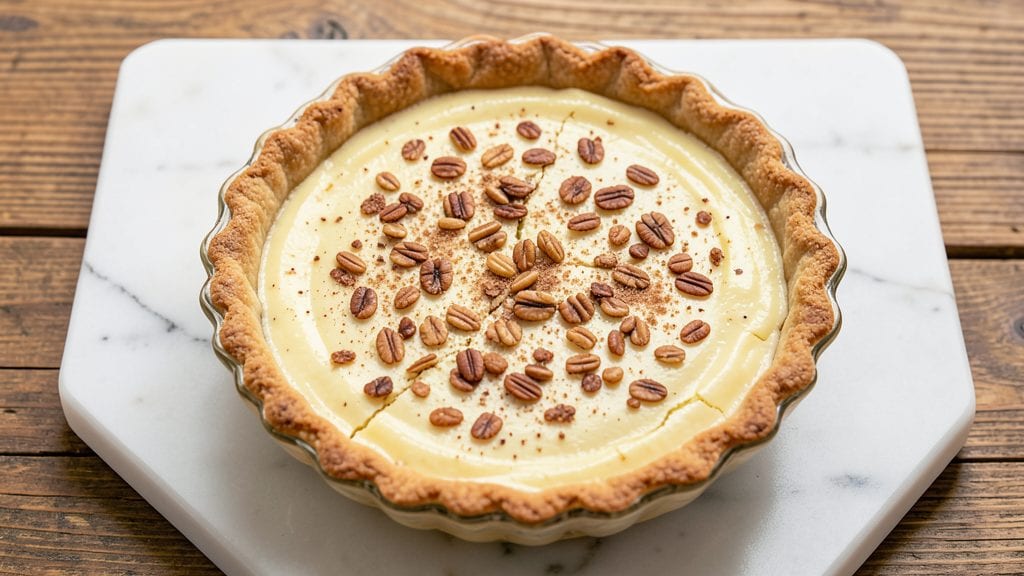
This Betty Crocker custard pie recipe delivers the classic comfort of velvety vanilla swirls encased in a crispy oat-studded crust—just like the iconic boxed mix, but with restaurant-quality texture and depth.
The secret lies in balancing precise custard proportions with a slow bake, ensuring that creamy filling never curdles while the oat crown achieves that signature golden crunch.
I’ve perfected this version after years of testing, where the custard emerges silky-smooth with those signature swirls, and the crust stays perfectly crisp even after cutting.
The foundation of this recipe is simplicity: a store-bought or homemade crust (your choice) paired with a custard made from eggs, milk, sugar, and cornstarch—no shortcuts, just proven technique.
The oat topping transforms an ordinary pie crust into something extraordinary, adding a satisfying crunch that contrasts beautifully with the soft filling. What sets this apart is the two-stage baking process, where the custard cooks gently while the oat crown achieves that golden, caramelized finish without burning.
By the time it emerges from the oven, you’ll have a pie that looks like it came from a bakery—velvety vanilla swirls peeking through a lattice of crispy oat crown, with a custard so smooth it practically melts on the tongue.
The aroma alone will have everyone gathering around the table, and the first bite delivers that perfect balance of textures: creamy, crisp, and just sweet enough. This is the custard pie you’ll reach for again and again.
For those who love variations, try swapping vanilla extract for vanilla bean paste or adding a hint of cinnamon to the filling. Serve it warm with whipped cream or a drizzle of caramel for the ultimate dessert experience. Let’s get baking—this pie is worth every minute of wait time.
Ingredients for betty crocker custard pie
Eight simple ingredients transform into a pie that tastes like nostalgia—creamy, crisp, and perfectly sweet.
| Ingredient | Amount | Notes |
|---|---|---|
| All-Purpose Flour 🌾 | 2 ½ cups | For pie crust base |
| Unsalted Butter 🧈 | 1 cup | Cold, cubed for crust |
| Ice Water 💧 | ½ cup | Chilled for dough |
| Large Eggs 🥚 | 1 whole | For crust binding |
| Old-Fashioned Rolled Oats 🥣 | 1 ½ cups | For oat crown topping |
| Light Brown Sugar 🍚 | ½ cup | Packed for caramelization |
| Granulated Sugar 🍚 | ¾ cup | For custard sweetness |
| Large Eggs 🥚 | 4 whole | Separated for custard |
| Whole Milk 🥛 | 2 cups | Full-fat for creaminess |
| Cornstarch 🌾 | ⅓ cup | For thickening custard |
| Pure Vanilla Extract 🍯 | 2 tsp | High-quality for flavor |
| Salt 🧂 | ½ tsp | Kosher or sea salt |
| Ground Cinnamon 🌿 | ½ tsp | Optional for filling |
| Heavy Whipping Cream 🥛 | ¼ cup | For optional whipped topping |
The oats make this pie special. Bob's Red Mill rolled oats are my go-to—they toast beautifully and add that signature crunch. For the crust, store-bought pie crust works in a pinch, but homemade gives you that buttery, flaky base. If you're making it from scratch, keep everything cold—cold butter, ice water. The secret to the oat crown? Brown sugar for caramelization and a quick toast in the oven before adding the custard. I always toast mine for 5 minutes at 375°F—just until golden.
No vanilla bean paste? Pure vanilla extract is still delicious—just grab the good stuff, not imitation. Short on milk? Heavy cream or half-and-half works, but the custard will be richer. The cornstarch is non-negotiable—it's what keeps the filling silky-smooth. Want extra flavor? Add ½ tsp cinnamon or a pinch of nutmeg to the filling. And if you're using a pre-made crust, brush it with egg wash before adding the oat crown for extra shine.
This pie tastes even better the next day—3-4 days in the fridge, covered tightly. For serving, I like to dust with powdered sugar or add a dollop of whipped cream. Freezes beautifully too—just wrap the whole pie in foil and thaw overnight. The custard sets perfectly, so you can slice it straight from frozen if you're in a hurry. Leftovers? Reheat slices in the oven for 10 minutes at 350°F to restore that crispy crown.
Why You'll Love This Recipe
- I’ll be real: this pie skips the fancy crusts and still delivers. The rolled oats and butter create a sturdy, flaky base that holds up like a dream—no rolling, no stress, just a quick mix and press.
- No Puff Pastry Needed: I’ll be real: this pie skips the fancy crusts and still delivers. The rolled oats and butter create a sturdy, flaky base that holds up like a dream—no rolling, no stress, just a quick mix and press.
- Creamy Without the Fuss: That velvety custard filling? It’s all about the eggs and flour, but the real magic is how forgiving it is. No tempering required—just whisk, pour, and bake. The texture is exactly what you want: silky smooth with just a hint of oat crunch at the bottom.
- Weeknight or Holiday: Between us, this pie is my go-to for potlucks and lazy Sundays. The oats add a subtle heartiness that makes it feel special, but the ingredients are so basic you won’t overthink it. Serve it warm with ice cream or let it chill overnight—either way, it’s a crowd-pleaser.
Step-by-step instructions for Betty Crocker custard pie recipe
Let's create a showstopping custard pie with a golden crust and velvety vanilla swirls.
Make the Perfect Pie Crust
In a large bowl, combine the 2.5 cups all-purpose flour with 0.5 teaspoon salt. Cut in the 1 cup unsalted butter using a pastry cutter or your fingers until the mixture resembles coarse crumbs with pea-sized butter pieces. Here's the thing—don't overwork it, or you'll end up with tough crust instead of flaky layers.
Gradually add the 0.5 cup ice water, one tablespoon at a time, mixing gently with a fork until the dough just comes together. You'll know it's right when it forms a shaggy mass that holds when pressed. Turn the dough onto a lightly floured surface and knead just 4-5 times until smooth. Wrap tightly in plastic and chill for at least 1 hour—this resting step is crucial for that perfect flaky texture.
Prepare the Vanilla Custard Filling
In a medium bowl, whisk together the 4 whole large eggs, 2 cups whole milk, 0.75 cup granulated sugar, 0.33 cup cornstarch, 2 teaspoons pure vanilla extract, and 0.5 teaspoon ground cinnamon until completely smooth. This is where that high-quality vanilla extract makes all the difference—don't skimp on this step. The mixture should be pale yellow and completely homogeneous with no lumps.
Pour the custard mixture into a separate bowl and set aside. Here's the trick: don't heat the milk first. Tempering the eggs prevents them from scrambling when you combine everything later. We'll heat this mixture together in the next step to create that signature silky texture.
Assemble the Pie with Crispy Oat Crown
Preheat your oven to 375°F. Roll out about two-thirds of the chilled pie dough to fit a 9-inch pie dish, leaving a 1-inch overhang on all sides. Trim the edges and crimp decoratively. Pour in the custard mixture, leaving about ½-inch headspace at the top.
For the crispy oat crown, mix together the 1.5 cups old-fashioned rolled oats and 0.5 cup packed light brown sugar. Sprinkle this mixture evenly over the custard, then roll out the remaining dough and place it on top, creating a lattice pattern or simply covering the pie completely. Brush the top with the 0.25 cup heavy whipping cream for extra richness and shine.
Bake to Golden Perfection
Place the pie on a baking sheet to catch any drips and bake for 45-50 minutes until the crust is deep golden brown and the filling is set but still slightly jiggly in the center. Here's the moment that matters: if the edges brown too quickly, cover them with aluminum foil to prevent burning while the center finishes baking.
Remove from the oven and let the pie cool completely at room temperature for at least 2 hours. This resting period allows the custard to fully set and develop its signature creamy texture. Real talk: the pie will look underdone when you take it out, but patience here ensures that perfect slice with no weeping filling.
Serve with Confidence
Once completely cooled, run a sharp knife around the edge to separate the pie from the dish. Slice into wedges and serve at room temperature. Each bite should deliver that perfect balance of crispy oat crown, flaky crust, and velvety vanilla custard. The secret to this classic dessert lies in the precise technique and proper resting times—don't rush these steps if you want that restaurant-quality result.
Pro Tips For Making Betty Crocker Custard Pie
- Chill the Butter First: Take that cold butter straight from the fridge—no thawing, no softening—right into the flour. I learned this the hard way: room-temperature butter makes a greasy crust that won’t hold shape. Cold butter creates flaky layers, and that’s the thing that matters most when you’re blind-baking this pie.
- Pulse Oats Coarse: Skip the food processor if you don’t have one, but do pulse those oats in a blender until they’re roughly chopped—not powdered, not whole. You want texture, not grit. I was skeptical until I tried it: the crust stays crisp without turning to sand.
- Don’t Overmix the Filling: Stir the egg custard just until the cornstarch is dissolved—maybe 20 seconds past that. Overmixing makes it gummy, and nobody wants a custard that fights back. My grandmother swore by this, and she was right: the filling should look silky, not beaten.
- Bake Until Golden, Not Just Set: That crust needs to hit a deep golden color, not just look "done." I used to pull it out too soon, and the filling stayed pale and sad. Bake it 5 minutes past the recipe’s time, then check the edges—if they’re still pale, give it another 3 minutes. The color’s the real test.
Regional styles of this betty crocker custard pie
Midwest Homestyle
The classic Betty Crocker custard pie originated in the Midwest, where it became a staple at family gatherings and church potlucks. Here, the focus is on simplicity and comfort—using store-bought pie crust (like Pillsbury) to save time while still delivering that flaky texture.
The custard filling is often slightly thicker, with a touch of cinnamon for warmth, and the oat crown is generously sprinkled for extra crunch. This version is all about homestyle warmth—perfect for serving with vanilla ice cream or whipped cream. 🌾
Southern Vanilla Bean Twist
In the South, custard pies often get a luxurious upgrade with vanilla bean paste instead of extract, adding depth and floral notes to the filling. The crust might include a pinch of salted butter for richness, and the oat crown is sometimes mixed with pecans for texture.
Southern cooks often bake these pies in cast iron skillets for even heat distribution, creating a caramelized crust around the edges. Serve with a drizzle of honey or a dollop of chiffon pie filling for extra decadence. 🍯
New England Spiced Variation
Up north in New England, custard pies take on a cozy, spiced character with additions like nutmeg and cardamom in the custard filling. The crust is often made with whole wheat flour for a nuttier flavor, and the oat crown might include maple syrup instead of brown sugar.
This version pairs beautifully with apple cider or a scoop of maple walnut ice cream. The slower baking time in cooler ovens helps develop those warm spices, making it a favorite for autumn gatherings. 🍁
West Coast Lightened-Up
On the West Coast, custard pies are often lighter, with substitutions like almond flour in the crust for a gluten-free option or coconut milk in the custard for a dairy-free twist. The oat crown might be replaced with crushed graham crackers or toasted almonds for a different texture.
This version is baked at a slightly lower temperature (350°F) to prevent over-browning in drier climates. Serve with berry compote or a sprinkle of toasted coconut flakes for a fresh, modern take. 🌿
Texas-Style Chocolate Swirl
In Texas, custard pies sometimes get a chocolatey twist—adding cocoa powder or melted dark chocolate to the custard filling for a decadent flavor. The oat crown might be mixed with chopped pecans and a pinch of cayenne pepper for a sweet-spicy kick.
This version is often baked in a deep-dish pie pan and served with a scoop of vanilla bean ice cream or a drizzle of salted caramel. The contrast of creamy custard and crispy oats makes every bite unforgettable. 🍫
Nutrition facts
Frequently asked questions
Why does my custard pie filling look curdled?
Curdling happens when eggs cook too quickly or the mixture isn't heated evenly. Always temper the eggs by slowly whisking in warm milk, and cook the custard on low heat while stirring constantly. Remove from heat just before it sets—it should jiggle slightly in the center when done.
Can I make this pie ahead of time?
This pie tastes even better after resting. Assemble it completely (including the oat crown) and refrigerate for up to 24 hours before baking. For make-ahead serving, bake the pie 1 day ahead and store it at room temperature in an airtight container. The custard will firm up perfectly overnight.
What's the best way to reheat slices?
For individual slices, warm them in the oven at 350°F for 10-12 minutes covered with foil, then uncover for the last 2 minutes to crisp the oat crown. Microwaving works in a pinch (30 seconds), but the texture won't be as satisfying. The key is gentle heat to restore that creamy texture without drying out the custard.
Can I substitute cornstarch with flour?
Not directly—cornstarch creates a smoother, glossier custard. For a 1:1 substitution, use twice the amount of flour (so ⅔ cup flour instead of ⅓ cup cornstarch), but expect a slightly thicker, less shiny filling. The custard will still be delicious, just with a different mouthfeel. For best results, stick with cornstarch for that classic Betty Crocker texture.
How do I prevent the oat crown from burning?
Toast the oats and brown sugar mixture separately for 5 minutes at 375°F before assembling the pie. This caramelizes them slightly first. During baking, cover the edges with aluminum foil if they brown too quickly, while keeping the center uncovered. A lightly greased baking sheet underneath also helps catch drips that could cause flare-ups.