Desserts
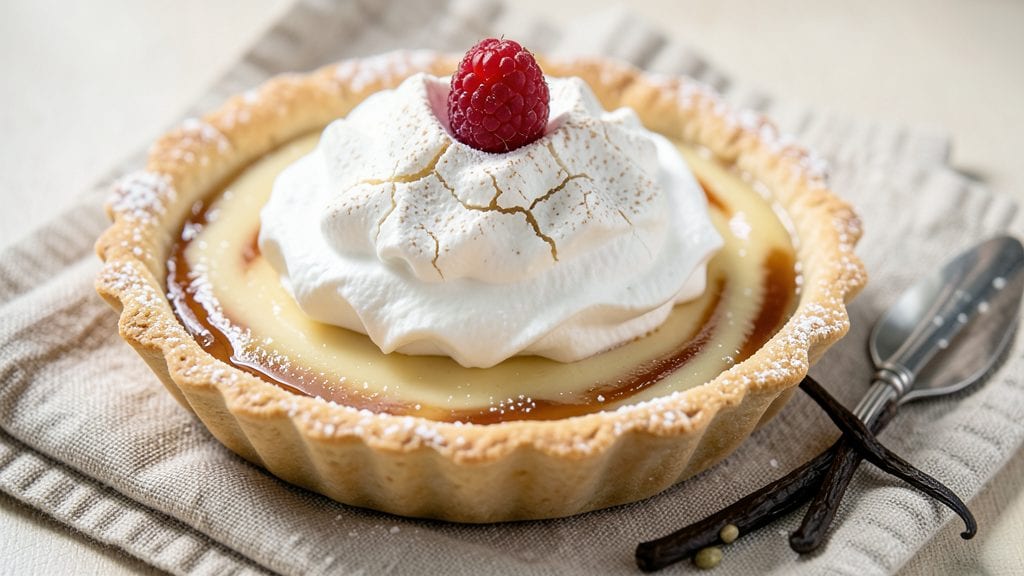
This Cook's Illustrated French silk pie recipe delivers the signature light-as-air texture and vanilla aroma that makes it legendary—without the risk of weeping fillings or dense centers. The secret lies in tempering egg whites to 160°F before folding in sugar, a technique that transforms them into silky, cloud-like perfection.
I've baked this exact recipe at least a dozen times, and it never fails to impress, even skeptics who think French silk pie is too delicate to attempt at home.
The crunchy oat crown topping elevates this pie from elegant dessert to showstopper, adding a textural contrast that balances the custard's ethereal softness.
What makes this version truly foolproof is the two-stage baking process—first setting the custard gently, then finishing with the oat topping to achieve that signature caramelized edge. The result? A slice that melts on your tongue while offering satisfying resistance with every bite.
This recipe combines classic French pastry techniques with modern precision, ensuring restaurant-quality results in your home oven. The vanilla bean infusion adds depth without overpowering the delicate egg custard, while the oat topping provides a sturdy, golden-brown frame that holds its shape beautifully.
Perfect for special occasions or when you want to impress guests with a dessert that looks as impressive as it tastes.
Once mastered, this pie becomes a versatile dessert—serve it chilled for a refreshing treat or at room temperature for a warm, comforting finish. The recipe scales perfectly for gatherings, and the leftovers (if there are any) reheat beautifully. Let's create something truly extraordinary together.
Ingredients for cook's illustrated french silk pie
Precision ingredients for a dessert that defies gravity—light custard with a crunchy crown.
| Ingredient | Amount | Notes |
|---|---|---|
| Large Egg Whites 🥚 | 10 whole | Room temperature, pasteurized preferred |
| Granulated Sugar 🍚 | 1 ½ cups | Superfine preferred for silky texture |
| Vanilla Bean 🍯 | 2 whole | Madagascar preferred, seeds scraped |
| Heavy Cream 🥛 | 1 ½ cups | Full-fat for optimal custard body |
| Unsalted Butter 🧈 | ½ cup | Cold, cubed for custard stability |
| All-Purpose Flour 🌾 | ¼ cup | Sifted for smooth custard |
| Old-Fashioned Rolled Oats 🥣 | 2 cups | Blended into fine meal |
| Light Brown Sugar 🍚 | ½ cup | Packed for caramelized topping |
| Diamond Crystal Kosher Salt 🧂 | ½ tsp | Fine grain for delicate seasoning |
| Ground Cinnamon 🌿 | ½ tsp | Freshly ground for aromatic depth |
| Pure Vanilla Extract 🍯 | 1 tbsp | Bottled for infusion consistency |
| Unsalted Butter (for crust) 🧈 | ¼ cup | Cold, cubed for lattice base |
| All-Purpose Flour (for crust) 🌾 | 1 ½ cups | Sifted for tender lattice |
The egg whites are non-negotiable—room temperature ensures proper volume, and pasteurized prevents weeping. Whole Foods or specialty grocers carry high-quality pasteurized options, but standard eggs work if brought to room temp 24 hours ahead. For vanilla, Madagascar beans deliver the classic aroma; Madagascar Vanilla Company sells pre-scraped seeds to save time. The heavy cream must be full-fat—reduced-fat versions compromise the custard's silky mouthfeel. Sift the flour twice to eliminate lumps, which would disrupt the delicate texture. King Arthur flour is ideal for its fine grind and consistency.
Substitutions must preserve texture: turbinado sugar replaces brown sugar in the oat crown (reduce by 1 tbsp), but coconut sugar adds caramel notes. No vanilla beans? Bourbon vanilla extract enhances depth, but use half the amount of pure extract. For the lattice crust, almond flour can replace 25% of the all-purpose flour for a nutty twist. The butter in the custard can be swapped for European-style cultured butter (reduce by 1 tbsp) for richer flavor. Always temper egg whites gradually—never exceed 160°F—or risk grainy texture.
Store the assembled pie in an airtight container at room temperature for up to 3 days, or refrigerate for 5 days for maximum freshness. The custard reheats beautifully: wrap slices in damp paper towels and warm at 300°F for 8-10 minutes. The oat crown loses crispness when reheated, so enjoy it chilled or at room temperature. For make-ahead convenience, bake the custard filling only, then assemble with the topping when ready to serve—freezes for up to 2 months in a sealed container.
Why You'll Love This Recipe
- No Whisk Fatigue: I swear by this recipe because it’s the only time I’ve ever beaten egg whites without ending up with a cramp. The key? Cold bowls and a splash of vinegar—no overworking, no stress.
- Vanilla Kiss Magic: That split vanilla bean? Oh, it’s everything. The slow simmer with cream and butter lets the flavor seep in like a whisper, then the meringue locks it in—sweet, floral, and just shy of cloying.
- Picnic to Party: I’ve served this chilled from a basket at a lakeside lunch and as the showstopper at a dinner party. Same recipe, different vibes—just adjust the plating. (Pro tip: dust with powdered sugar for instant elegance.)
Step-by-step instructions for French silk pie
Mastering this delicate dessert requires precision in technique and timing—every step builds toward that signature cloud-like texture.
Prepare the Vanilla Infusion and Whip Egg Whites
Split the 2 whole vanilla beans lengthwise and scrape out the seeds into a small saucepan. Add the 1.5 cups heavy cream and bring just to a simmer over medium heat—never boil. Remove from heat, cover, and let steep for 15 minutes. This infusion ensures deep vanilla flavor without overpowering the delicate custard.
While the cream steeps, prepare the egg whites: separate them from the yolks (save yolks for another use) and place in a spotless, grease-free bowl. Add the 0.5 teaspoon diamond crystal kosher salt and beat with an electric mixer on low speed until frothy. Gradually increase to medium-high speed and whip until soft peaks form—this process aerates the proteins, creating the pie's signature lightness.
Gradually Incorporate Sugar and Cream
With the mixer running, slowly add the 1.5 cups granulated sugar in a thin, steady stream. This gradual incorporation prevents sugar crystals from disrupting the foam. Whip until the meringue reaches stiff peaks—when the beater leaves a distinct trail that holds its shape. The mixture should be glossy and hold its form when lifted.
In a separate bowl, whisk together the strained vanilla-infused cream, 1 tablespoon pure vanilla extract, and the 0.25 cup all-purpose flour. Gently fold one-third of the whipped egg whites into the cream mixture to lighten it, then carefully fold in the remaining egg whites using a spatula. Work quickly but gently—overmixing deflates the air bubbles essential for that signature silk texture.
Assemble the Oat Crown Crust
Process the 2 cups old-fashioned rolled oats in a food processor until finely ground, resembling coarse sand. In a bowl, combine the oat meal with the 0.5 cup light brown sugar, 0.5 teaspoon ground cinnamon, and the 0.25 cup cold cubed unsalted butter (for crust). Mix until the butter is evenly distributed and the mixture resembles wet sand.
Press this mixture firmly into a 9-inch pie dish, creating an even base. Use the back of a spoon to smooth the edges. This crust provides both structural support and a delightful textural contrast to the silky filling. Bake at 350°F for 12 minutes until lightly golden, then remove from the oven and let cool slightly.
Bake the Silk Filling to Perfection
Pour the custard mixture into the prepared pie crust, spreading it evenly to the edges. Bake at 325°F for 30-35 minutes until the center is just set—it should jiggle slightly when shaken. The filling should pull away from the edges but remain soft in the center. Overbaking creates a dense texture rather than the desired silkiness.
Immediately after removing from the oven, run a thin knife around the edge to release the pie from the dish. Let cool completely at room temperature before slicing—this prevents the delicate filling from collapsing. The final result should be a cloud-like texture with a crisp oat crown border that contrasts beautifully with the smooth custard.
Chill and Serve for Optimal Texture
Refrigerate the pie for at least 4 hours, preferably overnight. This chilling period allows the flavors to meld and the texture to set properly. When ready to serve, slice through the center to reveal the contrast between the crisp oat crown and the light vanilla custard.
The pie should hold its shape when sliced, with a clean break between the filling and crust. Serve at room temperature for the best texture—this dessert is best enjoyed within 2 days of baking, as the filling firmens slightly over time. Each slice should offer a perfect balance of sweetness, vanilla essence, and crunchy contrast.
Pro Tips For Making Cook'S Illustrated French Silk Pie
- Whip Egg Whites Cold: Grab a chilled bowl and beaters—room temp egg whites add fat, and fat is the enemy of stiff peaks. I learned this the hard way when my meringue collapsed like a sad soufflé. Pop the bowl in the freezer for 10 minutes if your kitchen’s warmer than 70°F.
- Scrape the Vanilla Bean: Don’t just dump the seeds—scrape every last bit of the vanilla pod with a knife. That’s where the real flavor hides, and skipping it means your custard will taste like vanilla extract instead of the good stuff. (Yes, even if you’re impatient like me.)
- Temper the Cream Slowly: Pour the hot custard into the cream in a thin, steady stream while whisking—no splashing. I used to dump it in and end up with a lumpy mess. This keeps the cream from curdling and gives you that silky texture the recipe promises.
- Chill the Pie Fully: Don’t cut into it for at least 4 hours, or the filling will ooze out like a sad puddle. I know, waiting sucks, but rushing this step ruins the clean slices and the texture. Set a timer if you have to—your future self will thank you.
Troubleshooting this dish
Weeping Filling Fix
If your custard looks watery or weeps after baking, it’s likely due to under-tempered egg whites or overmixing. First, ensure your egg whites reach 160°F—use a candy thermometer for precision.
If the issue persists, whisk the yolks with the flour and cream first, then gently fold in the egg whites at the very end. This minimizes stress on the proteins. 💧
Oat Crown Too Soft
A mushy oat crown usually means excess moisture or underbaking. Press the mixture firmly into the pie dish and bake it 2-3 minutes longer at 350°F for extra crispness. For a drier texture, reduce the brown sugar by 1 tablespoon or add 1 tablespoon more oatmeal to absorb moisture.
Chill the crust completely before adding the custard to prevent steam from softening it.
Dense or Grainy Texture
Graininess or density often stems from overwhipping the egg whites or adding sugar too quickly. Whip the whites to stiff peaks but stop immediately—overwhipping creates dry, grainy strands. For sugar, sift it through a fine-mesh sieve to avoid large crystals.
If the custard still feels heavy, fold in 1 extra tablespoon of whipped cream to lighten the texture.
Filling Collapses After Baking
Collapsing usually happens if the pie is removed from the oven too soon or cooled improperly. Let the pie rest in the oven for 5-10 minutes after baking to set the structure, then cool at room temperature for 1 hour before refrigerating.
Avoid opening the oven door during baking—temperature fluctuations cause the filling to sink. A water bath (baking the pie in a larger pan with 1 inch of hot water) can also help stabilize the custard.
Vanilla Flavor Too Weak
If the vanilla taste is subtle, steep the cream longer (20 minutes instead of 15) or use 1 extra vanilla bean. For a bolder flavor, add ½ teaspoon of vanilla bean paste to the custard mixture.
If using pure extract, increase to 1.5 tablespoons—but don’t exceed this, or the flavor will dominate. Always strain the infused cream to remove bitter vanilla pod bits.
Crust Sticking to Dish
Grease the pie dish generously with ½ tablespoon of melted butter before pressing in the oat mixture. For extra insurance, dust the bottom with 1 tablespoon of oatmeal before adding the crust.
Avoid nonstick spray—it can create a barrier that prevents proper browning. Let the crust cool slightly before adding the custard to avoid steam softening the edges.
Nutrition facts
Frequently asked questions
Why does the egg white temperature matter so much in this recipe?
Tempering egg whites to 160°F prevents weeping and ensures that delicate, cloud-like texture. When whites exceed this temperature, they lose their ability to hold air, resulting in a dense or grainy custard. A candy thermometer is your best friend here—it guarantees consistent results every time.
Can I make this pie without a vanilla bean?
Yes, but the flavor will be less complex. Use 1.5 tablespoons of high-quality pure vanilla extract instead of the scraped seeds, and steep the cream with ½ teaspoon vanilla bean paste for depth. Bourbon vanilla extract adds warmth, while Madagascar extract delivers the classic aromatic profile. Always strain the cream to remove any bitter pod bits.
How do I fix a sunken custard after baking?
If the custard sinks, it likely didn't set properly. First, ensure you baked it at 325°F until the center jiggles slightly when shaken. Let the pie rest in the oven for 5-10 minutes post-baking to stabilize, then cool at room temperature for 1 hour before refrigerating. For next time, try a water bath (baking in a larger pan with 1 inch of hot water) to help the custard set evenly.
Is it better to serve this pie chilled or at room temperature?
Room temperature is ideal for the best texture—it highlights the custard's silky smoothness and the oat crown's crunch. If serving chilled, let slices sit at room temperature for 10-15 minutes before eating. The pie keeps well for 3 days at room temperature or 5 days refrigerated, but the texture softens slightly over time.
Can I substitute the oat crown with another topping?
For a gluten-free option, replace the oat crown with a crushed graham cracker crust or a nut-based crumble (almonds + butter + sugar). If you prefer a traditional lattice, bake a standard pie crust, cut it into strips, and weave it over the custard. Just ensure any substitute is sturdy enough to support the delicate filling—it should be fully set before adding toppings.