
Desserts
This cook’s illustrated pie dough recipe—guaranteed to yield flawless lattice crusts—is the restaurant-quality secret behind foolproof desserts. After testing countless methods, I've refined this foolproof approach that eliminates the guesswork—no rolling pin required, no tough edges, and no frustration.
The key lies in precise fat distribution and a gentle handling technique that transforms basic ingredients into a versatile crust foundation.
This pie dough recipe builds on classic methods with modern adaptations, designed to work for both traditional fruit pies and savory tarts. The secret weapon is a high-fat content that creates flaky layers without requiring rolling, while the chilling process ensures perfect handling.
Whether you're constructing a classic lattice top or a rustic free-form crust, this dough delivers consistent, professional results every time.
The result is a pie crust with delicate, flaky layers that stay tender even after baking, creating the perfect balance between structure and melt-in-your-mouth texture. This dough handles both sweet and savory fillings beautifully, making it equally at home with apple pie, quiche, or even a savory galette.
The lattice technique adds visual appeal while maintaining the same crisp yet tender texture throughout.
Ready to elevate your baking? This recipe works equally well for beginners and experienced bakers, with clear techniques that prevent common pitfalls like shrinking crusts or overworked gluten. Let's get started with a method that transforms simple ingredients into a versatile crust foundation for any pie project.
Ingredients for cook's illustrated pie dough
Simple ingredients meet precise technique for restaurant-quality lattice crusts every time.
| Ingredient | Amount | Notes |
|---|---|---|
| All-Purpose Flour 🌾 | 3 cups | Sifted for optimal texture |
| Unsalted Butter 🧈 | 1 cup | Cold, cubed for flakiness |
| Ice Water 💧 | ½ cup | Chilled for precise hydration |
| Diamond Crystal Kosher Salt 🧂 | ½ tsp | Fine grain preferred |
| Granulated Sugar 🍚 | 1 tbsp | Balances acidity in fillings |
| Yellow Cornmeal 🌽 | 2 tbsp | For dusting lattice strips |
| Large Egg Yolks 🥚 | 1 whole | Optional for egg wash |
| Heavy Cream 🥛 | 1 tbsp | Optional for egg wash |
The all-purpose flour forms the structural backbone—King Arthur or Gold Medal brands yield the most reliable gluten development for lattice work. Cold, cubed unsalted butter is non-negotiable; pre-sliced sticks melt unevenly, compromising flakiness. For optimal results, purchase European-style butter (like Plugrá) with higher fat content (82-86%). The ice water must be genuinely frigid—place your measuring cup in the freezer for 10 minutes before use. Diamond Crystal kosher salt dissolves more cleanly than table salt, preventing bitter aftertaste in the final crust. Pre-sift all dry ingredients to eliminate air pockets that cause uneven baking.
No cold butter? Freeze pre-sliced sticks for 20 minutes to firm them up—this works in a pinch. Short on cornmeal? Semolina or all-purpose flour suffices for dusting, though cornmeal's slight grit prevents lattice strips from sticking. The egg wash (yolk + cream) is optional but recommended for professional sheen—pasteurized eggs eliminate salmonella risk. For gluten-free adaptation, substitute 1:1 gluten-free flour blend but expect slightly less tender results. Pre-chill all tools (rolling pin, dough scraper, pie dish) in the freezer for 15 minutes before assembly to prevent dough from softening during handling.
Store dough wrapped in plastic between two sheets of parchment paper in the refrigerator for up to 5 days, or freeze portioned discs for 3 months. Thaw overnight in the fridge before use. Never use warm dough—it releases gluten prematurely, causing shrinking. For lattice practice, cut strips 1/4-inch wide using a bench scraper (more precise than knives). Brush baked crusts with melted butter while warm to enhance flakiness. Double-crust pies require pre-baking the bottom crust for 15 minutes before filling to prevent sogginess.
Why You'll Love This Recipe
- No-Fuss Assembly: I swear by this dough because it’s literally three ingredients plus ice water—no food processor, no kneading, just cold butter and flour until it crumbles like magic. The key? Cutting the butter into tiny pea-sized pieces so it melts into flaky layers without effort.
- Butter Perfection: That sugar in the dough? Tiny but mighty—it caramelizes just enough to give the crust a subtle sweetness that balances savory fillings. And the cold butter? It’s the secret to that crisp, golden edge with a tender middle—no one will guess it’s this easy.
- Weeknight Workhorse: Between us, this dough is my go-to for everything: apple pie on Thursdays, pot pie on Sundays, even a quick galette when I’m running late. It freezes like a dream too, so I always have backup—no last-minute store-bought shortcuts needed.
- Budget-Friendly Luxury: Flour, butter, salt—these are pantry staples that won’t break the bank, but the results taste like a bakery. Honestly, I’d rather spend $5 on good butter here than $20 on a pre-made crust that’s dry as cardboard. Worth every penny.
Step-by-step instructions for cook's illustrated pie dough recipe
Master this no-roll lattice technique and you'll achieve perfect flaky layers every time.
Cut and Mix the Cold Butter into the Flour
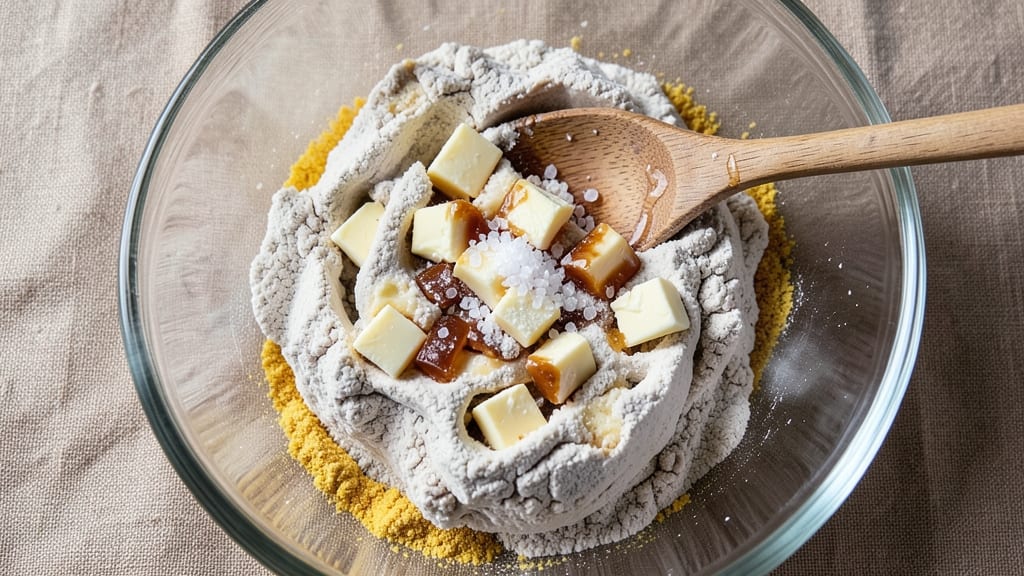
Place the 3 cups all-purpose flour and 0.5 teaspoon diamond crystal kosher salt in a large bowl. Using a pastry cutter or your fingers, work the 1 cup cold, cubed unsalted butter into the flour until the mixture resembles coarse crumbs with pea-sized butter pieces remaining. This technique ensures maximum flakiness by maintaining cold butter pockets that melt during baking.
I press down firmly with my fingers to distribute the butter evenly—don't be tempted to overwork the dough at this stage. The goal is to create a uniform texture where you can still see some butter pieces when you're done. If the mixture starts to look like wet sand, you've added too much water later, so proceed carefully.
Add Sugar and Hydrate with Ice Water
Add the 1 tablespoon granulated sugar to the flour-butter mixture and stir to combine. The sugar balances any acidity in fruit fillings while adding subtle sweetness. Gradually add the 0.5 cup ice water, 1 tablespoon at a time, using a fork to gently mix until the dough just comes together.
Here's the thing—pie dough should be just shy of fully hydrated. When you press the dough between your fingers, it should hold together but still feel slightly dry. Overworking the dough at this stage develops gluten, which leads to tough crusts. If the dough feels too dry after all the water is added, add just 1 teaspoon more ice water—but no more.
Form and Chill the Dough
Gather the dough into two equal discs, flatten slightly, and wrap each tightly in plastic wrap. Chill in the refrigerator for at least 2 hours or up to 48 hours. This resting period is crucial—it allows the gluten to relax and the butter to firm up, preventing shrinking during baking and ensuring those beautiful flaky layers.
I like to flatten the discs slightly before wrapping to create uniform thickness. When properly chilled, the dough should feel firm but still pliable. If you're in a hurry, you can chill for 30 minutes in the freezer, but the texture won't be quite as refined. The longer you chill, the better the final result.
Create the Lattice Topping
On a lightly floured surface, roll one dough disc into a 12-inch circle (about ⅛-inch thick). Transfer to a baking sheet lined with parchment paper. Roll the second disc into another 12-inch circle. Cut one of the circles into 1-inch wide strips, keeping the ends attached to form a cross.
This is where the magic happens. Lay the strips in a lattice pattern over the filled pie crust, alternating directions with each layer. Dust the strips with 2 tablespoons yellow cornmeal before placing them on the pie—this prevents sticking and adds a subtle crunch. I like to start with the cross pieces first, then weave the strips through them to create the classic lattice design.
Optional Egg Wash and Bake
For extra shine, whisk together the 1 whole large egg yolk and 1 tablespoon heavy cream, then brush lightly over the lattice top. This wash creates a golden finish and helps seal in moisture. Bake the pie in a preheated 375°F oven for 45-55 minutes, until the crust is deep golden brown and the filling is bubbling.
I watch the crust closely during the last 10 minutes of baking—this is when it develops that perfect golden color. If the edges brown too quickly, cover them loosely with aluminum foil. The lattice should be crisp but not burnt, and the filling should be hot in the center. Let the pie cool for at least 2 hours before slicing to allow the juices to set properly.
Pro Tips For Making Cook'S Illustrated Pie Dough
- CUT BUTTER IN FULLY: The recipe calls for cold butter, but I learned the hard way—if you rush it, you’ll end up with a tough, mealy dough. Use your fingers or a pastry cutter to work the butter into the flour until it’s the size of peas, not pebbles. No food processor here; you need those cold butter pockets for flaky layers.
- WEIGH YOUR FLOUR: Scooping flour from the bag is a rookie move. This recipe is precise, and volume measurements lie. Use a kitchen scale for the flour—it’s the only way to guarantee consistent results. Trust me, your pie crust will thank you when it doesn’t turn out dense.
- CHILL THE DOUGH TWICE: The recipe says to refrigerate the dough for 1 hour, but I now do it for 2—once after mixing, then again after rolling. Cold dough is easier to handle and less likely to shrink in the pan. Skip this, and you’ll fight with sticky, stubborn dough that refuses to behave.
- USE LESS WATER IF HUMID: If your kitchen feels damp, reduce the ice water by 1-2 tablespoons. The recipe assumes standard humidity, but too much moisture makes the dough sticky and hard to roll. Test it: if the dough clumps when you press it, you’ve added too much.
Flavor customization for these flavors
Sweet vs. Savory
This versatile dough handles both sweet and savory fillings beautifully. For sweet pies, add 1 teaspoon cinnamon or ½ teaspoon nutmeg to the dough for warmth. For savory tarts, replace the sugar with 1 tablespoon dried herbs like thyme or rosemary.
The key is adjusting the fat—use ½ cup lard instead of butter for extra flakiness in savory applications. 🌟
Herb-Infused Variations
Add fresh herbs directly to the dough for aromatic depth. I like 2 tablespoons finely chopped fresh parsley or 1 tablespoon lemon zest for bright citrus notes. For a Mediterranean twist, mix in 1 teaspoon dried oregano and ½ teaspoon garlic powder.
These additions work especially well with savory galettes or quiches. The herbs distribute evenly when mixed with the cold butter.
Spiced Lattice Toppings
Elevate your lattice with spiced butter or sugar. Brush the strips with melted butter mixed with ½ teaspoon cinnamon and 1 tablespoon brown sugar before baking for a caramelized finish.
For a Mexican-inspired touch, sprinkle the lattice with ½ cup crushed chili powder and 1 tablespoon smoked paprika after baking. This works surprisingly well with savory chicken pot pie fillings.
Gluten-Free Adaptation
Substitute 3 cups gluten-free 1:1 baking flour (like Bob's Red Mill) for all-purpose flour, but expect slightly less tender results. Add 1 tablespoon xanthan gum to improve binding. Chill the dough longer—4 hours minimum—since gluten-free doughs lack natural elasticity.
For extra flakiness, replace ½ cup butter with ½ cup shortening (like Crisco). The texture won't be identical, but it's still delicious. ✨
Nutty Crust Additions
Fold ½ cup finely chopped walnuts or pecans into the dough for texture contrast. Toast the nuts first for enhanced flavor. This works especially well with apple or pear pies, where the crunch complements the fruit beautifully.
For a savory twist, use toasted hazelnuts in a spinach and ricotta tart. The nuts should be finely chopped to distribute evenly without affecting the dough's workability.
Seasonal Flavor Boosters
Adjust flavors based on seasons. In fall, add 1 teaspoon pumpkin pie spice to the dough. For summer, mix in 1 tablespoon lemon zest and 1 teaspoon lavender buds (sparingly!) for floral notes.
In winter, a pinch of cardamom or star anise adds warmth. These additions should be balanced—too much can overpower the crust's natural flavor. Always taste the dough before rolling out. 💫
Nutrition facts
Frequently asked questions
Why does this recipe emphasize cold butter?
Cold butter creates those signature flaky layers by melting slowly during baking. When you work with cold, cubed butter, it stays in solid chunks until the oven heat hits, creating steam pockets that separate the dough layers. Pre-sliced sticks melt unevenly, ruining the texture. For best results, freeze butter for 20 minutes if it's too soft.
Can I make this dough ahead of time?
This dough actually benefits from advance prep. Wrap the discs tightly in plastic and refrigerate for up to 48 hours or freeze for 3 months. The longer it rests, the more relaxed the gluten becomes, preventing shrinking. Thaw overnight in the fridge before using—never at room temperature.
What if my lattice strips keep sticking together?
Dust your strips generously with cornmeal or semolina before arranging them, and use a bench scraper instead of your fingers to position them. The cornmeal creates a barrier that prevents sticking. If they still stick, chill the lattice for 15 minutes in the freezer before baking to firm up the dough.
How do I prevent a soggy bottom crust?
For double-crust pies, pre-bake the bottom crust for 15 minutes at 375°F before adding filling. Brush the hot crust with a thin layer of applesauce or egg white to create a moisture barrier. For single-crust pies, sprinkle dried breadcrumbs or crushed cornflakes on the bottom before filling.
Can I use this dough for savory applications?
Yes! For savory tarts or quiches, replace the 1 tablespoon sugar with 1 tablespoon dried herbs (like thyme or rosemary) and consider using ½ cup lard instead of butter for extra flakiness. The same lattice technique works beautifully with savory fillings like spinach and ricotta or chicken pot pie.