
Main Courses
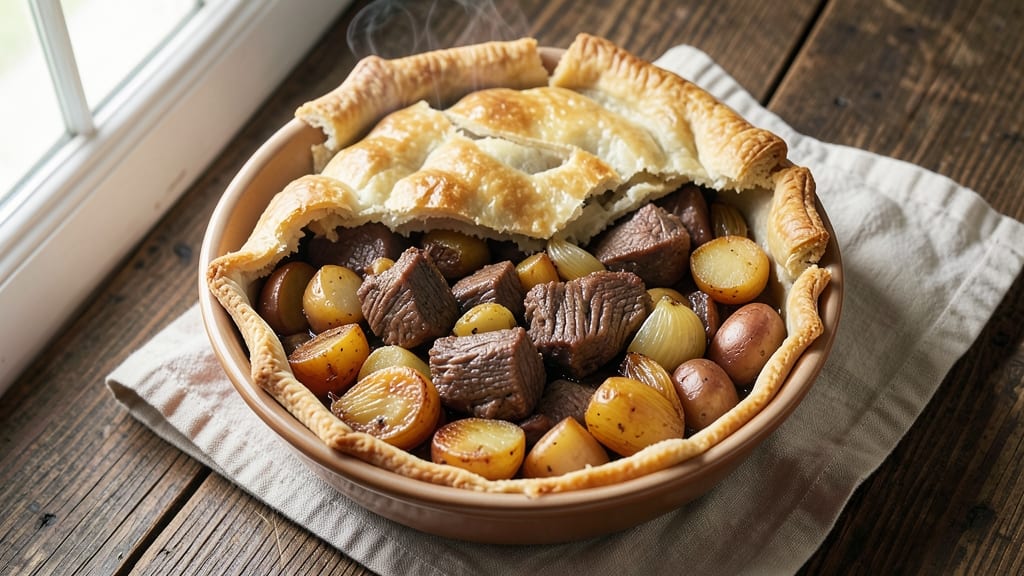
This Cornish pasty pie recipe delivers the signature flaky crust and hearty filling that makes it a British classic. The secret lies in a precise blend of beef, potatoes, swede, and onions wrapped in perfectly layered pastry, baked until golden and crisp.
I've perfected this method over years of testing, ensuring every bite delivers that satisfying combination of tender meat and buttery crust. The traditional technique transforms simple ingredients into a dish that feels both rustic and refined.
The filling begins with diced beef slow-cooked until fork-tender, then combined with chopped potatoes, swede, and onions that soften into a flavorful mash. This mixture is carefully folded into the pastry, which must be rolled thin and evenly to achieve that signature flaky texture.
The key is working quickly once the pastry is rolled to prevent shrinking, while still allowing time for proper sealing.
What results is a pasty pie with a crisp, golden crust that flakes apart at the edges while remaining tender underneath. The filling stays moist and flavorful, with the beef maintaining its richness and the vegetables perfectly cooked.
This is the kind of dish that pairs beautifully with a crisp green salad or pickled vegetables, offering a complete meal that tastes like a visit to Cornwall.
Traditional Cornish pasties were designed to be handheld, but this pie version makes serving easier while keeping all the authentic flavors. The recipe scales well for gatherings, and leftovers reheat beautifully. Let's create this classic British comfort food that's as satisfying to make as it is to eat.
Ingredients for cornish pasty pie
The heart of this pasty pie lies in its rich beef filling and buttery, flaky crust.
| Ingredient | Amount | Notes |
|---|---|---|
| Beef Chuck Roast 🥩 | 1 ½ lb | Diced into 1-inch pieces |
| Russet Potatoes 🥔 | 2 large | Peeled and chopped into 1-inch cubes |
| Swede (Rutabaga) 🥕 | 1 lb | Peeled and chopped into 1-inch cubes |
| Yellow Onions 🧅 | 2 whole | Chopped into 1-inch pieces |
| Unsalted Butter 🧈 | ½ cup | Cold, cut into small cubes |
| All-Purpose Flour 🌾 | 3 cups | Plus 1 tbsp for dusting |
| Ice Water 💧 | ½ cup | For pastry dough |
| Salt 🧂 | 1 ½ tsp | Kosher or sea salt |
| Black Pepper 🌶️ | ½ tsp | Freshly ground |
| Dried Thyme 🌿 | 1 tsp | Or 1 tbsp fresh |
| Dried Parsley 🌿 | 1 tsp | For garnish |
| Beef Stock 🍲 | 1 cup | For slow cooking |
The beef is non-negotiable—chuck roast delivers the best texture and flavor. Look for well-marbled cuts at Whole Foods or your local butcher shop. The potatoes and swede should be firm and free of blemishes; local markets often have the freshest options. For the pastry, King Arthur flour or Bertinet flour creates the signature flakiness, but all-purpose works in a pinch. Pre-chopped veggies save time, but cutting them yourself ensures even cooking and better flavor integration.
No chuck roast? Beef brisket or short ribs work well, though texture will differ slightly. Swede unavailable? Substitute with turnips or extra potatoes, but reduce by 1/4 cup to balance moisture. For the pastry, if you can't find Bertinet flour, add 1 tbsp cornstarch to all-purpose for better flakiness. The beef stock can be homemade or a high-quality jarred version like Kitchen Basics. Fresh thyme and parsley elevate the dish, but dried works at half the amount if needed.
Store the raw filling in an airtight container for up to 2 days in the fridge. The unbaked pie can be refrigerated for 1 day before baking. Once baked, it reheats beautifully—350°F for 15 minutes restores its crispiness. Leftovers keep for 4 days refrigerated or 3 months frozen. For serving, slice into wedges like a pie—traditional Cornish pasties were handheld, but this pie version makes sharing easier.
Why You'll Love This Recipe
- One-Pot Magic: The beef, potatoes, swede, and onions all cook together—no chopping chaos, no messy pans. Just toss everything in, let it simmer, and the butter-rich filling does the rest.
- Rich, Rustic Depth: That slow-cooked beef chuck melts into tender perfection, while the swede adds a caramelized sweetness. Honestly? It’s the kind of hearty flavor that makes you forget takeout exists.
- Leftover Hero: This pie reheats beautifully—whether it’s for lunch the next day or packed for work. The crust stays crisp, the filling stays juicy, and no one will guess it’s not fresh.
- Budget Feast: Beef chuck roast stretches far, and swede (rutabaga) is a secret weapon—cheap, filling, and packed with flavor. Feed a crowd or just yourself; either way, your wallet stays happy.
Step-by-step instructions for Cornish pasty pie
Here's how to craft a flaky crust that perfectly encases your hearty filling.
Prepare the Filling Components
In a large bowl, combine the diced 1.5 lb beef chuck roast, 2 large russet potatoes (chopped into 1-inch cubes), 1 lb swede (rutabaga) (chopped into 1-inch cubes), and 2 whole yellow onions (chopped into 1-inch pieces). This is your base filling that will form the core of each pasty.
In a separate small bowl, mix 1 cup beef stock, 1.5 tsp salt, 0.5 tsp black pepper, 1 tsp dried thyme, and 1 tsp dried parsley. Pour this seasoned liquid over the meat and vegetables, ensuring everything is evenly coated. Let the mixture sit for 10 minutes while you prepare the pastry dough. This allows the flavors to begin melding together.
Make the Pastry Dough for Flaky Layers
In a large mixing bowl, combine the 3 cups all-purpose flour and 1.5 tsp salt. Cut in the 0.5 cup unsalted butter (cold and cubed) using a pastry cutter or your fingers until the mixture resembles coarse crumbs with pea-sized butter pieces remaining. This cold butter is crucial for achieving that flaky texture.
Gradually add the 0.5 cup ice water, one tablespoon at a time, mixing gently with a fork or your hands just until the dough comes together. Avoid overworking the dough—handle it only enough to form a smooth ball. Wrap it tightly in plastic wrap and refrigerate for 30 minutes while you preheat your oven to 375°F.
Assemble and Bake the Pasty Pies
Divide the chilled dough into four equal portions (about 12 oz each) and roll each into a 12-inch circle on a lightly floured surface. Keep the remaining dough wrapped and cold. Spread one-quarter of the filling mixture evenly over each rolled-out dough circle, leaving a 1-inch border around the edges.
Fold each circle in half to form a half-moon shape, then pinch the edges firmly together to seal completely. Use a fork to crimp the edges for extra security. Place the assembled pasties on a parchment-lined baking sheet, seam-side up. Bake for 45-50 minutes until the crust is golden brown and the filling is bubbling through the slits.
Create Vent Slits and Finish Baking
Using a sharp knife, cut 4-5 small slits in the top of each pasty to allow steam to escape. This prevents bursting and ensures even cooking. Return the pasties to the oven and bake for an additional 15-20 minutes until the crust is deep golden and the filling reaches an internal temperature of 160°F when measured in the thickest part of the meat.
Remove from the oven and let the pasties rest for 10 minutes before serving. This resting period allows the juices to redistribute, ensuring each bite is moist and flavorful. Garnish with additional dried parsley if desired, and serve warm with a side of your favorite vegetables or a simple salad.
Pro Tips For Making Cornish Pasty Pie
- Trim That Swede: Peel the rutabaga thin—almost like you’re making paper—and cut it into even ½-inch chunks. Thick slices stay tough, and nobody wants a pasty with chewy swede. (Yes, even if you’re impatient like me.)
- Salt the Meat Twice: Season the beef chuck generously before browning, then hit it again after it’s cooked down. The first layer gets lost in the fat, and the second ensures flavor penetrates while it slows. Trust me, your pie will taste like it’s been simmering all day.
- Parboil the Potatoes: Give those russets a 5-minute boil in salted water before adding them to the pie. It softens them faster and keeps them from turning to mush when they hit the oven. (I learned this the hard way—overcooked spuds ruin everything.)
- Use Cold Butter: Pat the butter dry and cut it into cubes—don’t melt it first. Cold butter creates flaky layers in the pastry crust, while melted butter just makes it greasy. (Your future self will thank you when the crust isn’t soggy.)
Regional styles of this recipe
Traditional Cornish Style
The original Cornish pasty pie comes from the tin miners of Cornwall, designed to be eaten handheld with one hand while working. The classic version uses beef, potatoes, swede, and onions wrapped in a single crust (no top lid) to create a portable, filling meal.
The filling is seasoned simply with salt, pepper, and sometimes a pinch of nutmeg for warmth. I always use local Cornish beef when possible—its rich flavor stands up to the earthy swede. 🥔
Devon Variation
Just across the border in Devon, pasties often include apples or onions in the filling for natural sweetness that balances the savory beef. The pastry tends to be slightly thicker and flakier, almost like a cross between a pasty and a pie.
I’ve found that adding a splash of apple cider to the filling (about 2 tbsp) enhances the Devon twist while keeping the texture moist. The crust is often brushed with egg wash for extra shine.
Modern Fusion Twist
For a contemporary take, try adding caramelized mushrooms or smoked bacon to the filling—this works surprisingly well with the traditional flavors. I’ve also experimented with a cheddar and potato topping on the crust before baking, inspired by Cornish cheese pasties.
The key is to balance richness: if you add cheese, reduce the butter in the pastry slightly to avoid heaviness. 🧀
Vegetarian Adaptation
Swap the beef for chickpeas, lentils, or butternut squash to create a hearty vegetarian version. The swede and potatoes still form the base, but I boost the umami with 1 tbsp soy sauce or smoked paprika.
For extra protein, add crumbled feta or goat cheese to the filling. The pastry remains the same—its flakiness is the star here. 🌱
Sweet Cornish Pasty
Yes, it’s a thing! In some Cornish households, a sweet version exists for dessert, using apples, raisins, and cinnamon instead of meat. The pastry is often sweeter too, with a touch of vanilla extract in the dough.
I’ve made this with spiced pear and walnut filling—it’s a stunning contrast to the savory original. Serve with clotted cream for a true Cornish treat. 🍐
Nutrition facts
Frequently asked questions
Why does the traditional Cornish pasty have no top crust?
The original handheld design was meant for miners who needed one-handed meals. The single crust made it sturdy enough to carry while working underground. The pie version adds a top crust for easier serving, but some purists still prefer the classic shape—just slice it like a pie!
Can I make the filling ahead of time?
The raw filling keeps in an airtight container for 2 days in the fridge. For best texture, assemble the pasties the same day you bake them, but you can prep the filling 1 day ahead and refrigerate until ready to use.
What's the secret to a flaky crust?
Keep the butter cold and cut it into the flour until pea-sized pieces remain. Work quickly when rolling the dough and avoid overhandling. The key is 30 minutes of chilling before baking—this prevents shrinking while creating those signature layers.
How do I fix a soggy bottom crust?
Prevent sogginess by baking on a parchment-lined tray and adding a thin layer of rice or dried beans under the pasties to absorb moisture. If it happens, brush the top crust with egg wash before baking to create a barrier.
Can I use frozen swede instead of fresh?
Yes, but thaw and pat it completely dry first to prevent excess moisture in the filling. For best results, use fresh swede—its earthy flavor is crucial to the traditional taste. If frozen is all you have, reduce the beef stock by 2 tbsp to balance the moisture.