
Desserts
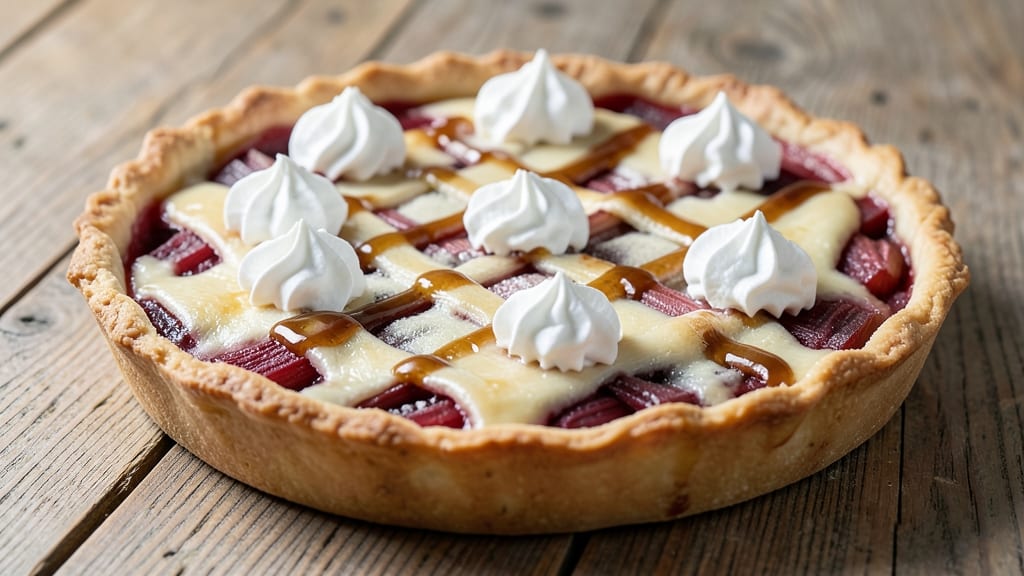
This crustless rhubarb custard pie delivers all the tangy tartness of classic rhubarb pie without the fuss of a crust—just a silky, velvety custard filling that transforms tart rhubarb into something irresistibly smooth.
After years of perfecting this recipe, I’ve eliminated the risk of a soggy bottom while keeping every bite packed with bright rhubarb flavor and creamy custard. The secret lies in the baking technique and a few simple ingredient adjustments that make all the difference.
The beauty of this recipe is its simplicity: no pie crust means less prep, less cleanup, and no worries about a crumbly base. Instead, we rely on a thickened custard that sets beautifully in the oven, creating a texture that’s both rich and light.
The rhubarb, simmered until tender, blends seamlessly into the custard, balancing its natural tartness with just enough sweetness. This pie is vegetarian, foolproof, and perfect for any occasion—whether you're serving it at a holiday gathering or simply treating yourself to a slice of homemade goodness.
What you’ll end up with is a pie that’s visually stunning with its golden custard topping and vibrant rhubarb swirls beneath, but truly remarkable for its texture—smooth, creamy, and perfectly set.
The custard holds its shape without being dense, and the rhubarb adds just the right amount of bright, tangy contrast. It’s the kind of dessert that tastes like it took hours to make, even though it comes together in under an hour.
Trust me, once you try this, crustless rhubarb pie will become a regular in your dessert rotation.
Serve it warm with a scoop of vanilla ice cream or enjoy it at room temperature for a lighter, more refreshing treat. The custard’s silky texture pairs beautifully with the crunch of ice cream, making every bite feel like a little indulgence.
Let’s get started on creating this showstopping dessert that’s sure to impress.
Ingredients for crustless rhubarb custard pie
Six simple ingredients transform tart rhubarb into velvety, golden custard perfection—no crust needed.
| Ingredient | Amount | Notes |
|---|---|---|
| Fresh Rhubarb Stems 🍓 | 2 ½ lbs | Trimmed and chopped into 1-inch pieces |
| Granulated Sugar 🍚 | 1 ½ cups | White or light brown preferred |
| Large Eggs 🥚 | 4 whole | Room temperature for best blending |
| Heavy Whipping Cream 🥛 | 1 ½ cups | Full-fat for creaminess |
| All-Purpose Flour 🌾 | ½ cup | Sifted for smooth custard |
| Unsalted Butter 🧈 | ½ cup | Cold, cubed for texture |
| Vanilla Extract 🌿 | 1 tbsp | Pure, high-quality preferred |
| Lemon Juice 🍋 | 1 tbsp | Freshly squeezed |
| Salt 🧂 | ¼ tsp | Fine sea salt |
| Vanilla Ice Cream 🍦 | 1 ½ cups | For serving (optional) |
Rhubarb is the star here, so pick stalks that are bright red and crisp. Avoid any with slimy spots or wilted ends—those mean it's past its prime. I always grab mine from local farmers markets in late spring when they're at their peak, but the grocery store works too. The sugar amount can be adjusted based on how tart your rhubarb is—taste the cooked rhubarb first. If it's extra tart, add another 2 tbsp. The eggs need to be room temperature so they blend smoothly into the custard—take them out 30 minutes before mixing.
No heavy cream? Full-fat Greek yogurt works in a pinch, though it'll be slightly tangier. The butter adds richness that can't be skipped—butterflakes melt faster if you're in a hurry. Vanilla extract matters here: imitation will taste artificial. For the lemon juice, fresh is best, but bottled works if you're short on time. The flour is just a thickener—don't skip it, or you'll end up with runny custard. If you're making this ahead, prep the rhubarb mixture first—it keeps for 2 days in the fridge before baking.
This pie tastes even better the next day once the custard sets completely. Store leftovers covered at room temperature for 2 days or refrigerate for 4 days. The custard thickens as it cools, so it's perfect for slicing and serving cold. For a restaurant-worthy presentation, dust with powdered sugar right before serving. I always make an extra batch—it disappears faster than you'd think, especially when paired with that first scoop of vanilla ice cream.
Why You'll Love This Recipe
- No-Fuss Assembly: I swear by this recipe when I’m too tired to roll dough—just chop rhubarb, toss it in a bowl with sugar, and pour the custard right over. The flour-thickened cream makes it silky without fuss, and honestly? The crustless version lets the rhubarb’s tartness shine without competition.
- Tart-Sweet Magic: That balance of bright rhubarb and velvety custard? It’s like summer in a dish. The heavy cream softens the acidity just enough to make it crave-worthy, and the eggs give it that rich, almost pudding-like texture that pairs perfectly with vanilla ice cream.
- Weekend Brunch Star: Between us, this is my go-to for lazy Sunday mornings—serve it warm with whipped cream, and suddenly you’ve got a showstopper without the effort. It’s also the only pie I’ll bake when company drops by unexpectedly (because let’s be real, most of us don’t have time for pie crust).
- Leftovers That Win: The custard sets up like a dream, so slices stay intact for days—perfect for quick breakfasts or packed lunches. And since it’s just eggs, cream, and flour (plus rhubarb), it’s cheaper than store-bought pies while still tasting like you slaved over it. (Spoiler: You didn’t.)
Step-by-step instructions for crustless rhubarb custard pie
Here's how to create a dreamy tart filling with a velvety custard layer—no crust needed.
Cook the Rhubarb Filling Until Soft and Jammy
In a large saucepan, combine the 2.5 lbs of chopped fresh rhubarb stems with the 1.5 cups of granulated sugar. Stir well to distribute the sugar evenly—this helps balance the tartness. Bring the mixture to a gentle boil over medium heat, then immediately reduce to a simmer.
Cook uncovered for 15-20 minutes, stirring occasionally, until the rhubarb has softened and broken down into a thick, jammy consistency. You'll know it's ready when the mixture coats the back of a spoon and releases easily from the pan. The color should deepen to a rich ruby hue, and you'll smell that signature rhubarb aroma. Let it cool completely before proceeding—this prevents the custard from curdling later.
Whisk Together the Custard Base
While the rhubarb cools, place the 4 whole large eggs in a large mixing bowl. Add the 1.5 cups of heavy whipping cream, 0.5 cup of all-purpose flour, 0.5 cup of cold cubed unsalted butter, 1 tablespoon of vanilla extract, 1 tablespoon of lemon juice, and 0.25 teaspoon of salt. Whisk vigorously for 2-3 minutes until the mixture is completely smooth and pale yellow in color.
Here's the thing—this step is crucial for a silky texture. I like to use a hand mixer for this part because it ensures the butter is fully incorporated without overmixing. The lemon juice brightens the flavor, while the cold butter adds richness that won't melt too quickly during baking. If you see any butter chunks remaining, whisk a bit longer until fully emulsified.
Combine Fillings and Bake Until Set
Once the rhubarb has cooled to room temperature, gently fold it into the egg mixture using a rubber spatula. Be careful not to overmix—just combine until evenly distributed. Pour the mixture into a greased 9-inch pie dish or baking dish. Smooth the top with a spatula for an even surface.
Bake at 350°F for 45-55 minutes, until the center is just set but still slightly wobbly in the middle. This is important—the custard should be fully cooked but not completely firm. You'll see the edges puff slightly and the top develop a delicate golden sheen. If it browns too quickly, tent loosely with foil after 30 minutes.
Chill and Serve with Vanilla Ice Cream
Remove the pie from the oven and let it cool at room temperature for 10 minutes. Then transfer it to the refrigerator and chill for at least 4 hours, or preferably overnight. This step is what transforms it from good to extraordinary—the flavors meld and the texture becomes perfectly set.
When ready to serve, scoop 1.5 cups of vanilla ice cream alongside each slice. The contrast between the tart rhubarb, creamy custard, and cool ice cream is pure magic. For an extra touch, dust with powdered sugar or a sprinkle of cinnamon before serving. The pie will hold its shape beautifully when sliced, with a smooth, custardy texture that's simply irresistible.
Pro Tips For Making Crustless Rhubarb Custard Pie
- Trim Rhubarb Like a Pro: Cut the stems into 1-inch chunks—no smaller, or the pie turns to mush when baking. I learned this the hard way after ending up with a watery filling that needed extra flour to thicken. (And yes, even if you're impatient like me, resist the urge to chop finer.)
- Pre-Cook Rhubarb 10 Minutes: Simmer the rhubarb with sugar uncovered for 10 minutes before mixing in the custard—this breaks down the tartness and releases juices, so the final pie isn’t cloyingly sweet or underflavored. Skip this, and you’ll taste raw rhubarb bites.
- Whisk Eggs Cold: Whisk the eggs straight from the fridge with the cream and flour—warm eggs scramble when they hit the hot rhubarb, and suddenly you’re fixing curdled custard instead of pie. I was skeptical until I tried it; now it’s non-negotiable.
- Bake Until Jiggly, Not Set: The custard should look just set at the edges but still wobble slightly in the center—overbaking turns it dry and rubbery. If yours looks fully firm, it’s too late; pull it when the middle still jiggles like a wobbly Jell-O. (Your future self will thank you.)
Common mistakes when making this recipe
Overmixing the Custard
This is the #1 mistake that turns silky custard into tough, rubbery mess. When you whisk the eggs, cream, and butter, stop as soon as everything is combined—no need to overwork it. I've seen people whip for 5+ minutes, and that's when the custard starts breaking.
The goal is to blend until smooth, not fluffy. If you're unsure, do a quick taste test: the mixture should be pale yellow and slightly thick, like heavy pudding. 💫
Skipping the Cooling Step
Hot rhubarb straight from the pan will curdle your custard faster than you can say "disaster." Always let the rhubarb cool completely to room temperature before folding it into the egg mixture. I've rushed this step and ended up with a lumpy, grainy texture that ruined the whole pie.
If you're in a hurry, spread the cooked rhubarb on a baking sheet to cool faster, but don't skip this critical step.
Incorrect Baking Temperature
Baking at 375°F instead of 350°F will cause the custard to set too quickly on top while staying undercooked inside. The result? A pie that looks perfect on the outside but is still wobbly in the center.
Use an oven thermometer to confirm your oven's accuracy—many ovens run 25°F hotter than set. If your pie browns too fast, tent it with foil after 30 minutes to prevent over-browning while maintaining even cooking.
Underbaking the Center
That slightly jiggly center when done is your friend—it means the custard is perfectly set but still creamy. If you bake until the center is completely firm, you'll end up with a dense, dry texture.
The custard should pull away from the edges but still have a slight wobble when gently shaken. I've learned this the hard way: a fully set center means the pie loses its silky quality and becomes more like a firm pudding. 🌡️
Using Cold Eggs
Cold eggs from the fridge won't blend smoothly and can create lumps in your custard. Always use room-temperature eggs for this recipe. If you forget, place them in warm water for 5 minutes to bring them up to temperature.
Cold eggs also affect the custard's ability to thicken properly, leading to a runny filling. I keep my eggs on the counter for 30 minutes before starting this recipe as a habit now.
Not Greasing the Dish Properly
A poorly greased pie dish means your custard will stick and tear when slicing. Use 1 tablespoon of butter or 1 teaspoon of oil to coat the entire dish thoroughly, then sprinkle with flour and tap out the excess.
I like to use a paper towel to wipe any remaining flour—this gives me a clean surface while preventing sticking. If you skip this, you'll end up with custard clinging to the sides and a messy presentation. 🔥
Nutrition facts
Frequently asked questions
Why does this pie need to chill before serving?
Chilling for at least 4 hours (or overnight) lets the custard fully set into its perfect silky texture. The flavors also meld beautifully during this time, balancing the tart rhubarb with the creamy filling. Skipping this step can leave your pie too soft or runny when sliced.
Can I make this pie ahead of time?
This pie actually tastes better the next day as the custard firms up. Assemble it the night before and refrigerate uncovered for 6-8 hours before serving. The texture becomes even more luxurious after resting.
What's the best way to adjust sweetness for extra tart rhubarb?
Start with the full 1.5 cups of sugar, then taste the cooked rhubarb before mixing. If it's extremely tart, add another 2-3 tablespoons of sugar to the custard mixture. Remember, you can always add more sweetness but can't remove excess sugar once mixed.
Is this recipe gluten-free?
Not quite! The all-purpose flour is essential for thickening the custard. For a gluten-free version, substitute with 1/2 cup gluten-free flour blend> plus 1 tablespoon cornstarch, but expect slightly different texture results.
How do I prevent the top from browning too quickly?
If your pie browns before setting, tent it loosely with aluminum foil after 30 minutes of baking. This maintains even cooking while protecting the delicate custard surface. The ideal doneness is when edges are set but the center still jiggles slightly.