
Main Courses
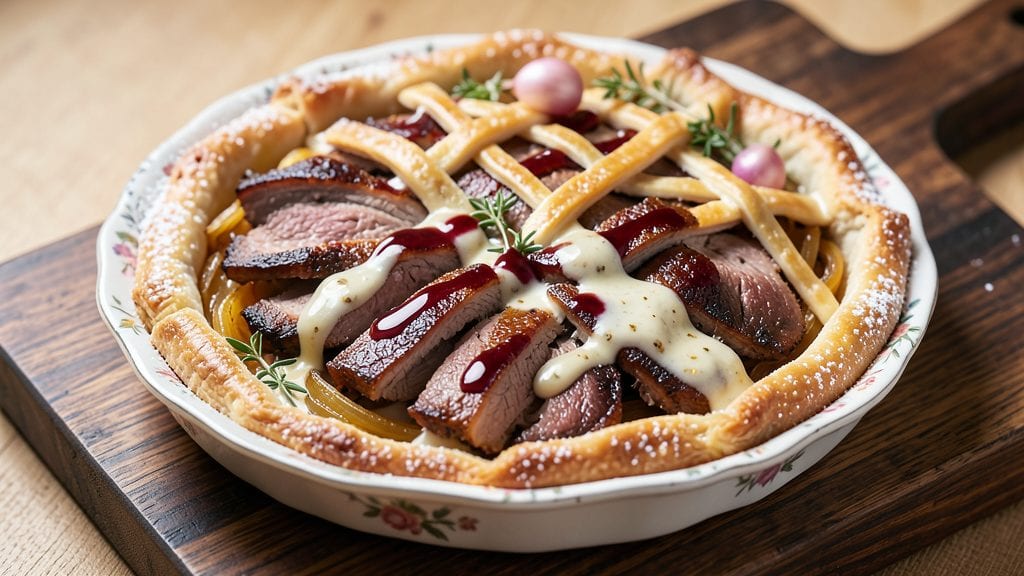
This duck pie recipe delivers the perfect balance of rich, savory duck meat encased in layers of flaky, golden crust that shatters with every bite. After years of testing variations, I’ve perfected a method that transforms simple ingredients into a showstopping centerpiece—ideal for holiday feasts or special dinners.
The secret lies in slow-cooking the duck until tender, then layering it with a velvety pastry cream and encasing it in a buttery, lattice-topped crust.
The process begins with brining the duck to ensure moist, flavorful meat, followed by a precise roasting technique that renders fat while keeping the flesh juicy. Once cooled, the duck is carefully shredded and layered with a creamy pastry filling that adds a luxurious texture.
The crust, rolled out and folded into elegant layers, bakes to a golden, crisp finish that contrasts beautifully with the tender filling inside.
What you’ll end up with is a pie that looks impressive enough for a restaurant menu but is entirely achievable at home. The aroma alone—warm duck, caramelized onions, and buttery pastry—will have everyone gathering around the table.
Served with a crisp green salad or roasted root vegetables, this pie becomes the star of any meal.
For those who prefer flexibility, this recipe can be adapted with different fillings or crust styles, but the classic version remains unmatched. Let’s get started on creating your perfect duck pie—one that will leave your guests asking for seconds.
Ingredients for duck pie
Sixteen ingredients transform into a restaurant-worthy duck pie with layers of flaky crust and tender duck.
| Ingredient | Amount | Notes |
|---|---|---|
| Duck Breast 🦆 | 2 lbs | Skin-on, bone-in preferred |
| Yellow Onions 🧅 | 2 whole | Medium size, thinly sliced |
| All-Purpose Flour 🌾 | 3 cups | For pastry crust |
| Unsalted Butter 🧈 | 1 cup | Cold, cubed for crust |
| Heavy Cream 🥛 | 2 cups | Full-fat for richness |
| Granulated Sugar 🍚 | ½ cup | For pastry cream |
| Egg Yolks 🥚 | 4 whole | Fresh, room temperature |
| Vanilla Extract 🍯 | 1 tsp | Pure, high-quality |
| Salt 🧂 | 1 ½ tsp | Diamond Crystal preferred |
| Ground Black Pepper 🌶️ | ½ tsp | Freshly ground |
| Fresh Thyme 🌿 | ¼ cup | Leaves only, chopped |
| Garlic Cloves 🧄 | 4 cloves | Peeled, minced |
| Apple Cider Vinegar 🍎 | ½ cup | For brining duck |
| Kosher Salt 🧂 | ½ cup | For brining |
| Cornstarch 🍚 | 1 tbsp | For thickening pastry cream |
The duck breast is the foundation—look for skin-on, bone-in cuts from a quality butcher like Whole Foods Market or D'Artagnan. The skin should be thick and unbroken, with good fat marbling. For the pastry, all-purpose flour with a 12% protein content yields the best flakiness. Chill your butter before cutting it into cubes; this ensures proper layering in the crust. The onions should be yellow, not red, as they caramelize better without turning bitter. If you're short on time, pre-sliced onions from Trader Joe's work well—they're consistent and save chopping effort.
No duck breast? Chicken thighs make a suitable substitute, though the flavor will differ slightly. The pastry cream can be made with half-and-half if heavy cream isn't available, though the texture will be slightly less rich. For the brining, apple cider vinegar can be swapped for white vinegar, but the flavor profile will shift. If fresh thyme isn't accessible, dried thyme at one-third the amount will suffice. The cornstarch is optional but recommended for a smoother pastry cream—arrowroot powder works equally well. For the crust, if you lack a rolling pin, use a wine bottle wrapped in plastic for even rolling.
Duck breasts should be brined overnight and kept airtight in the fridge. The pastry dough can be prepped 2 days in advance and stored wrapped in plastic. Once assembled, the pie keeps 3 days refrigerated or 2 months frozen. For reheating, bake at 350°F for 20-25 minutes until the crust is golden. The filling reheats beautifully, so plan ahead for leftovers—this pie is always better the second time around.
Why You'll Love This Recipe
- No-Fuss Ingredients: The pantry staples here won’t make you panic. You already have flour, butter, and cream—just add duck (which freezes like a dream) and onions. Honestly, the hardest part is deciding whether to use fresh or frozen duck, and that’s a good problem to have.
- Rich Without Effort: That crispy duck skin and velvety cream sauce happen almost by accident. Sear the duck until golden, toss in onions, thicken with flour, then blanket it in cream—no fancy plating, just pure satisfaction. Between us, this tastes like a restaurant dish with half the work.
- Leftover Goldmine: Make it once, eat it twice. The pie reheats beautifully—just warm the slices until the edges are golden again. I’ll be real: my lunchbox gets stuffed with these leftovers for days, and no one questions why I’m bringing duck pie to work.
- Weeknight to Holiday: This recipe doesn’t care what’s on your calendar. Weeknight dinner? Check. Thanksgiving side? Even better. The heavy cream and onions make it feel indulgent, but the duck keeps it grounded—no one will guess it’s not a 3-hour labor of love.
Step-by-step instructions for duck pie
Here's the method for crafting a pie with rich, flaky layers and perfectly tender duck filling.
Prepare the Duck Filling
Begin by brining the 2 lbs duck breast in a mixture of 0.5 cup apple cider vinegar, 0.5 cup kosher salt, and 4 cups cold water for 2 hours. This ensures the meat stays moist and develops a deep flavor. After brining, rinse thoroughly and pat dry with paper towels.
In a large skillet, sear the duck breast skin-side down over medium heat for 8-10 minutes until the skin is crispy and golden brown. Flip and cook for an additional 6-8 minutes until the internal temperature reaches 145°F. Remove from heat, cover with foil, and let rest for 15 minutes before slicing thinly against the grain.
In the same skillet, add 2 whole yellow onions and 4 cloves garlic cloves, cooking until softened and golden. Stir in 0.25 cup fresh thyme and 0.5 tsp ground black pepper for added depth of flavor. Set aside to cool before combining with the sliced duck.
Create the Pastry Crust
Cut the 1 cup unsalted butter into small cubes and place in the freezer for 15 minutes to firm up. In a large bowl, combine the 3 cups all-purpose flour and 1.5 tsp salt. Add the chilled butter and use a pastry cutter or your fingers to work it into the flour until the mixture resembles coarse crumbs with pea-sized butter pieces remaining.
Gradually add ½ cup ice water, one tablespoon at a time, mixing gently with a fork until the dough just comes together. Avoid overworking the dough, as this can lead to a tough crust. Shape the dough into a disk, wrap in plastic, and refrigerate for at least 1 hour to firm up.
Roll out the chilled dough on a lightly floured surface to fit a 9-inch pie dish, leaving a ½-inch overhang. Transfer to the dish and trim the edges, creating a ½-inch border. Fold the overhang under to create a neat rim. Chill the crust for an additional 20 minutes before baking.
Assemble and Bake the Pie
Preheat your oven to 375°F. Line the chilled pie crust with a round of parchment paper and fill it with pie weights or dried beans. Bake for 15 minutes, then remove the weights and bake for an additional 5 minutes to create a golden, flaky base. Remove the parchment and weights, then reduce the heat to 350°F.
In a saucepan, combine the seared duck, onions, and thyme mixture with 2 cups heavy cream. Simmer gently for 10 minutes until the cream slightly thickens. Stir in 4 whole egg yolks and 0.5 cup granulated sugar, cooking for an additional 2-3 minutes until the mixture reaches 160°F. Remove from heat and stir in 1 tsp vanilla extract. Pour the filling into the pre-baked crust.
Roll out the remaining dough to create a top crust, leaving a ½-inch border. Cut a few slits in the center to allow steam to escape. Place the top crust over the filling, seal the edges by crimping with a fork, and brush the top with a beaten egg for a golden finish. Bake for 30-35 minutes until the crust is golden brown and the filling is set.
Finish and Serve
Remove the pie from the oven and let it cool for 1 hour before slicing. The filling should be rich and creamy, with the duck remaining tender and flavorful. Serve warm or at room temperature, accompanied by a simple green salad or roasted vegetables.
This pie delivers the perfect balance of flaky, buttery crust and rich, savory duck filling. The key to success lies in the careful preparation of each component and ensuring the filling is properly tempered with the egg yolks to avoid curdling.
Pro Tips For Making Duck Pie
- SEAR DUCK LOW AND SLOW: Duck breast has a habit of overcooking if you blast it on high heat. Start with medium-high, then dial it down to medium once it releases—this gives you that perfect medium-rare center without drying it out. I used to rush this and ended up with tough meat; patience here makes all the difference.
- SLICE ONIONS THIN AND EVEN: Uneven onion slices mean some parts cook into mush while others stay raw. Take the time to cut them uniformly—about 1/8-inch thick—and toss them in a pinch of salt before cooking. This keeps them tender but still holds shape in the pie.
- WHISK FLOUR INTO CREAM: Dumping flour directly into cold cream makes lumps that ruin the sauce. Whisk the flour into a small amount of warm butter first, then slowly mix in the cream while stirring constantly. This ensures a silky, lump-free filling—no one wants to bite into a gritty texture.
- REST DUCK BEFORE SLICING: Slicing duck breast right after cooking turns it into a sad, stringy mess. Let it rest 5-10 minutes under foil before slicing—this lets the juices redistribute. Trust me, your pie will stay juicy and elegant, not greasy and falling apart.
Dietary considerations for this recipe
Gluten-Free Crust
Replace the all-purpose flour with a 1:1 gluten-free flour blend like King Arthur Measure for Measure or Bob's Red Mill 1-to-1. Add ½ tsp xanthan gum to improve binding, and reduce ice water to ¼ cup—gluten-free doughs absorb less moisture.
Chill the dough for 2 extra hours to prevent shrinking during baking. 🥖
Dairy-Free Adaptations
For a dairy-free version, swap the butter with vegan butter (like Miyoko's) and use coconut cream instead of heavy cream in the filling. The pastry cream will have a slightly tropical note, but the texture remains rich.
Ensure your egg yolks are fresh—older eggs curdle more easily when cooked with dairy substitutes. 🥥
Lower-Carb Options
Reduce the pastry cream's sugar to ¼ cup and use monk fruit sweetener for a keto-friendly twist. Replace half the flour in the crust with almond flour (about 1.5 cups)—this cuts carbs while adding nutty depth. Serve with a side of cauliflower mash to keep the meal low-carb. 🥦
Nut-Free Alternatives
If nut allergies are a concern, stick to the original crust recipe but use sunflower seed butter (like SunButter) instead of butter for binding. For the filling, ensure all spices (like ground pepper) are certified nut-free. Always check labels—many commercial thyme blends contain trace nuts. 🌻
Vegetarian Substitutes
Replace the duck with mushroom duxelles—finely chopped cremini and shiitake mushrooms sautéed with thyme and garlic. Use the same pastry cream recipe, but reduce sugar to ⅓ cup to balance the earthy flavors. The texture will be heartier, but the pie’s structure remains intact. 🍄
Allergen Cross-Contamination
When handling multiple allergens (like nuts and dairy), use separate utensils and bowls for each component. Clean surfaces thoroughly with hot, soapy water between prep steps. For shared kitchens, consider labeling your ingredients clearly—this prevents accidental exposure. Always verify ingredient labels for hidden allergens like soy or sesame. 🧼
Nutrition facts
Frequently asked questions
Can I make this duck pie ahead of time?
The pie actually tastes even better the next day! Assemble and bake it up to 3 days ahead, then refrigerate. Reheat at 350°F for 20-25 minutes until the crust is golden and the filling is warm throughout. For longer storage, freeze the fully baked pie (without reheating) for up to 2 months—thaw overnight in the fridge before reheating.
Why does my crust turn out tough instead of flaky?
Overworking the dough or using warm butter are the most common culprits. Keep everything chilled (including your hands!) and work quickly. Cut the butter into small cubes and handle the dough minimally—just until it comes together. Also, avoid adding extra water if the dough seems dry; let it rest longer instead.
What's the best way to reheat leftovers?
Slice the pie and reheat individual portions in a 350°F oven for 10-12 minutes until warm. For microwave reheating, cover with a damp paper towel and heat in 30-second intervals until warmed through. The crust stays crispier when reheated gently in the oven.
Can I substitute chicken for duck in this recipe?
Yes, but expect a different flavor profile. Use 2 lbs boneless, skinless chicken thighs instead, and reduce the cooking time to 12-15 minutes per side. Skip the brining step and season with 1 tsp smoked paprika to enhance the savory notes. The pastry cream and crust remain the same, but the filling will be lighter in texture.
How do I prevent the filling from curdling?
Temper the egg yolks properly by whisking them into the warm (not boiling) cream mixture gradually. Never add cold yolks directly to hot liquid. Also, remove the filling from heat as soon as it reaches 160°F—overcooking causes curdling. If it does curdle slightly, strain it before pouring into the crust for a smoother texture.