
Desserts
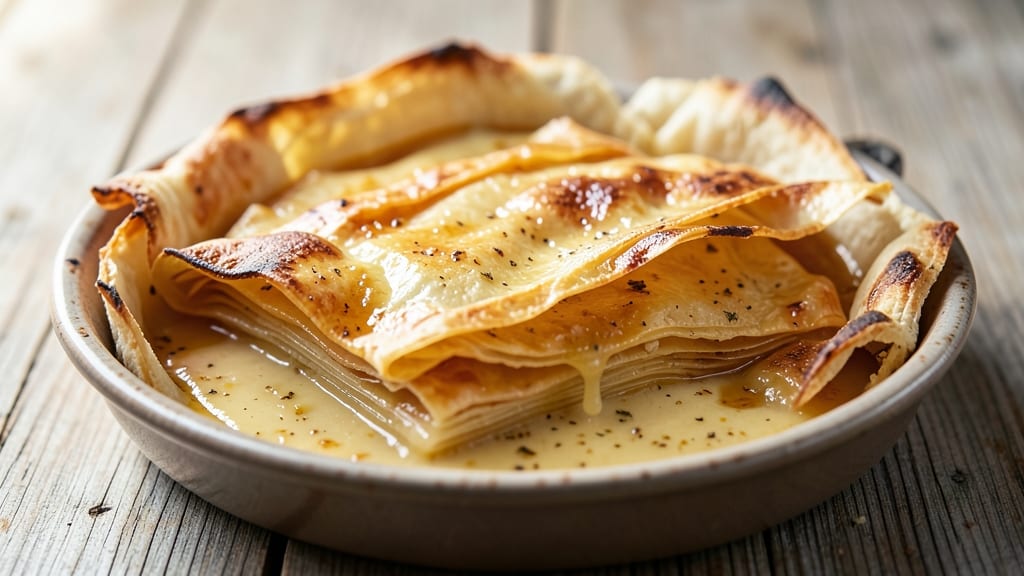
This filo pie recipe delivers the perfect balance of crispy lattice layers and a gooey vanilla filling that melts in your mouth. The secret lies in layering thin, flaky filo sheets with precision—each one brushed with butter for that signature golden-brown crust.
I’ve perfected this technique over years of baking, ensuring every slice has that satisfying crunch and rich, custardy center.
The process starts with a simple vanilla custard filling that thickens just enough to hold its shape while staying creamy. Layering the filo requires patience, but the result—a crispy crown that shatters with each bite—is worth every minute.
Baking at the right temperature ensures the lattice stays golden and the filling stays perfectly set, never dry or undercooked.
What you’ll end up with is a dessert that looks like it came straight from a bakery, with layers of buttery filo forming an intricate crown over a smooth, vanilla-infused custard.
The aroma of warm filo and vanilla fills the kitchen, making it impossible to resist cutting into the warm pie. This is the kind of dessert that impresses guests and satisfies cravings alike.
Serve it warm with a drizzle of honey or a dusting of powdered sugar for an extra touch of elegance. The lattice design isn’t just decorative—it’s functional, trapping steam and keeping the filling moist.
Whether you’re baking for a special occasion or a cozy night in, this recipe delivers restaurant-quality results at home.
Ingredients for filo pie
Twelve filo sheets, a cup of butter, and vanilla that sings—this is all you need for bakery-quality filo pie.
| Ingredient | Amount | Notes |
|---|---|---|
| Filo Pastry Sheets 🍞 | 12 sheets | Thawed if frozen, room temperature |
| Unsalted Butter 🧈 | ¾ cup | Melted, full-fat preferred |
| Granulated Sugar 🍚 | 1 ½ cups | Superfine for smoother texture |
| All-Purpose Flour 🌾 | ½ cup | Sifted, for custard thickness |
| Whole Milk 🥛 | 2 cups | Full-fat for creaminess |
| Large Egg Yolks 🥚 | 4 whole | Pasture-raised if available |
| Pure Vanilla Extract 🍯 | 2 tsp | Bourbon or Madagascar preferred |
| Salt 🧂 | ¼ tsp | Fine sea salt |
| Powdered Sugar 🍚 | ¼ cup | For dusting, plus extra |
| Honey 🍯 | ¼ cup | For drizzling, optional |
| Lemon Juice 🍋 | 1 tbsp | Freshly squeezed |
| Cornstarch 🌾 | 1 tbsp | For extra thickening |
The filo sheets are your golden ticket. Frozen is fine—just thaw them between damp paper towels for 30 minutes. Filoz or Marti are my go-tos, but any brand works if they're thin and crisp. The butter? Full-fat, unsalted—nothing else gives that rich, golden crust. Melt it gently, don't burn it. For the custard, whole milk and egg yolks are non-negotiable—half-and-half or low-fat milk will make the filling watery. If you're using store-bought vanilla, double the amount—most extracts are watered down. And trust me, the cornstarch makes all the difference for that perfect set without dryness.
No filo sheets? Puff pastry in a pinch—just cut into strips and layer like lattice. Short on butter? Olive oil or ghee works, but the flavor won't be quite the same. The custard can be made ahead—it actually tastes better after chilling overnight. Substitute almond milk if you're avoiding dairy, but add an extra tablespoon of cornstarch. For the vanilla, vanilla bean paste works too—just use half the amount. And if you're worried about the custard curdling, temper the egg yolks by whisking in warm milk gradually. The lemon juice brightens the whole thing—don't skip it, even if you hate citrus in desserts.
This pie keeps beautifully. Room temperature for 2 hours after baking is ideal—let it cool slightly first. Store leftovers in an airtight container for 3 days in the fridge. Reheat slices in the oven at 350°F for 5-7 minutes to restore that crisp. The filling freezes well too—just wrap the whole pie tightly in foil and plastic wrap for up to 2 months. Pro tip: Brush the top lattice with extra melted butter before baking for maximum crispiness. And save that leftover custard—it's perfect for French toast.
Why You'll Love This Recipe
- No-Fuss Layers: I swear by this recipe because it’s all about stacking and folding—not fussy techniques. Brush those filo sheets with butter, sprinkle sugar, and repeat until you’ve got a tower of crispy, golden perfection. Honestly, even if the edges aren’t perfect, that buttery crunch and caramelized sugar make it taste like a bakery treat.
- Buttery-Sweet Magic: That first bite? Pure satisfaction. The filo’s flaky layers soak up the warm, buttery filling—just flour, milk, and sugar—until it’s rich and tender with a crispy edge. It’s the kind of dessert that makes you pause mid-slice, wondering if you can eat just one more.
- Weeknight to Holiday: I make this for lazy Sundays when I don’t want to bake, but it also steals the show at potlucks. Serve it warm with a scoop of ice cream or let it cool for a sturdy, transportable treat. Between us, it’s my go-to for birthdays, book club gatherings, or just because.
- Leftovers? Best Ever: This pie actually improves the next day—crispier, with deeper caramelized pockets of sugar. I’ll be real: I’ve reheated slices straight from the fridge for breakfast (yes, even on a Tuesday) and never regretted it. Plus, it’s cheap to make—just a handful of ingredients that stretch for multiple servings.
Step-by-step instructions for filo pie recipe
Here's how to build that perfect golden lattice over a velvety vanilla custard.
Prepare the Vanilla Custard Filling
In a medium saucepan, combine the 2 cups whole milk, 1.5 cups granulated sugar, 1 tbsp cornstarch, 0.25 tsp salt, and 1 tbsp lemon juice. Stir over medium heat until the sugar dissolves completely and the mixture reaches a gentle simmer. I like to watch for tiny bubbles forming around the edges—that's your signal it's ready.
In a separate bowl, whisk together the 4 whole large egg yolks and 2 tsp pure vanilla extract until smooth and pale yellow. Slowly pour the hot milk mixture into the egg yolks while whisking constantly—this tempering step prevents scrambling. Return everything to the saucepan and cook on low heat, stirring frequently, until the custard thickens enough to coat the back of a spoon. This should take about 5-7 minutes. The mixture will look like thick pudding when done right.
Remove from heat and stir in the 0.25 cup honey for that extra depth of flavor. Let the custard cool completely before using—this ensures clean layers when you assemble the pie. I usually spread it on a baking sheet and refrigerate for 30 minutes while I prep the crust.
Assemble the Filo Lattice Base
Preheat your oven to 375°F and lightly grease a 9-inch pie dish with some of the 0.75 cup melted unsalted butter. Take 4 sheets of filo pastry and stack them on a clean towel. Brush each sheet lightly with melted butter, then fold in half and cut into strips about 2 inches wide. This creates your lattice pattern pieces.
For the base, butter 4 more filo sheets and layer them in the pie dish, brushing each with butter and letting them overlap slightly. Press gently to form a solid bottom. The key here is to keep everything buttered—this creates that signature crispy texture we're after. The filo should cover the bottom completely but not extend up the sides yet.
Spread the cooled custard evenly over the base, leaving about ½ inch border uncovered. This prevents soggy bottoms and ensures crispy edges all around. The custard should look smooth and level—use a spatula to smooth any lumps.
Create the Iconic Lattice Topping
Here's where the magic happens. Take your pre-cut filo strips and start weaving them over the custard in a lattice pattern. I like to start with a horizontal strip across the center, then alternate vertical and horizontal strips, overlapping them by about ½ inch. Brush each strip with melted butter as you go—this ensures maximum crispiness.
Leave the outer ½ inch border uncovered, just like with the base. This creates that beautiful golden edge we all love. The lattice should cover the custard completely but leave those crucial edges exposed. Once you've got your pattern, trim any excess filo from the sides of the pie dish.
Brush the entire lattice with the remaining melted butter, focusing on the top edges. Sprinkle 0.25 cup powdered sugar evenly over the lattice—this gives that classic dusty finish and adds a touch of sweetness. Bake for 35-40 minutes until the lattice is deep golden brown and the edges are crispy to the touch.
Finish and Serve Warm
Remove the pie from the oven and let it cool for 15 minutes before slicing. This resting time lets the custard set slightly and prevents it from running when you cut into it. The lattice should be crispy enough to stand up on its own, with a beautiful golden color that contrasts perfectly against the creamy custard.
For that final touch, drizzle with any remaining honey if you like. Serve warm with a scoop of vanilla ice cream or whipped cream for the ultimate dessert experience. Each slice should have that perfect balance of crispy lattice and gooey vanilla filling—just like bakery-style filo pie.
Pro Tips For Making Filo Pie
- Brush Butter Cold: DESCRIPTION: Take your butter out of the fridge before you start—room temperature makes it easier to spread evenly, but if it melts too fast, pop the dish in the freezer for 10 minutes. I learned this the hard way when my first layer turned into a greasy mess because I rushed.
- Stack Sheets Fast: DESCRIPTION: Keep filo sheets covered with a damp towel while you work, and stack them before brushing butter—this prevents cracking and saves time. I used to brush each sheet individually and ended up with a pie that looked like it was held together by hope.
- Sugar First, Milk Last: DESCRIPTION: Mix the sugar into the flour before adding milk—this prevents clumping and ensures a smoother filling. I skipped this once and ended up with lumps that made my pie taste like sandpaper.
- Bake Low and Slow: DESCRIPTION: Start at 375°F (190°C) for 20 minutes, then drop to 350°F (175°C) until golden—high heat too long burns the bottom before the top cooks. My first attempt looked like a charred disaster because I ignored this.
Troubleshooting this dish
Filo Not Lying Flat
If your filo layers refuse to stay flat during assembly, it’s usually because the sheets are too dry or you’re not handling them properly. Keep your filo covered with a damp towel until ready to use—this prevents cracking. I also recommend brushing each sheet with melted butter immediately before layering.
For extra stability, chill the pie in the fridge for 15-20 minutes before baking. This helps the custard firm up slightly and prevents the lattice from sagging. 💡
Custard Too Thin
A runny custard usually means the cornstarch wasn’t fully incorporated or the heat wasn’t controlled. Whisk the cornstarch into the milk mixture until completely dissolved before adding to the eggs. Cook the custard on low heat and stir constantly—don’t walk away!
If it’s still too thin, mix 1 tsp cornstarch with 1 tbsp cold water, stir into the custard, and cook for another 2-3 minutes. For extra insurance, let it chill completely before assembling the pie. 🥄
Lattice Not Crispy
Undercooked or soggy lattice often happens when the butter isn’t distributed evenly or the pie isn’t baked long enough. Brush every single strip with melted butter before weaving, and don’t skip the final butter brush on top.
Bake at 375°F until the lattice is deep golden brown, not just pale yellow. If it’s still soft, broil for 1-2 minutes at the end—just watch it closely to avoid burning. 🔥
Pie Filling Too Dry
Overbaking is the #1 culprit for dry custard. The moment the lattice turns golden, pull it out—even if it looks underdone. If your custard is consistently dry, reduce the baking time by 5 minutes or cover the pie loosely with foil halfway through baking.
For extra moisture, brush the custard with a thin layer of melted butter before adding the lattice. A splash of heavy cream in the custard also adds richness. 💧
Filo Sticking Together
Filo sheets stick when they absorb moisture from the custard or the air. To prevent this, brush each layer with melted butter before adding the next one.
If you’re working ahead, assemble the pie without the custard, bake the lattice shell for 10 minutes, then add the filling and complete the lattice. This creates a protective barrier. Store unused filo in the fridge between damp paper towels. ✨
Uneven Baking
Hot spots in your oven can cause uneven browning. Rotate the pie halfway through baking and place it on the middle rack for even heat distribution. If one side browns faster, cover it loosely with foil.
For extra insurance, preheat your oven for at least 20 minutes before baking. A light-colored metal pie dish helps reflect heat more evenly than dark dishes. 🌡️
Nutrition facts
Frequently asked questions
Can I use puff pastry instead of filo dough?
If you can't find filo, puff pastry works as a great substitute. Cut it into strips and layer it in the same lattice pattern, brushing each piece with melted butter. The texture will be slightly different—puff pastry is more flaky than crispy—but it still creates a beautiful golden top. Just expect a slightly denser result than traditional filo.
How do I prevent the custard from becoming watery?
Undercooked custard is almost always the culprit. Make sure to cook it on low heat until it thickens enough to coat the back of a spoon. For extra insurance, whisk 1 tbsp cornstarch with 1 tbsp cold water and stir it into the custard if it's still too thin. Let it cool completely before assembling the pie—this helps it set properly under the lattice.
Can I make this ahead of time?
This pie actually tastes better the next day! Assemble it completely, but don't bake it yet. Cover tightly with plastic wrap and refrigerate for up to 24 hours before baking. The custard flavors deepen overnight, and the lattice stays crispy when reheated. For serving later, bake at 350°F for 25-30 minutes—just watch closely to avoid overbrowning.
What's the best way to store leftovers?
Store any uneaten pie in an airtight container at room temperature for up to 2 hours, or refrigerate for 3 days. To reheat, wrap individual slices in foil and warm at 350°F for 5-7 minutes until the lattice is crispy again. The custard will soften slightly, but the flavor stays rich. For longer storage, freeze the whole pie (wrapped tightly) for up to 2 months—thaw overnight in the fridge.
Can I make this without eggs?
Yes, but you'll need to adjust the custard. Replace the 4 egg yolks with 1 tbsp cornstarch mixed with 2 tbsp cold water, then whisk it into the warm milk mixture. Cook until thickened, then stir in 2 tbsp melted butter for richness. The texture will be slightly different but still delicious. For extra stability, chill the custard longer before assembling.