
Desserts
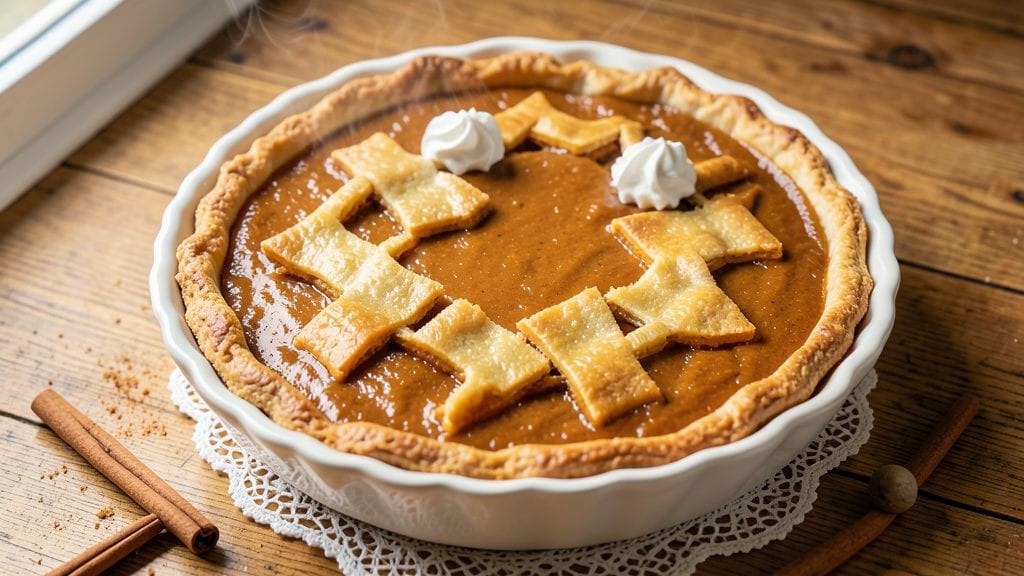
Grandma's old-fashioned pumpkin pie recipe brings back the warmth of autumn afternoons spent in the kitchen, where cinnamon filled the air and the lattice crust turned golden under the broiler.
This is the version I grew up with—rich, spiced filling that balances sweetness with just the right kick of nutmeg and cloves, all wrapped in a flaky crust that shatters with every bite.
The secret lies in precise spice measurements and a slow-baked center that stays perfectly set while the edges stay tender.
What makes this recipe special is the attention to detail that transforms a simple pie into something extraordinary. The lattice crust isn't just decorative—it creates pockets of steam that keep the filling moist while adding visual appeal.
I use a simple pie dough recipe that's been passed down through generations, with cold butter cut into the flour for that signature flakiness. The filling combines canned pumpkin (for convenience without sacrificing quality) with eggs, sugar, and spices measured exactly to create that classic balance.
By the time you pull it from the oven, you'll have a pie that smells like autumn memories—warm spices mingling with the buttery crust. The lattice pattern creates beautiful shadows while allowing the filling to peek through in tempting golden squares.
This isn't just dessert; it's a centerpiece that brings people together, whether for Thanksgiving dinner or a quiet weeknight treat. The best part? It's easier than it looks, with techniques that even beginner bakers can master.
Serve it warm with a scoop of vanilla ice cream or let it cool slightly for clean slices that reveal the perfect texture—creamy filling with just a hint of spice in every bite.
The lattice crust holds its shape while adding that professional touch that makes it look like you spent hours baking. This is the pie recipe that becomes a family tradition, generation after generation.
Ingredients for grandma's old fashioned pumpkin pie
Pantry staples plus a few specialty spices that make all the difference in this classic pie.
| Ingredient | Amount | Notes |
|---|---|---|
| Canned Pumpkin Puree 🎃 | 15 oz | Unsweetened, not pumpkin pie filling |
| Large Eggs 🥚 | 2 whole | Room temperature for best mixing |
| Granulated Sugar 🍚 | 1 ½ cups | White sugar preferred |
| Light Brown Sugar 🍚 | ¼ cup | Packed, for depth of flavor |
| All-Purpose Flour 🌾 | ½ cup | For thickening filling |
| Ground Cinnamon 🌿 | 2 tsp | Freshly ground preferred |
| Ground Nutmeg 🌿 | ½ tsp | Freshly grated nutmeg better |
| Ground Allspice 🌶️ | ¼ tsp | Or pinch of whole cloves |
| Ground Ginger 🌿 | ½ tsp | Fresh ginger preferred |
| Salt 🧂 | ½ tsp | Kosher or sea salt |
| Unsalted Butter 🧈 | ½ cup | Cold, cut into small pieces |
| All-Purpose Flour 🌾 | 2 ½ cups | Plus 1 tbsp for dusting |
| Ice Water 💧 | ½ cup | For pie dough |
| Vanilla Extract 🍯 | 1 tsp | Pure vanilla preferred |
The pumpkin puree is non-negotiable—Libby's Unsweetened is what Grandma used, and it's still the gold standard. For the spices, Penzeys or bulk bins are worth it if you bake often, but the grocery store stuff works fine if it's fresh. That said, if your nutmeg smells like dust, toss it. The butter for the crust? Plugrá or Land O'Lakes unsalted are my go-tos—they cut into the flour better than salted. Pro tip: chill your butter and flour before mixing for that perfect flaky texture. And whatever you do, don't skip the ice water—it keeps the dough from getting tough.
No vanilla extract? Seeds from a vanilla bean or even a splash of vanilla bean paste works in a pinch. Short on brown sugar? White sugar plus a pinch of molasses gets you close. The filling can be made a day ahead—just bake it fresh when ready. For the crust, if you're nervous about lattice, cut strips and weave them in like a basket. It's easier than it looks! And if you're feeling fancy, brush the top with egg wash before baking for that restaurant-quality shine. The pie dough can also be rolled out and frozen for up to 3 months—just thaw before using.
This pie keeps beautifully—3-4 days at room temperature in a cool spot, or 1 week in the fridge. The filling actually tastes better the next day as the flavors meld. For serving, I always let it cool slightly so the slices hold their shape. Store leftovers covered, and reheat slices in a 350°F oven for 10 minutes to revive the crust. The lattice crust? That's the showstopper—it stays crisp even after slicing. Worth the extra effort, trust me.
Why You'll Love This Recipe
- No Pantry Hoarding Needed: I swear by this recipe because it only needs five things from my pantry—no weird spices or hard-to-find ingredients. Just pumpkin, eggs, sugars, flour, and a pinch of cinnamon if I’m feeling fancy. That’s it. Honestly, if you’ve got a kitchen, you’ve got this.
- Spiced to Perfection: The brown sugar adds this deep, caramel-like richness that plain pumpkin pie just can’t match. And that flour-thickened filling? It’s creamy but not gluey—just the right balance of spiced sweetness that makes me reach for seconds without guilt.
- Holiday or Weeknight Win: Between us, this pie is just as welcome at Thanksgiving as it is on a lazy Sunday afternoon. The crust (if you use one) is simple enough to skip or slap together in 10 minutes, and the filling’s so good it doesn’t need a fancy presentation.
- Leftovers That Don’t Let You Down: I always make two pies because the leftovers are that good. Slice it up for breakfast toast, serve it with ice cream, or even pack it in lunchboxes—it’s the kind of dessert that keeps giving without tasting like it’s been sitting around. (Yes, even on a Tuesday night.)
Step-by-step instructions for grandma's old-fashioned pumpkin pie
Here's how to make the perfect spiced filling and flaky lattice crust that'll have everyone asking for seconds.
Make the Classic Pumpkin Filling
In a large mixing bowl, combine the 15 oz canned pumpkin puree, 1.5 cups granulated sugar, 0.25 cup light brown sugar, 2 tsp ground cinnamon, 0.5 tsp ground nutmeg, 0.25 tsp ground allspice, 0.5 tsp ground ginger, and 0.5 tsp salt. Mix until the sugars are completely dissolved and the spices are evenly distributed throughout the pumpkin.
Add the 2 whole large eggs and 1 tsp vanilla extract, mixing until fully incorporated. The mixture should be smooth with no lumps. I like to use a whisk for this step—it helps aerate the filling slightly, which makes the pie lighter. For the final touch, gradually whisk in the 0.5 cup all-purpose flour until just combined. This prevents gluten development that could make your filling tough. The filling should be thick but still pourable—if it looks too stiff, add 1 tablespoon ice water to loosen it slightly.
Prepare the Flaky Pie Crust Dough
In a separate large bowl, combine the 2.5 cups all-purpose flour and 0.5 tsp salt. Cut in the 0.5 cup unsalted butter using a pastry cutter or your fingers until the mixture resembles coarse crumbs with some pea-sized butter pieces remaining. This cold butter is what creates those beautiful flakes in the crust.
Drizzle in the 0.5 cup ice water while stirring with a fork until the dough just comes together. Be careful not to overmix—just combine until it forms a shaggy mass. Turn the dough out onto a lightly floured surface and gently shape it into a disk. Wrap in plastic wrap and chill in the refrigerator for at least 30 minutes (up to 2 hours). This resting period relaxes the gluten and makes rolling easier. If you skip this step, you'll end up with a tough crust instead of that perfect flaky texture.
Assemble the Pie with Lattice Crust
Preheat your oven to 375°F. Roll out half of the chilled pie dough to fit a 9-inch pie dish, leaving a 1-inch overhang all around. Trim the excess dough and press it gently into the pie dish, then crimp the edges with your fingers or a fork. Pour in the pumpkin filling, spreading it evenly to the edges.
For the lattice top, roll out the remaining dough and cut it into 1-inch wide strips. Arrange half the strips horizontally across the filling, spacing them about ¼ inch apart. Fold back every other strip, then unfold and place the remaining strips vertically on top, crossing them over the folded strips to create the classic lattice pattern. Press gently to seal where the strips cross. Brush the lattice with a beaten egg for a golden finish—this egg wash is what gives that beautiful caramelized color and helps create that signature flaky texture.
Bake to Golden Perfection
Place the pie on a baking sheet (to catch any drips) and bake for 50-55 minutes until the filling is set but still slightly jiggly in the center (it will continue thickening as it cools). The crust should be deep golden brown with some areas looking slightly puffed and flaky. If the edges start browning too quickly, cover them loosely with aluminum foil.
Here's the thing—don't overbake. The pie will continue cooking as it cools, and an overbaked pie can turn out dry. You want that perfect balance: a set filling with a slightly wobbly center and a crust that's crisp but not burnt. Let the pie cool completely on a wire rack before slicing—this prevents the filling from running out when you serve it. And trust me, the first slice out of the fridge is always the best.
Pro Tips For Making Grandma'S Old Fashioned Pumpkin Pie
- Whisk Eggs Cold: Pull the eggs straight from the fridge and whisk them first—no warm eggs, no shortcuts. I learned this the hard way when my pie filling curdled into a weird, lumpy mess because I used eggs at room temperature. Cold eggs blend smoother with the pumpkin and sugar, giving you that classic creamy texture grandma’s version is known for.
- Sift the Flour Twice: Don’t just dump that flour in—sift it through a fine-mesh strainer before mixing and again after combining with the wet ingredients. Old-fashioned recipes rely on even distribution, and clumps make your pie filling grainy instead of silky. Yes, it’s extra work, but your future self will notice the difference when the pie slices cleanly.
- Bake Until the Center Jiggles: Your pie isn’t done when the edges look set—wait until the center still wobbles slightly when you shake the pan. Overbaking turns pumpkin pie into a dry, rubbery brick, and underbaking leaves it too soft. A toothpick test is fine, but if it comes out clean but the center’s still shaky, give it 5 more minutes. Trust the jiggle.
- Chill the Filling Overnight: Mix the filling the night before and let it sit, covered, in the fridge. The starches in the pumpkin and flour break down slower, and the flavors meld into something deeper than if you bake it fresh. I was skeptical until I tried it—now it’s non-negotiable for that old-school richness. Just whisk it again before pouring.
Troubleshooting this recipe
Filling Too Runny
If your pumpkin filling spreads too thin during baking, the issue is usually under-mixed flour or too much liquid. First, ensure you've whisked the 0.5 cup flour thoroughly into the filling until just combined—no lumps should remain.
If the filling still seems too loose, add 1-2 tablespoons more flour and mix gently. For extra insurance, chill the filling in the fridge for 30 minutes before pouring it into the crust. This helps thicken it slightly before baking.
Crust Too Tough
A tough crust usually means overworked dough or butter that wasn't cold enough. When cutting in the 0.5 cup cold butter, stop as soon as the mixture resembles coarse crumbs with pea-sized butter pieces—don't overmix. Also, ensure your butter and flour are properly chilled before mixing.
If the dough feels warm, return it to the fridge for 15-20 minutes before rolling. Another trick? Use your fingers to cut in the butter instead of a pastry cutter—it's gentler on the dough.
Lattice Falling Apart
Weak lattice strips often happen when the dough isn't properly chilled or when strips are too thin. Make sure your dough has rested for the full 30-60 minutes in the fridge before rolling. Cut strips to exactly 1-inch wide—thinner strips are more fragile.
When arranging, press the strips gently but firmly against the filling to create a seal. If you're nervous, brush the strips with a little egg wash before weaving to help them hold together.
Filling Not Setting
An undercooked filling usually means the pie wasn't baked long enough or the oven temperature fluctuated. First, ensure your oven is properly calibrated—use an oven thermometer to confirm it's hitting 375°F.
Bake until the center is just slightly jiggly (about 50-55 minutes), then let it cool completely before slicing. If it's still too soft after cooling, place it in a 350°F oven for 10-15 minutes to firm up. Avoid overbaking, though—this can make the filling dry.
Crust Burning Too Fast
If the crust edges brown too quickly while the center stays pale, it's a classic case of uneven heat distribution. Cover the edges loosely with aluminum foil after 20 minutes of baking, leaving the center exposed.
For extra protection, place a baking sheet on the lower rack to reflect heat upward. Another trick? Pre-bake the crust (without filling) for 8-10 minutes at 375°F before adding the filling—this helps it set faster and reduces the risk of burning.
Soggy Bottom Crust
A soggy bottom crust is almost always caused by condensation from the filling. To prevent this, blind-bake the bottom crust for 10 minutes before adding the filling. Simply line the crust with parchment paper, fill with pie weights or dried beans, and bake at 375°F.
After baking, remove the weights and parchment, then pour in the filling. This creates a barrier that keeps the crust crisp. For extra insurance, sprinkle a thin layer of crushed cornflakes or crushed graham crackers between the crust and filling.
Nutrition facts
Frequently asked questions
Can I make this pie ahead of time?
The filling can be prepared 1 day ahead and stored in the fridge. The crust can be rolled out and frozen for up to 3 months—just thaw before assembling. The fully baked pie keeps well for 3-4 days at room temperature or 1 week in the fridge. The flavors actually deepen as it sits!
What's the secret to a perfect lattice crust?
Chill the dough for 30-60 minutes before rolling, and cut strips to exactly 1-inch wide. Press them firmly against the filling to seal, then brush with egg wash for that golden finish. If strips fall apart, try brushing them with extra egg wash before weaving. The key is patience—don't rush the chilling step!
Can I substitute fresh pumpkin for canned?
Yes, but you'll need 2.5 cups cooked fresh pumpkin puree (about 1 medium pumpkin). Roast the pumpkin at 400°F for 45 minutes, scoop out the flesh, and purée it smooth. Fresh pumpkin has more moisture, so you may need 1-2 extra tablespoons flour to thicken the filling.
Why does my crust get soggy?
A soggy bottom happens when moisture from the filling steams the crust. Prevent it by blind-baking the crust for 10 minutes before adding filling. Line it with parchment, add pie weights, and bake—then remove weights and add filling. For extra insurance, sprinkle crushed cornflakes between crust and filling.
How do I know when the pie is fully baked?
The center should be just slightly jiggly (like 2 inches when gently pressed). It will firm up as it cools. The crust should be deep golden brown with flaky edges. If it's not set after 55 minutes, cover loosely with foil and bake 10 more minutes. Never overbake—this makes the filling dry!