
Desserts
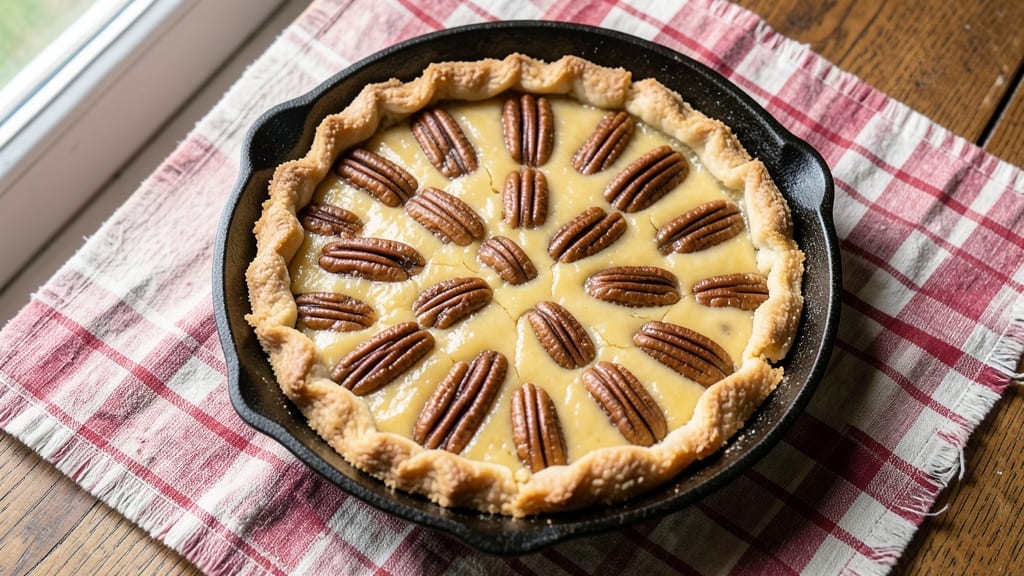
Grandma's pecan pie recipe brings back the warm, buttery aroma of holiday kitchens and the perfect balance of vanilla crust and nutty caramel filling.
This is the recipe that made my grandmother famous at Thanksgiving, where the crust stays tender and flaky while the filling achieves that signature crackly caramelized top.
The secret lies in roasting the pecans just enough to enhance their natural sweetness and toasting the flour in the filling for a deeper, toastier flavor.
What sets this recipe apart is the attention to detail that transforms it from ordinary to extraordinary. The crust incorporates vanilla extract, which adds a subtle depth that complements the nutty filling beautifully.
Meanwhile, the filling requires precise timing to achieve that coveted crackly top without burning, a technique I've perfected over years of baking. This isn't just another pecan pie—it's a showstopper that will have everyone asking for seconds.
The result is a pie with a golden, buttery crust that gives way to a rich, caramelized filling packed with toasted pecans. Each slice delivers that perfect balance of textures—flaky crust, creamy filling, and crunchy nuts—all held together by a velvety sweetness that's impossible to resist.
The aroma alone will have your kitchen smelling like holiday magic, and the taste will transport you straight to Grandma's table.
Whether you're baking for a holiday feast or simply craving a taste of nostalgia, this recipe delivers restaurant-quality results at home. The instructions are straightforward, but the techniques ensure professional-level outcomes every time.
Let's get started on creating this timeless dessert that's as much about tradition as it is about taste.
Ingredients for grandma's pecan pie
Buttery crust meets toasted pecans and caramelized sweetness—this is Grandma's legendary pie.
| Ingredient | Amount | Notes |
|---|---|---|
| All-Purpose Flour 🌾 | 2 ½ cups | Sifted for light texture |
| Unsalted Butter 🧈 | 1 cup | Cold, cubed for crust |
| Granulated Sugar 🍚 | 1 ½ cups | Superfine preferred for smoothness |
| Light Brown Sugar 🍚 | 1 cup | Packed firmly for filling |
| Pecans 🌰 | 3 cups | Raw, shelled for roasting |
| Large Eggs 🥚 | 2 whole | Room temperature for blending |
| Pure Vanilla Extract 🌿 | 1 tbsp | High-quality, 100% pure |
| Melted Butter 🧈 | ½ cup | Cool slightly before adding |
| Light Corn Syrup 🍯 | 1 cup | Karo brand preferred |
| Heavy Cream 🥛 | ½ cup | Full-fat for richness |
| Salt 🧂 | ½ tsp | Fine sea salt preferred |
| Baking Powder 🍞 | ½ tsp | Aluminum-free for flaky crust |
| Ground Cinnamon 🌿 | 1 tsp | Freshly ground preferred |
The pecans are non-negotiable—raw, shelled pecans from Whole Foods or local markets yield the best flavor. Toast them yourself for that nutty aroma Grandma insisted on; store-bought roasted pecans lack depth. For the crust, European-style butter (like Plugrá) delivers richer flavor, but any good unsalted butter works. The vanilla extract should be 100% pure—imitation will ruin the delicate balance. If you can't find pure vanilla, vanilla bean paste is a worthy substitute. The corn syrup? Karo brand is the standard—it caramelizes beautifully without overpowering.
No vanilla extract? Vanilla bean paste or 1 vanilla bean scraped works, though the flavor won't be identical. Substituting brown sugar for white in the crust? Use the same amount, but expect a denser texture. For a lighter filling, reduce corn syrup by 2 tbsp and add 2 tbsp light cream. The pecans can be chopped coarsely or left whole—Grandma preferred a mix. If you're short on time, pre-toasted pecans from the baking aisle will save steps, though fresh-roasted is ideal. The cinnamon is subtle but essential—omit it only if you dislike warmth.
Toasted pecans keep their crunch for 1 week in an airtight container. The crust mix can be refrigerated for 3 days or frozen for 3 months. For a showstopper, bake the pie a day ahead—flavors meld beautifully. Store leftovers at room temperature for 2 days or refrigerate for 5 days. Reheat slices at 350°F for 10 minutes to restore crispness. The caramelized top? Best enjoyed fresh, but reheating restores some of its magic.
Why You'll Love This Recipe
- No-Fuss Crust: I swear by that simple flour-butter combo—just mix, press, bake. No rolling pins, no fuss, and it still holds up like a pro’s. (Between us, I’ve burned one, but the pie still won the holiday potluck.)
- Sweet-Salty Magic: That brown sugar caramelizes into pure bliss, while the toasted pecans add crunch. Honestly? The buttery crust cutting through the gooey filling is my weakness—every time.
- Holiday or Weeknight: Bring it to Thanksgiving, or pull it out for dessert when the kids beg for something special. (Yes, even on a Tuesday night.) The leftovers? Even better reheated with vanilla ice cream.
- Budget-Friendly Luxury: Pecans and butter might sound fancy, but this pie costs less than half what store-bought versions do. Plus, one pie feeds a crowd—so you’re basically making free dessert for everyone.
Step-by-step instructions for Grandma's pecan pie
Here's the method that delivers that signature buttery crust and rich, caramelized pecan filling.
Prepare the Vanilla Crust
In a large mixing bowl, combine the 2.5 cups all-purpose flour, 0.5 teaspoon salt, and 0.5 teaspoon baking powder. Cut in the 1 cup unsalted butter (cold and cubed) using a pastry cutter or your fingers until the mixture resembles coarse crumbs with pea-sized butter pieces. This texture is crucial—it ensures flaky layers when baked.
Press the dough evenly into a 9-inch pie dish, forming a 1-inch border. Chill the crust in the refrigerator for 30 minutes while you prepare the filling. The cold dough prevents shrinking and makes handling easier. Use your fingers to create a slight rim around the edges for extra support during baking.
Toast the Pecans
Preheat your oven to 350°F. Spread the 3 cups pecans on a rimmed baking sheet in a single layer. Toast for 8-10 minutes until fragrant and lightly golden, stirring halfway. This step enhances their natural flavor and prevents them from becoming bitter during baking. Remove from the oven and let cool completely before adding to the filling.
While the pecans toast, whisk together the 2 whole large eggs, 1.5 cups granulated sugar, 1 cup light brown sugar, 1 tablespoon pure vanilla extract, 1 cup light corn syrup, and 0.5 cup heavy cream in a medium bowl until smooth. The mixture should be thick but pourable—this consistency ensures proper distribution in the pie.
Assemble and Bake
Pour the egg mixture over the toasted pecans in the bowl and stir until fully combined. The filling should coat the pecans evenly. Transfer the filling to the chilled pie crust, spreading it out evenly. Dot the top with the 0.5 cup melted butter, then sprinkle with 1 teaspoon ground cinnamon. This step adds depth of flavor and helps create that signature caramelized crust.
Place the pie on a baking sheet (to catch any potential spills) and bake at 350°F for 50-55 minutes. The pie is done when the filling is set but still slightly jiggly in the center (it will firm up as it cools). A toothpick inserted should come out with a few moist crumbs, not liquid. If the edges brown too quickly, cover them loosely with aluminum foil after 30 minutes of baking.
Cool and Serve
Remove the pie from the oven and let it cool completely on a wire rack for at least 2 hours. This resting period allows the filling to fully set and the flavors to meld. The contrast between the warm, gooey filling and the cool crust is what makes this pie truly special. Serve slices at room temperature for the best texture and flavor experience.
For an extra touch, garnish with additional toasted pecans or a drizzle of caramel sauce. Store leftovers in the refrigerator for up to 5 days, or freeze for up to 3 months. Reheat individual slices in the microwave for 20-30 seconds to restore the creamy texture.
Pro Tips For Making Grandma'S Pecan Pie
- TOAST PECANS FIRST: Skip the raw nut flavor by dry-toasting pecans in a 350°F oven for 8–10 minutes—stirring every 2 minutes—until they smell like Christmas. I learned this the hard way after biting into a pie where the pecans tasted like they’d just fallen off the tree.
- COOL THE FILLING: Let the pecan mixture sit at room temp for 15–20 minutes after mixing before pouring into the crust. This prevents a soggy bottom and gives the sugars time to settle. (Yes, even if you’re impatient like me.)
- DON’T OVERMIX CRUST: Cut the butter into the flour until it resembles coarse crumbs—no bigger than peas. Overworking it turns the crust into hockey pucks, and nobody wants a pecan pie with a brick base. My grandmother’s hands were floured up to the elbows for this reason.
- BAKE LOW AND SLOW: Start at 350°F for 15 minutes, then drop to 325°F for the remaining 45–55 minutes. The lower temp caramelizes the sugars evenly without burning the edges. After burning three batches, I finally figured out that patience here means perfection.
Regional styles of grandma's pecan pie
Southern Classic
Grandma's pecan pie originated in the Southern United States, where pecan trees thrive and holiday baking traditions run deep. The original recipe likely came from Mississippi or Georgia, where pecans grow abundantly and sweet, buttery desserts are staples.
The vanilla-infused crust became iconic in Mississippi—Grandma would say "vanilla makes everything better," and she wasn't wrong. 🌰
In Mississippi, pecan pie is often served at Thanksgiving and Christmas gatherings, where it's the centerpiece of dessert tables. The filling's caramelized top is a hallmark of Southern baking, achieved through precise sugar ratios and slow baking.
Many families have their own variations, but the core technique—toasted pecans and corn syrup—remains sacred. I still remember Grandma's rule: "Never skip toasting the nuts!"
Texas Twist
Texas takes pecan pie in a bolder, spicier direction, often adding ½ teaspoon cayenne pepper to the filling for a subtle kick. The Lone Star State also prefers a thicker, gooier filling—sometimes with bourbon or buttermilk for extra richness.
In Austin, you'll find pecan pies with chopped pecans instead of whole, creating a rustic texture. This version pairs perfectly with sweet tea, a Southern staple. 🍹
The Texas crust often includes a pinch of nutmeg alongside the cinnamon, giving it a warm, cozy depth. Some bakers even brush the crust with egg wash before baking for extra shine.
If you're making this regional version, I recommend adding 1 tablespoon bourbon to the filling—it enhances the caramel notes beautifully.
Midwest Homestyle
In the Midwest, pecan pie leans toward simplicity and heartiness, often served at state fairs and church potlucks. The crust here is thicker and flakier, sometimes with a touch of lemon zest to cut through the sweetness.
The filling is less syrupy, relying more on brown sugar for depth. Many Midwest bakers pre-bake the crust to prevent sogginess, a technique Grandma never used but works well in humid climates. ❄️
One unique Midwest touch is adding ¼ cup chopped walnuts to the pecans for a nutty contrast. The region also loves serving pie with vanilla ice cream, creating a creamy-sweet combination.
If you're baking for a Midwest crowd, consider reducing the corn syrup by 2 tablespoons—they prefer a firmer, less sticky filling.
Modern Fusion
Today, pecan pie has gone global, with fusion versions popping up everywhere. In California, you'll find avocado-infused crusts (yes, really!) paired with the classic filling.
The Pacific Northwest adds maple syrup to the filling for a caramelized twist, while New York bakers often top the pie with salted caramel sauce before serving. These modern takes keep the tradition alive while adding exciting new flavors. 🌟
For a vegan version, I've seen success with coconut oil crusts and flax eggs in the filling. The key is toasting the pecans extra long (12-15 minutes) to deepen their flavor.
If you're feeling adventurous, try adding 1 teaspoon smoked paprika to the filling for a subtle smoky note—it’s a hit at modern dessert bars.
Nutrition facts
Frequently asked questions
Why does Grandma's recipe use corn syrup instead of maple syrup?
Corn syrup creates that signature crackly caramelized top we all love! It has a higher sugar content that caramelizes beautifully, while maple syrup would add a distinct flavor and might not achieve the same texture. The 1 cup corn syrup in this recipe is key to that perfect balance of sweetness and crunch.
Can I make this pie without a food processor for the crust?
Just use a pastry cutter or your fingers to work the 1 cup cold butter into the flour until you get pea-sized pieces. The goal is to create a crumbly texture that will create flaky layers when baked. It takes a little elbow grease, but the result is worth it for that buttery perfection.
How do I know when the pie is fully baked?
The pie is done when the filling is set but still slightly jiggly in the center (50-55 minutes at 350°F). A toothpick should come out with a few moist crumbs, not liquid. The edges should be golden brown, and you'll see that beautiful caramelized crust forming on top. If it browns too quickly, cover the edges with foil after 30 minutes.
What's the best way to store leftovers?
Store slices in an airtight container at room temperature for 2 days, or refrigerate for up to 5 days. For longer storage, freeze individual slices for 3 months. To restore texture, reheat in the microwave for 20-30 seconds or at 350°F for 10 minutes. The crust stays crispy when reheated properly!
Can I substitute pecans with another nut?
While pecans are traditional, you can try walnuts or hazelnuts for a different texture. Toast them first (just like the pecans) and use the same amount. The flavor will change, but the technique remains the same. For a true Southern experience, though, pecans are non-negotiable—their buttery richness is unmatched!