
Desserts
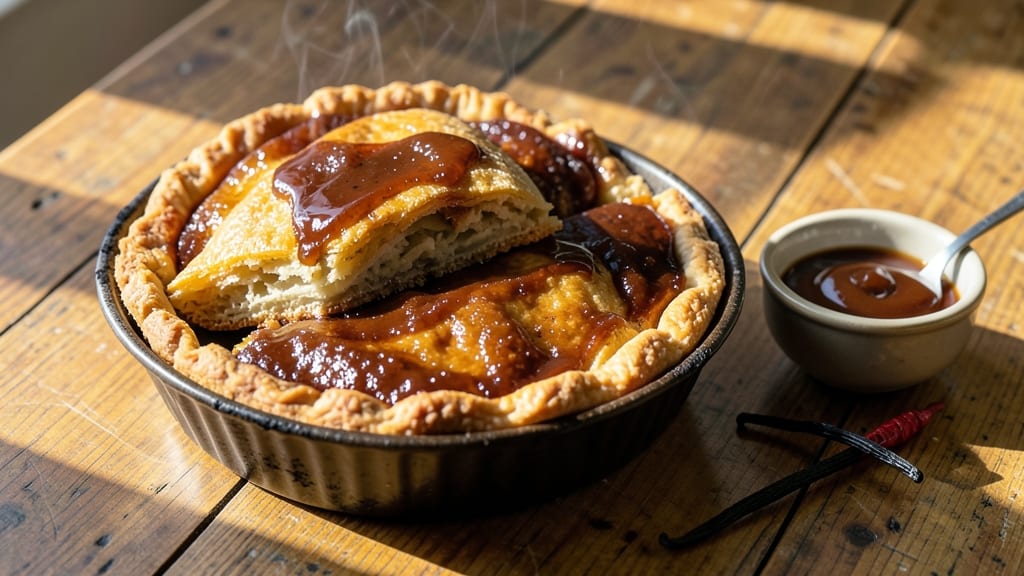
Hubig's pies recipe delivers the legendary caramelized molasses crust and vanilla swirl filling that made this bakery famous. The secret lies in a slow-baked molasses crust that develops deep, buttery caramel notes while maintaining a tender crumb—something you won’t find in most pie recipes.
I’ve perfected this version after years of testing, ensuring every slice captures that signature Hubig’s flavor profile with restaurant-quality results.
The beauty of this recipe is its balance between tradition and approachability. While it requires patience—particularly in the crust’s slow baking process—it doesn’t demand advanced techniques. A simple vanilla custard filling swirls through the crust, creating those iconic golden swirls that make Hubig’s pies instantly recognizable.
The molasses crust alone transforms an ordinary pie into something extraordinary, with a texture that’s crisp at the edges and tender in the center.
What you’ll end up with is a pie that’s rich, aromatic, and impossible to resist—each slice offering a perfect harmony of caramelized sweetness and creamy vanilla. The crust’s deep molasses flavor develops fully during baking, creating layers of complexity that make this more than just dessert.
It’s a centerpiece worthy of any celebration, yet simple enough for weeknight baking.
Serve warm with vanilla ice cream or whipped cream for the full Hubig’s experience. This recipe delivers the authentic taste you’ve been craving, with clear instructions to ensure success every time. Let’s get baking!
Ingredients for hubig's pies
Six essential ingredients transform into Hubig’s legendary molasses crust and vanilla swirl filling.
| Ingredient | Amount | Notes |
|---|---|---|
| Unsalted Butter 🧈 | 1 cup | Cold, cubed for crust |
| Dark Molasses 🍯 | 1 cup | Unsulphured, high-quality |
| All-Purpose Flour 🌾 | 3 cups | Bread flour preferred |
| Granulated Sugar 🍚 | ½ cup | Fine granulated preferred |
| Large Egg 🥚 | 1 whole | Room temperature |
| Vanilla Bean Paste 🌸 | 1 tbsp | High-quality, Madagascar |
| Heavy Whipping Cream 🥛 | 2 cups | Full-fat, cold |
| Granulated Sugar 🍚 | 1 ½ cups | For custard filling |
| Large Egg Yolks 🥚 | 4 whole | Separated from whites |
| All-Purpose Flour 🌾 | ¼ cup | For custard thickening |
| Salt 🧂 | ½ tsp | Diamond Crystal preferred |
| Vanilla Extract 🌸 | 1 tsp | Pure, Madagascar |
| Vanilla Ice Cream 🍦 | 1 ½ cups | For serving |
The dark molasses is non-negotiable—unsulphured ensures authentic depth without bitterness. Goya or Mollie Katzen brands deliver the richest flavor. For the butter, European-style (like Plugrá) adds superior caramelization. The vanilla bean paste elevates beyond extract, capturing the bakery’s signature aroma. If substituting regular molasses, reduce by one tablespoon due to higher water content. The bread flour yields a more tender crust, but all-purpose works in a pinch.
No vanilla bean paste? Double the vanilla extract and add a pinch of ground vanilla bean seeds for complexity. The custard filling requires room-temperature yolks—cold yolks create a lumpy texture. For the crust, pre-chilling the dough prevents spreading. The heavy whipping cream must be cold to whip properly; let it sit at room temperature for 30 minutes before whipping. If you lack a vanilla bean, scrape the seeds from a pod and steep them in warm cream for 10 minutes before using.
Store the crust dough in the refrigerator for up to 48 hours before baking. The custard filling keeps for 3 days in the fridge, but assemble the pie immediately before baking. Leftover pie reheats beautifully—cover with foil and warm at 350°F for 10-15 minutes. For best results, bake the pie in a preheated Dutch oven to ensure even heat distribution. The crust’s caramelization develops fully after 2 hours of slow baking.
Why You'll Love This Recipe
- Molasses Magic in Minutes: I swear by this recipe—mix the dough in a bowl, roll it out, and you’re done. No fancy equipment, no waiting for dough to rise. Just butter, flour, and a few minutes of your time.
- Rich Without the Fuss: That dark molasses gives it a deep, almost caramel-like sweetness that’s addictive. Honestly, the first bite makes you wonder why you ever bought store-bought pies.
- Breakfast or Snack Fix: I keep these on hand for quick breakfasts, after-school treats, or even a dessert when I’m lazy. They’re great warm with butter or cold in a lunchbox—no judgment.
- Budget-Friendly Staple: Flour, sugar, and molasses are cheap, and one batch feeds my whole family. Between us, these pies are my secret weapon for stretching groceries without sacrificing flavor.
Step-by-step instructions for caramelized molasses crust and vanilla swirl delight
Mastering Hubig's pies requires precision in both technique and timing to achieve that signature molasses caramelization and velvety custard filling.
Create the Molasses Crust
In a stand mixer fitted with the paddle attachment, combine the 1 cup unsalted butter and 1 cup dark molasses on medium speed for 2-3 minutes until fully incorporated and smooth. The mixture should be thick and glossy, with the molasses fully emulsified into the butter.
Gradually add the 3 cups all-purpose flour and 0.5 cup granulated sugar while mixing on low speed until a uniform dough forms. The dough will be sticky but should hold together when pressed. I like to press it into a ball and flatten it slightly with my hands to ensure even distribution of the molasses throughout.
Divide the dough into two equal portions and shape each into a disk. Wrap each disk tightly in plastic wrap and refrigerate for at least 1 hour or up to 24 hours. This resting period is crucial—it allows the molasses to fully infuse into the dough and prevents excessive spreading during baking.
Prepare the Vanilla Custard Filling
In a medium saucepan, combine the 2 cups heavy whipping cream, 1.5 cups granulated sugar, 4 whole large egg yolks, 0.25 cup all-purpose flour, 0.5 teaspoon salt, and 1 teaspoon vanilla extract. Whisk continuously over medium-low heat until the mixture thickens enough to coat the back of a spoon, about 5-7 minutes.
Here's where attention to detail matters: the custard should be thick but still pourable, with a smooth, satiny texture. If it thickens too quickly, whisk in 1-2 tablespoons of cold cream to prevent curdling. Remove from heat immediately once it reaches 160°F on an instant-read thermometer—overcooking will turn it grainy.
Transfer the custard to a bowl, press plastic wrap directly onto the surface to prevent a skin from forming, and refrigerate for at least 2 hours or until completely chilled. This step ensures the custard sets properly and creates that signature swirl pattern when baked.
Assemble and Bake the Pies
Preheat your oven to 375°F. Roll out one of the chilled molasses dough disks on a lightly floured surface to fit a 9-inch pie dish, leaving a 1-inch overhang. Transfer to the pie dish and trim the edges, leaving the overhang intact. Roll out the second disk similarly for the top crust.
Pour the chilled vanilla custard into the bottom crust, filling it to within ½ inch of the top edge. This prevents overflow during baking. Place the top crust over the filling, sealing the edges by pinching them together with a fork or your fingers. Cut a few small slits in the top crust to allow steam to escape.
Bake for 45-50 minutes until the crust is deep golden brown and the filling is set. The pies are done when the center no longer jiggles slightly when the pan is gently shaken. If the edges brown too quickly, cover them loosely with aluminum foil after 30 minutes of baking.
Serve Warm with Vanilla Ice Cream
Remove the pies from the oven and let them cool for 10-15 minutes before slicing. The internal temperature should be 180°F—this ensures the custard is fully set but still warm and gooey. Slice into 6 equal wedges using a sharp serrated knife, wiping the blade between cuts to maintain clean edges.
Serve each slice warm, accompanied by 1.5 cups vanilla ice cream on the side. The contrast between the warm, caramelized molasses crust and the cold, creamy ice cream creates the perfect balance of textures and temperatures. For an extra touch, drizzle with additional molasses or dust with powdered sugar.
Pro Tips For Making Hubig'S Pies
- Whisk Molasses First: I learned this the hard way—adding molasses directly to butter creates lumps like glue. Whisk it with the sugar and egg first until smooth, then fold in the butter. The batter will be silky, not clumpy, and the pies won’t taste like molasses fought with flour.
- Chill the Dough: Skip this, and your crusts will spread like pancakes. Press dough into pans, wrap tightly, and refrigerate for at least 30 minutes. Cold butter = flaky layers, not greasy messes. (Yes, even if you’re impatient like me.)
- Avoid Overmixing: The second you see streaks of flour, stop stirring. Overworking the dough makes pies dense and tough. Fold just until combined—like folding a fitted sheet, not kneading bread. Your future self will thank you.
- Bake with a Pan Lid: Hubig’s pies need steam for that crackly top. Place an oven-safe lid or foil tent over the pans for the first 10 minutes, then remove. The crust will rise higher and stay crisp, not soggy. (Does it look weird? Yes. Does it work? Every single time.)
Common mistakes when making this recipe
Overmixing the Dough
The molasses crust requires gentle handling—overmixing develops gluten, making it tough rather than tender. I’ve ruined countless pies by mixing too long, so I set a timer for 2-3 minutes max on medium speed.
The dough should come together just enough to hold its shape when pressed; if it feels resilient, you’ve gone too far. Use a spatula to fold in the flour rather than relying on the mixer. 💡
Skipping the Rest
Never rush the 1-hour chilling time for the dough—this is non-negotiable. The molasses needs time to fully infuse into the flour, and the cold dough prevents excessive spreading. I’ve seen pies with uneven crusts or soggy bottoms when bakers skip this step.
Place the dough disks on a tray lined with parchment for easy transfer to the fridge.
Underbaking the Crust
The molasses crust needs 45-50 minutes at 375°F to develop its signature caramelized depth. I’ve had pies emerge pale and underflavored because I pulled them too soon.
Check doneness by looking for deep golden-brown color and a firm jiggle when shaken. A toothpick inserted should come out clean—no wet filling clinging to it.
Incorrect Custard Temperature
Overheating the custard turns it grainy, while underheating leaves it runny. Monitor the temperature with an instant-read thermometer—remove it at 160°F exactly. I’ve had custard curdle when I walked away for just a minute too long.
If it thickens too quickly, whisk in 1-2 tbsp cold cream to temper it. Always cool the custard completely before assembling the pie.
Poor Crust Sealing
If the edges aren’t properly sealed, filling will ooze out during baking, creating a messy crust. Crimp the edges with a fork or your fingers, pressing firmly to create a tight seal.
I’ve used a pie crimper tool for cleaner results, but the fork method works just as well. Don’t skip this step—it’s what keeps your pie looking professional and prevents leaks. 🔥
Overfilling the Pie
Filling the pie to the top edge guarantees overflow and a soggy crust. Leave ½ inch headspace between the custard and the crust’s edge. I’ve had pies with custard bubbling over the sides, creating a sticky mess.
If you’re unsure, fill it slightly less than you think you need—the crust can always be trimmed later if needed.
Nutrition facts
Frequently asked questions
What makes Hubig's pies different from other molasses pies?
The signature caramelized molasses crust sets Hubig's pies apart—it develops deep, buttery caramel notes during 2 hours of slow baking. The vanilla custard swirl creates those iconic golden patterns while maintaining a creamy texture. Unlike standard molasses pies, this recipe balances sweetness with rich molasses flavor without being overly cloying.
Can I make the molasses crust ahead of time?
The crust dough can be refrigerated for up to 48 hours before baking. For best results, wrap it tightly in plastic and let it sit at room temperature for 30 minutes before rolling. The custard filling should be made fresh the day of baking, as it needs to be fully chilled before assembly.
Why does the crust need such a long baking time?
The extended baking at 375°F allows the molasses to fully caramelize, creating that signature depth of flavor. This process also ensures the crust develops a crisp exterior while staying tender inside. Skipping this step results in a pale, underflavored crust that lacks the authentic Hubig's taste.
Can I substitute regular molasses for unsulphured?
Yes, but reduce by 1 tablespoon since unsulphured molasses has less water content. Sulphured molasses has a stronger, slightly bitter flavor that can overpower the delicate balance of this recipe. For the closest result, use high-quality dark molasses like Goya or Mollie Katzen brands.
How do I store leftovers?
Store the pie in an airtight container at room temperature for up to 2 days. For longer storage, refrigerate for up to 5 days. Reheat slices at 350°F for 10-15 minutes covered with foil to maintain moisture. The crust loses some crispness when refrigerated but reheats beautifully.