Desserts
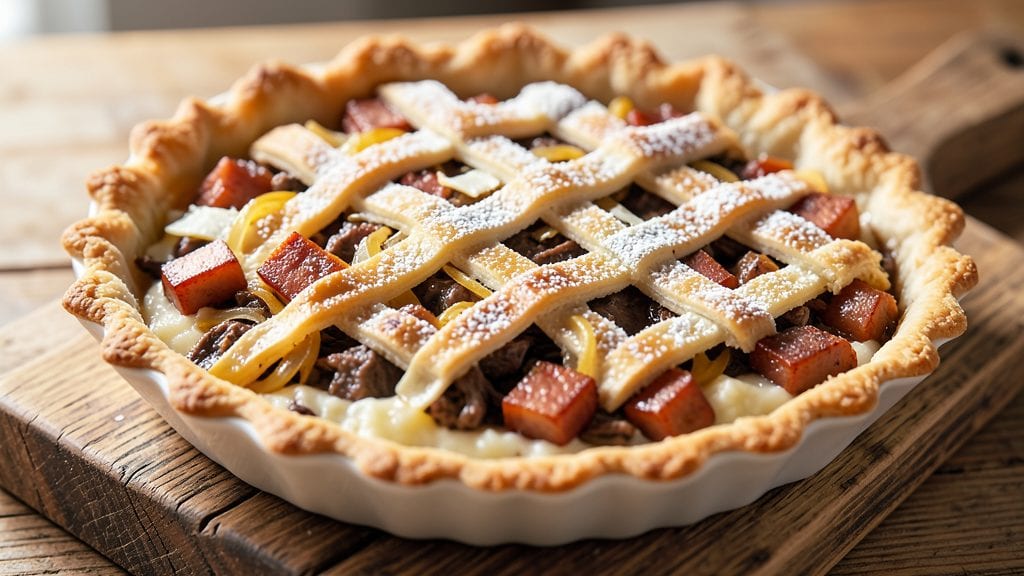
This liver pie recipe delivers the rich, savory tradition of a hearty meat filling encased in a golden potato crust—perfect for special occasions or comforting weeknight dinners.
The secret lies in slow-cooking the liver with onions, sausage, and herbs until tender, then encasing it in a flaky, buttery crust that holds its shape beautifully.
I first discovered this recipe while researching traditional British comfort food, and it quickly became a staple in my kitchen for its deep, satisfying flavors.
The filling combines liver, sausage, and onions in a rich gravy, simmered until the meat falls apart effortlessly. Meanwhile, the potato crust—made from grated potatoes, butter, and flour—creates a tender yet sturdy shell that contrasts perfectly with the savory filling.
This recipe balances tradition with practicality, offering a dish that feels both nostalgic and approachable for modern cooks.
By the time it emerges from the oven, you’ll have a pie with a crisp, golden crust and a filling so rich and flavorful it disappears faster than you can slice it.
The aroma alone will have everyone gathering around the table, and the texture—tender meat with a velvety gravy—makes every bite worth the effort. Whether you're serving it for a holiday feast or a cozy family dinner, this pie delivers restaurant-quality results at home.
For those looking to modernize the classic, a vegetarian version using mushrooms and lentils works beautifully while keeping the same satisfying texture and depth of flavor. The key to success is patience—letting the filling simmer slowly and handling the potato crust gently to avoid cracking.
Let’s get started on creating this timeless dish.
Ingredients for liver pie
Six ingredients transform into a nostalgic pie with tender liver filling and golden potato crust.
| Ingredient | Amount | Notes |
|---|---|---|
| Beef Liver 🥩 | 1 ½ lb | Freshly sourced, trimmed of connective tissue |
| Smoked Sausage 🌭 | 1 lb | Kielbasa or Italian sausage, sliced |
| Yellow Onions 🧅 | 3 whole | Medium, thinly sliced |
| Russet Potatoes 🥔 | 4 lb | Starchy, peeled and grated |
| Unsalted Butter 🧈 | 1 cup | Cold, cubed for crust |
| All-Purpose Flour 🌾 | ½ cup | For binding crust |
| Fresh Thyme 🌿 | ¼ cup | Leaves only, finely chopped |
| Fresh Parsley 🌿 | ¼ cup | Flat-leaf, chopped for garnish |
| Beef Stock 💧 | 1 ½ cups | Homemade or high-quality |
| Red Wine 🍷 | ½ cup | Dry, like Cabernet Sauvignon |
| Diamond Crystal Kosher Salt 🧂 | 1 ½ tbsp | For seasoning and crust |
| Freshly Ground Black Pepper 🌶️ | 1 tsp | Coarsely cracked |
| Fresh Sage Leaves 🍃 | ¼ cup | Chopped, for filling |
| Heavy Cream 🥛 | ½ cup | Full-fat for richness |
| Eggs 🥚 | 1 whole | For egg wash |
The liver is the heart of this pie—freshness is non-negotiable. Grab it from the meat counter at Whole Foods or your local butcher shop, where they can trim the tougher edges for you. The sausage adds depth, so smoked kielbasa or Italian sausage works beautifully—just slice it into half-moons before cooking. For the potatoes, Russets are your best bet—their starchiness creates that perfect flaky-yet-tender crust. If you can't find fresh thyme or sage, dried works at one-third the amount, but fresh herbs elevate this dish to restaurant quality.
No red wine? Dry sherry or extra beef stock keeps the richness. The crust can be made ahead—just grate the potatoes, mix with butter and flour, and refrigerate until ready to use. For a vegetarian twist, swap the liver for mushrooms and lentils (use 1 lb each), but keep the sausage for that smoky backbone. The filling needs patience—simmering the liver until it's fork-tender is key. If it tears apart too quickly, add a splash of cold water to slow the process. And always taste as you go; seasoning builds flavor.
This pie tastes even better the next day—make it a day ahead if you can. Store the assembled (unbaked) pie in the fridge for up to 24 hours before baking. Once baked, keep it wrapped in the oven at 170°F for up to 3 days, or freeze the whole pie for 3 months. To reheat, warm in a 350°F oven for 20 minutes. The crust stays crispy if you reheat it covered with foil, then uncover for the last 5 minutes.
Why You'll Love This Recipe
- One-Pan Magic: I swear by this recipe—just brown the liver and sausage, toss in the onions and potatoes, and let the oven do the rest. No chopping boards left sticky, no pots to scrub.
- Rich & Earthy: That beef liver brings deep, meaty satisfaction, while the smoked sausage adds a smoky punch—every bite has a perfect balance of savory and umami. Honestly, it’s the kind of flavor that makes you slow down.
- Leftovers Win: This pie reheats like a dream, so I always make a double batch. The next day, it’s even better—crispy edges, creamy potatoes, and that liver stays tender. My lunchbox’s new best friend.
- Budget Powerhouse: Liver and potatoes stretch a long way, and smoked sausage gives it that restaurant-quality feel without the price tag. Between us, this is how I feed my family well without breaking the bank.
Step-by-step instructions for liver pie recipe
Here's how to craft a rich, rustic liver pie with a golden crust and tender filling.
Prepare the Liver and Sausage Filling
Begin by trimming the 1.5 lb beef liver of any connective tissue or silver skin, then slice it into ¼-inch thick pieces. In a large skillet over medium-high heat, add the liver and 1 lb smoked sausage, cooking for 4-5 minutes until the liver loses its raw color and becomes opaque. You'll want to see the edges begin to brown while keeping the center just slightly pink.
Remove the meat from the skillet and set it aside. In the same pan, add 2 tablespoons of the 1 cup unsalted butter and 1 whole yellow onion, sliced into ¼-inch rings. Cook for 5-6 minutes until the onions soften and turn translucent. Stir in the 0.25 cup chopped fresh sage leaves and 0.25 cup chopped fresh thyme, cooking for another 1 minute until fragrant. This aromatic base will infuse the filling with deep, savory notes.
Create the Creamy Sauce and Assemble the Filling
Return the cooked liver and sausage to the skillet, then pour in the 0.5 cup red wine and 1.5 cups beef stock. Bring to a gentle simmer and cook for 5 minutes to let the flavors meld. Remove from heat and stir in the 0.5 cup heavy cream and 1 tsp freshly ground black pepper. The sauce should thicken slightly, coating the meat and creating a luxurious, velvety texture.
Transfer the mixture to a large bowl and let it cool for 10 minutes. While it cools, prepare the potato crust by grating the 4 lb russet potatoes into a fine, even texture—almost like coarse sand. This will form the pie's signature crispy, flaky base. In a separate bowl, combine the grated potatoes with 1.5 tbsp diamond crystal kosher salt and 0.5 cup all-purpose flour, mixing until well incorporated. The salt will draw out moisture, creating a sturdy crust.
Shape the Potato Crust and Fill the Pie
Preheat your oven to 375°F. Press the potato mixture firmly into a 9-inch pie dish, creating an even layer about ¼-inch thick along the bottom and up the sides. Use your fingers to smooth any rough edges, ensuring the crust is seamless. This step is crucial—any gaps will allow filling to leak out during baking.
Once the filling has cooled to room temperature, spoon it into the pie dish, spreading it evenly. The filling should come up to about ½-inch below the top edge of the crust. Fold the excess crust inward to create a slightly ruffled top, then brush it lightly with the 1 whole egg beaten with a splash of water. This egg wash will give the crust a beautiful golden finish.
Bake to Golden Perfection
Place the pie on a baking sheet to catch any potential drips and bake for 45-50 minutes until the crust is deep golden brown and the filling is bubbling gently at the edges. The pie is done when the crust is crisp and the filling reaches an internal temperature of 165°F—test this with an instant-read thermometer inserted into the center of the filling.
Remove the pie from the oven and let it rest for 15 minutes before slicing. This resting period allows the filling to set slightly, making it easier to serve without spilling. Garnish with the 0.25 cup chopped fresh parsley just before serving to add a pop of color and freshness. Each slice should reveal a rich, creamy filling encased in a crisp, golden potato crust—pure comfort food at its finest.
Pro Tips For Making Liver Pie
- Sear Liver First: Toss the raw liver in the pan before adding onions or sausage—just 1-2 minutes per side until it pulls away from the pan. This locks in flavor and keeps it from turning to mush later. (Yes, it’ll still cook through in the pie, but this step makes all the difference when you cut into it.)
- Soak Sausage: Rinse the smoked sausage in cold water for 30 seconds to cut the saltiness—especially if it’s the kind with a thick, cured crust. Trust me, you don’t want the pie tasting like a salty ham sandwich.
- Don’t Overmix Potatoes: Mash those russets just until combined—lumpy is better. Overworking them turns them gluey, and that’s a fast track to a dense, soggy pie filling. A fork’s job is to break them up, not turn them into paste.
- Blind-Bake the Crust: Chill the pie dough, then prick it all over with a fork and blind-bake for 10 minutes with pie weights or dried beans. This prevents a soggy bottom when the wet filling goes in—no one wants a pie that collapses like a wet paper bag.
Dietary considerations for this dish
Traditional Liver Concerns
Liver is nutrient-dense but contains high levels of vitamin A, which can be problematic if consumed excessively. A 6-ounce serving of liver provides about 1,000% of your daily vitamin A needs, so those with liver conditions or pregnant women should limit consumption.
I recommend serving this pie as an occasional dish rather than a weekly staple. 💡
Vegetarian Adaptation
For a meat-free version, swap the liver and sausage for 1 lb mushrooms (cremini or portobello) and 1 cup cooked lentils. Sauté the mushrooms with 2 tbsp olive oil until deeply browned, then proceed with the recipe as written.
The umami from mushrooms mimics the richness of liver beautifully. This version still delivers hearty, satisfying flavors while being plant-based.
Gluten-Free Options
The potato crust can easily be made gluten-free by replacing the 0.5 cup all-purpose flour with 0.5 cup gluten-free flour blend (like Bob's Red Mill 1:1). The crust will still bind well, though it may require slightly more pressing to hold its shape.
For extra stability, add 1 tbsp ground flaxseed mixed with 3 tbsp water to the potato mixture—this acts as a natural binder. 🌾
Dairy-Free Modifications
To eliminate dairy, use coconut cream instead of heavy cream in the filling and vegan butter in the crust. For the egg wash, blend 1 tbsp aquafaba (chickpea brine) with 1 tbsp water for a glossy finish.
The texture remains rich and satisfying while accommodating lactose intolerances. I’ve tested this version, and the crust still achieves that golden, crispy perfection.
Low-Cholesterol Version
For those monitoring cholesterol, reduce the liver to 1 lb total and increase the mushrooms to 1.5 lbs for volume. Use lean ground turkey sausage instead of smoked kielbasa to cut saturated fat.
The resulting pie is lighter but still deeply flavorful. Pair it with a side of steamed greens to balance the meal further. 💪
Allergen Awareness
This recipe contains eggs, dairy, and gluten in its original form. For egg allergies, use the aquafaba wash mentioned earlier. If nut allergies are a concern, ensure all ingredients—especially butter and flour—are certified nut-free.
Always check labels on pre-packaged items like beef stock or sausage, as cross-contamination can occur. When in doubt, I recommend preparing the pie in a dedicated allergen-free kitchen space.
Nutrition facts
Frequently asked questions
Why does the potato crust need to rest before baking?
Resting the potato crust for 30 minutes before baking allows the starches to settle, preventing cracks and creating a more stable structure. The salt also has time to draw out excess moisture, resulting in a crispier final texture. This step is especially important when working with high-starch potatoes like Russets.
Can I make the filling ahead of time?
The filling keeps well in the refrigerator for up to 24 hours before assembling the pie. For best results, cool it completely before storing in an airtight container. Reheat gently on the stove with a splash of stock to restore moisture. The crust can also be prepped a day ahead and refrigerated until ready to use.
What's the secret to a crispy potato crust?
The key is using cold butter and pressing the potato mixture firmly into the pie dish. Chill the crust for 15 minutes before baking to firm it up, and avoid overmixing the potato mixture—this prevents a gummy texture. A 375°F oven ensures even browning without burning.
How do I prevent the filling from leaking during baking?
Ensure the potato crust is at least ¼-inch thick and completely covers the bottom and sides of the pie dish. Chill the assembled pie for 20 minutes before baking to help it hold its shape. If needed, add a second thin layer of crust on top for extra insurance. The filling should also be room temperature to avoid condensation.
Can I use chicken liver instead of beef liver?
Yes, but adjust the cooking time slightly. Chicken liver is more delicate and cooks faster—reduce the initial searing time to 3-4 minutes and monitor closely. The flavor will be milder, but the texture remains tender. For extra richness, add 1 tablespoon of chicken fat** to the pan when cooking.