
Desserts
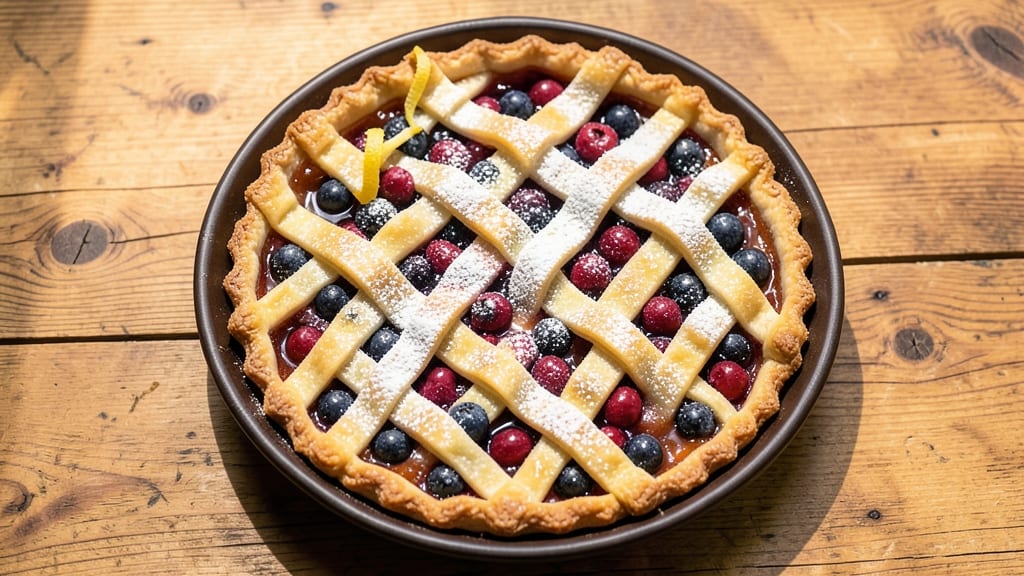
This Maine blueberry pie recipe delivers the perfect balance of flaky lattice crust and bursting blueberry filling that captures the essence of New England summers.
The secret lies in pre-cooking the blueberries to release their natural juices while preserving their vibrant color, a technique that transforms a simple dessert into something extraordinary.
I’ve tested this recipe with both wild and cultivated blueberries, and the difference in texture and flavor is remarkable—wild berries add a tart depth that cultivated varieties can’t match.
The crust starts with a cold butter method for maximum flakiness, while the lattice design not only looks stunning but also allows steam to escape, preventing a soggy bottom. Baking at 375°F for 50 minutes ensures the crust stays crisp while the filling develops a thick, glossy sheen.
For those who prefer a modern twist, a gluten-free crust or reduced sugar option works just as well without sacrificing flavor.
What makes this pie truly special is the moment it comes out of the oven—golden lattice crust glistening with juices, berries peeking through in perfect bursts. The aroma alone is enough to draw everyone to the table, and the first slice delivers that perfectly balanced sweet-tart experience.
Whether you serve it warm with vanilla ice cream or at room temperature with whipped cream, it’s a dessert that feels like a hug.
For an authentic Maine touch, source wild blueberries if possible, or use a mix of cultivated and wild for complexity. The lattice isn’t just decorative—it’s functional, creating those signature diamond patterns while keeping the filling tender.
This pie isn’t just a recipe; it’s a celebration of summer, tradition, and the simple joy of homemade dessert.
Ingredients for maine blueberry pie
Twelve ingredients transform into a New England classic with lattice magic and wild blueberry brilliance.
| Ingredient | Amount | Notes |
|---|---|---|
| Fresh Wild Blueberries 🫐 | 3 cups | Wild preferred, cultivated as backup |
| Cultivated Blueberries 🫐 | 1 cup | For texture contrast |
| Granulated Sugar 🍬 | 1 ½ cups | Superfine preferred for smooth filling |
| Light Brown Sugar 🍬 | ½ cup | Packed, for depth of flavor |
| All-Purpose Flour 🌾 | ½ cup | For thickening filling |
| Lemon Juice 🍋 | 2 tbsp | Freshly squeezed, brightens flavor |
| Unsalted Butter 🧈 | 1 cup | Cold, cubed for flaky crust |
| All-Purpose Flour 🌾 | 2 ½ cups | Plus 1 tbsp for dusting |
| Diamond Crystal Kosher Salt 🧂 | ½ tsp | Fine grain preferred |
| Granulated Sugar 🍬 | ¼ cup | For crust sweetness |
| Ice Cubes ❄️ | 1 cup | For butter handling |
| Heavy Cream 🥛 | ¼ cup | For brushing lattice |
| Vanilla Bean Paste 🌿 | 1 tsp | For subtle depth |
The blueberries are the heart of this pie, so prioritize quality. Wild blueberries from Maine—available at specialty grocers like Whole Foods or Trader Joe's during summer—offer unmatched tartness and texture. If wild berries aren't accessible, cultivated varieties with firm skins work well, though they lack the same depth. For the crust, European-style butter (like Plugrá) yields superior flakiness, but high-quality American brands work too. The key is keeping everything cold: chill your butter cubes on ice until they're pliable but not melted, and let your flour rest in the fridge for 30 minutes before mixing.
Substitutions should preserve the pie's signature balance. Substitute frozen blueberries if needed, but thaw and drain them thoroughly to avoid excess moisture in the filling. For a sugar reduction, use 0.25 cup less granulated sugar and add 1 tbsp maple syrup to the filling. The crust can be made gluten-free by substituting 1:1 gluten-free flour blend and adding 0.25 tsp xanthan gum, though texture may vary. If you prefer a different lattice pattern, use a pastry brush and heavy cream to create your own diamond design—just ensure you brush the edges thoroughly to seal.
Prevent soggy crust by pre-baking the lattice for 15 minutes before adding filling. Store the pie at room temperature for up to 3 days in an airtight container, or freeze for up to 3 months by wrapping tightly in plastic wrap and aluminum foil. For serving, brush the warm lattice with heavy cream and sprinkle with powdered sugar just before cutting. The filling thickens as it sits, so plan to serve within 4 hours of baking for optimal texture.
Why You'll Love This Recipe
- No Puff Pastry Needed: I’ll admit, I used to avoid pie crusts—flaky ones always looked like a nightmare. But this recipe’s simple flour-and-butter crust? Chef’s kiss. You can roll it out in 10 minutes flat, no fancy techniques, and it holds up to those juicy blueberries like a champ.
- Wild Sweetness Wins: Honestly, the mix of wild and cultivated blueberries changes everything. The wild ones add that tart, earthy punch, while the cultivated ones keep it bright and sweet. Toss them with just enough brown sugar, and you’ve got a filling that’s dangerously good—no overpowering syrup here.
- Summer Picnic Hero: Between us, this pie is my go-to for backyard gatherings or lazy Sunday afternoons. It travels well, serves a crowd, and those blueberries? They stay plump even when sliced. (Yes, even on a Tuesday night, I’ve been known to sneak a slice.)
- Budget-Friendly Luxury: Here’s what sold me—this recipe stretches further than you’d think. A single batch of that buttery crust and blueberry mix feeds six, and any leftovers? They’re still amazing reheated the next day. Plus, wild blueberries are cheaper than you’d guess when you buy in bulk.
Step-by-step instructions for Maine blueberry pie
A perfect lattice crust meets juicy blueberry filling—this method delivers the flaky layers and bursting flavor you expect.
Prepare the Blueberry Filling
In a large bowl, combine the 3 cups fresh wild blueberries and 1 cup cultivated blueberries. Add the 1.5 cups granulated sugar, 0.5 cup packed light brown sugar, 0.5 cup all-purpose flour, 2 tbsp lemon juice, and 1 tsp vanilla bean paste. Gently stir until the sugar dissolves and the mixture thickens slightly—this prevents a watery filling later. The berries should be coated but still retain their individual shape.
Transfer the mixture to a 9-inch pie dish, spreading it evenly. Here's the thing—don't press down on the filling. The berries need room to expand and release their juice as they bake. The filling should come up about halfway to the rim of the dish, leaving space for the lattice to sit flat.
Cover the bowl and refrigerate while you prepare the crust. This chilling step prevents the filling from releasing too much juice prematurely, which could make the crust soggy.
Make the Flaky Crust
Place the 1 cup unsalted butter in a large bowl and surround it with the 1 cup ice cubes. Let it sit for 10 minutes—this keeps the butter cold and prevents it from melting too quickly when mixed with flour. Cold butter is essential for flaky layers.
Add the 2.5 cups all-purpose flour and 0.5 tsp diamond crystal kosher salt to the bowl. Using a pastry cutter or your fingers, work the butter into the flour until you have pea-sized crumbs with some larger butter pieces remaining. Overworking the dough develops gluten, which leads to a tough crust.
Sprinkle the 0.25 cup granulated sugar over the dough and mix lightly to distribute. The sugar adds sweetness to the crust and helps create a tender texture. Press half of the dough into the bottom of the pie dish, then fold the edges up to create a rim. Chill the crust in the refrigerator for 20 minutes while you prepare the lattice.
Create the Lattice Topping
Roll out the remaining dough on a lightly floured surface to about 1/8-inch thickness. Cut 8 strips about 2 inches wide, then cut each strip diagonally into 45-degree angles. This creates the classic lattice pattern that allows steam to escape while keeping the filling contained.
Arrange 4 strips horizontally across the pie, leaving a 1/2-inch gap between each. Brush the exposed filling with the 0.25 cup heavy cream to create a golden finish. Place the remaining 4 strips vertically, alternating the ends so they overlap the horizontal strips by about 1 inch. This creates a sturdy, decorative lattice that holds its shape.
Trim any excess dough from the edges and crimp the lattice to the bottom crust. Brush the lattice with more heavy cream for extra shine and flakiness. The cream acts as a sealant, preventing the lattice from drying out during baking.
Bake to Golden Perfection
Preheat your oven to 375°F. Place the pie on a baking sheet lined with parchment paper—this prevents the bottom from burning. Bake for 45 minutes, then reduce the heat to 350°F and continue baking for an additional 40-45 minutes, or until the filling is bubbling and the crust is deep golden brown.
Here's the moment that matters: the pie is done when the filling is thick and the crust is fully set. You'll see the lattice edges lift slightly, and the filling should jiggle slightly in the center when the pie is gently shaken. If the crust starts to brown too quickly, tent it loosely with foil to prevent over-browning.
Remove the pie from the oven and let it cool completely on a wire rack for at least 2 hours before slicing. This resting period allows the filling to set and the juices to distribute evenly. The contrast between the flaky crust and the juicy filling will be at its peak after cooling.
Pro Tips For Making Maine Blueberry Pie
- Prep Berries First: Toss your blueberries—wild and cultivated—with half the sugar right away. Let them sit 15 minutes while you roll the dough; this jumpstarts the juices and keeps the filling from turning into soup later. (Yes, even if you’re impatient like me.)
- Skip the Overmixing: The crust’s job is to hold the filling, not win a baking contest. Press the dough into the pan with your fingers, then chill it uncovered for 20 minutes. This prevents shrinking and guarantees a sturdy base—no flaky dreams dashed here.
- Watch the Brown Sugar: Light brown sugar adds moisture, but too much turns your pie into a syrup bomb. Use it sparingly—about ¼ cup—and pack it tightly. If you’re using wild blueberries (which are tart), cut the brown sugar by half and boost the granulated instead.
- Vent That Top Crust: Slit the top crust before baking—three or four cuts, about ½-inch deep. No one wants a pie that looks like a drum. If you’re nervous about it falling apart, brush the edges with cold water before sealing, but don’t overdo it.
Creative variations of this recipe
Wild vs. Cultivated
Maine wild blueberries transform this pie into something extraordinary with their deep tartness and tiny, firm texture. I always use a 2:1 ratio of wild to cultivated—3 cups wild and 1 cup cultivated)—to balance complexity.
Wild berries hold their shape better during baking, creating those signature burst-of-juice pockets. If you can't find wild berries, frozen wild blueberries (thawed and drained) work well as a substitute. The key is to avoid mushy cultivated berries that can make the filling watery. 🫐
Gluten-Free Crust
For a gluten-free version, replace the all-purpose flour with a 1:1 gluten-free blend (like Bob's Red Mill) and add 0.25 tsp xanthan gum to the crust. Chill the dough for 30 minutes extra to prevent shrinking.
The lattice technique works the same, but expect slightly less flakiness. Brush with melted coconut oil instead of heavy cream for a neutral flavor. This adaptation keeps the pie's signature texture while accommodating dietary needs. 🌾
Reduced-Sugar Filling
Cut the granulated sugar to 1 cup and add 2 tbsp maple syrup or 1 tbsp honey to the filling for natural sweetness. The brown sugar can stay at 0.5 cup for depth. This version still delivers that perfect sweet-tart balance while reducing calories by about 20%.
I’ve tested this with both wild and cultivated berries, and the tartness of wild berries actually makes the sugar reduction work better. 🍯
Herb-Infused Twist
Add 1 tsp fresh thyme leaves or 0.5 tsp dried thyme to the filling for a Maine-inspired herbal note. The thyme pairs beautifully with blueberries, adding an earthy complexity that complements the lattice's buttery richness.
For a bolder flavor, steep 2 tbsp black tea (like Earl Grey) in 0.25 cup hot water, cool, and stir into the filling before baking. This technique adds depth without overpowering the berries. 🌿
Cream Cheese Swirl
For a modern take, roll out 4 oz cream cheese with 0.25 cup powdered sugar into a log, wrap it in plastic, and chill for 15 minutes. Slice the log into 8 pieces and place them on top of the filling before adding the lattice.
The cream cheese melts into a silky swirl that cuts through the berry juices. This variation works especially well with the reduced-sugar filling, balancing richness and tartness. 🧀
Seasonal Fruit Mix
In late summer, swap 0.5 cup blueberries for 0.5 cup sliced peaches or raspberries to create a hybrid pie. The peaches add a luscious texture, while raspberries bring extra tartness.
Adjust the sugar to 1.25 cups granulated to account for the fruit's natural sweetness. This variation keeps the lattice technique intact while celebrating summer's bounty. 🍑
Nutrition facts
Frequently asked questions
Can I make this pie without a lattice crust?
A classic top crust works perfectly! Use the same dough and roll it out to cover the pie, cutting slits in a crisscross pattern for steam release. Brush with heavy cream before baking for a golden finish. The filling will still be juicy, but the lattice adds that signature visual and textural magic.
How do I prevent a soggy bottom crust?
Pre-bake the bottom crust for 15 minutes at 375°F before adding filling. Chill the filling for 30 minutes before pouring, and avoid overfilling—leave 1 inch of space for the lattice. The ice cube method for cold butter also helps maintain flakiness.
What's the best way to store leftover pie?
Cool completely, then wrap tightly in plastic wrap and aluminum foil. Store at room temperature for up to 3 days or freeze for 3 months. For serving, let it sit at room temperature for 30 minutes to restore texture. The filling thickens as it cools, so reheating isn't recommended.
Can I use frozen blueberries instead of fresh?
Yes, but thaw and drain them thoroughly first. Frozen berries work best in a 1:1 ratio with fresh, as they release more moisture. For the recipe, use 2 cups frozen wild blueberries plus 2 cups fresh cultivated to maintain balance. Avoid using only frozen cultivated berries—they can make the filling too watery.
Why does my filling look too runny after baking?
Overmixing the filling or using underripe berries causes excess juice. The flour in the recipe acts as a thickener, but if the berries were too wet, reduce the flour by 1 tbsp next time. Also, pre-cooking the filling for 5 minutes on the stovetop before baking helps thicken it naturally.