
Desserts
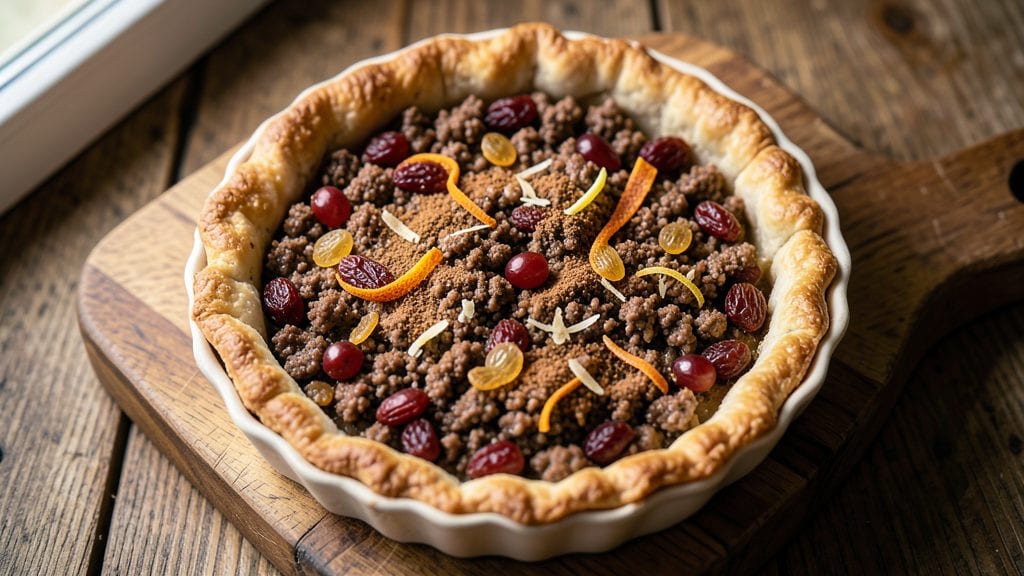
This old-fashioned mince pie recipe brings back the cozy, spiced flavors of British holiday traditions—where tender mincemeat filling meets flaky pastry for a dessert that tastes like nostalgia in every bite.
The secret lies in traditional ingredients: suet, dried fruits, and warm spices that meld together during slow baking, creating a filling that's rich yet balanced. I've perfected this recipe over years, ensuring the crust stays delicate while the filling stays moist and fragrant.
What sets these mince pies apart is the combination of a flaky suet pastry and the classic mincemeat recipe, which includes minced beef for depth alongside raisins, currants, and citrus peel. The pastry is blind-baked to achieve that signature crispness, then filled and sealed carefully to prevent leaks during baking.
This method guarantees a pie with a golden crust and a filling that's perfectly set—neither too dry nor too runny.
The result is a dessert that transports you to a traditional British kitchen, where every pie carries the warmth of spiced fruit and the comfort of homemade baking.
The aroma of cinnamon, nutmeg, and citrus fills your home as they bake, creating an atmosphere that's as inviting as the pies themselves. These are the kind of treats that become family favorites, passed down through generations.
Whether you're celebrating Christmas or simply craving a taste of tradition, these mince pies deliver flaky crusts and a filling that's rich with history. Perfect for holidays or special occasions, they're also simple enough to make year-round. Let's get started on creating these timeless desserts.
Ingredients for old fashioned mince pie
Twelve traditional ingredients blend suet richness with spiced fruit and citrus for authentic British holiday pies.
| Ingredient | Amount | Notes |
|---|---|---|
| Beef Suet 🥩 | 1 lb | Fresh or frozen, finely minced |
| Raisins 🍇 | 1 ½ cups | Golden or dark, soaked if preferred |
| Currants 🍇 | 1 cup | Dried, preferably organic |
| Sultanas 🍈 | ½ cup | Plump and moist |
| Orange Peel 🍊 | 1 tbsp | Finely grated, organic preferred |
| Lemon Peel 🍋 | 1 tbsp | Finely grated, organic preferred |
| Ground Almonds 🌰 | ½ cup | Finely ground, not almond flour |
| Brown Sugar 🍚 | ½ cup | Lightly packed |
| Ground Cinnamon 🌿 | 1 tbsp | Freshly ground preferred |
| Ground Nutmeg 🌿 | ½ tsp | Freshly grated nutmeg |
| Ground Ginger 🌶️ | ½ tsp | Freshly ground preferred |
| All-Spurce Flour 🌾 | 2 cups | Plus extra for dusting |
| Cold Unsalted Butter 🧈 | 1 cup | Cut into cubes, chilled |
| Ice Water 💧 | ½ cup | For pastry consistency |
| Diamond Crystal Kosher Salt 🧂 | ½ tsp | For pastry and filling |
| Minced Beef 🥩 | ½ lb | Lean, finely chopped |
| Brandy 🍷 | 2 tbsp | Optional, for depth |
The beef suet is non-negotiable for that classic texture—fresh from a butcher delivers superior flavor, though frozen works in a pinch. Raisins and currants should be plump, not shriveled; Whole Foods bulk bins often carry superior quality. Orange and lemon peel must be organic to avoid wax residue—Trader Joe's carries excellent organic citrus. For the ground spices, Penzeys Spices offers freshly ground options that elevate the filling's warmth. The minced beef adds depth; Costco sells pre-minced beef in vacuum-sealed packages for convenience without sacrificing quality.
No beef suet? Vegetable suet substitute (like Smart Balance) works for a vegetarian version, though texture differs slightly. Dried fruit substitutes? Chopped dates or figs add moisture but alter sweetness balance. Citrus peel can be omitted if unavailable, but the brandy is optional—Everclear or high-proof vodka works if brandy isn't on hand. Ground spices can be swapped for whole spices toasted and ground (e.g., toast cinnamon sticks first), but freshly ground delivers optimal aroma. All-purpose flour should be cool when mixed with butter to prevent melting during handling.
Store unbaked pies in an airtight container for up to 2 days before baking—this allows flavors to meld further. Baked pies keep 3 days at room temperature or 1 week refrigerated, though they're best enjoyed within 48 hours for peak texture. Freeze unbaked pies for up to 3 months by wrapping tightly in parchment and foil; bake straight from frozen with 5 extra minutes. Reheat briefly at 350°F to restore crispness if needed.
Why You'll Love This Recipe
- No Fuss Filling: I swear by this—just mix suet, dried fruit, and citrus zest, then bake. No rolling, no fuss, no stress. The texture stays moist for days, and honestly? That’s half the battle won.
- Spiced Comfort Bite: Between us, the raisins, currants, and sultanas plump up while baking, and that orange peel? It’s like a tiny citrus hug in every bite. Rich, sweet, and just tart enough to wake up your taste buds.
- Holiday or Snack: I make these for Christmas, but they’re also my go-to for school lunches or when I need a quick dessert. Wrap them in foil, and they’re ready in minutes—no reheating needed.
- Pantry Magic: Beef suet lasts forever, and dried fruit? You probably already have it. This recipe costs pennies but tastes like you spent hours. Plus, leftovers? They’re my secret weapon for lazy afternoons.
Step-by-step instructions for old fashioned mince pies
Mastering these classic pies requires precision in both filling and pastry technique.
Prepare the Spiced Fruit Filling
In a large mixing bowl, combine the 1 lb beef suet and 0.5 lb minced beef, breaking up any large pieces with your fingers until you achieve a fine, crumbly texture. This step is crucial for achieving the traditional meaty texture that distinguishes old-fashioned mince pies from fruit-only versions.
Add the 1.5 cups raisins, 1 cup currants, and 0.5 cup sultanas to the bowl. Gently toss the dried fruits with the meat mixture to distribute them evenly. Next, incorporate the 1 tbsp finely grated orange peel, 1 tbsp finely grated lemon peel, 0.5 cup ground almonds, and 0.5 cup brown sugar. The citrus peels will infuse subtle brightness, while the almonds add a delicate nuttiness that balances the sweetness.
In a small bowl, whisk together the 1 tbsp ground cinnamon, 0.5 tsp ground nutmeg, 0.5 tsp ground ginger, and 0.5 tsp diamond crystal kosher salt. Sprinkle this spice mixture evenly over the fruit-meat combination and mix thoroughly with your hands. The spices should be distributed uniformly to create a cohesive, aromatic filling. For an optional depth of flavor, drizzle in the 2 tbsp brandy and mix again, allowing the alcohol to mingle with the ingredients. This step ensures the filling will have that characteristic old-fashioned warmth when baked.
Create the Flaky Pastry Dough
In the bowl of a stand mixer fitted with the paddle attachment, combine the 2 cups all-spurce flour and 0.5 tsp diamond crystal kosher salt. Mix on low speed for 10 seconds to distribute the salt evenly through the flour. Add the 1 cup cold unsalted butter, cut into cubes, and mix on low speed until the butter is reduced to pea-sized pieces. This cold butter is essential for achieving the flaky layers in the crust.
With the mixer running on low, gradually add the 0.5 cup ice water, one tablespoon at a time, until the dough begins to come together. Avoid overmixing—stop as soon as the dough forms a shaggy mass. If the dough feels too dry, add an additional 1 teaspoon ice water. The dough should be cool to the touch and hold together when pressed gently. If it crumbles, it needs more ice water; if it sticks to your fingers, it's too wet. The goal is a firm, cohesive dough that will yield a tender yet flaky crust.
Assemble and Bake the Mince Pies
Preheat your oven to 375°F. On a lightly floured surface, roll out the pastry dough to a thickness of ⅛ inch. Use a 2.5-inch round cutter to cut out circles for the pie tops and bottoms. You should yield enough dough for 12 pies, including a small amount for sealing the edges. If the dough becomes too warm or sticky while rolling, place it in the refrigerator for 10 minutes to firm up again.
Place a round of dough in each of 12 greased mini muffin tin cups, pressing gently to ensure the dough adheres to the bottom and sides. Spoon 1 tablespoon of the spiced fruit filling into each pie shell, mounding it slightly in the center. Top each pie with another round of dough, pressing the edges firmly to seal. Use a fork to crimp the edges decoratively, ensuring a good seal to prevent filling from leaking during baking.
Bake the pies in the preheated oven for 25-30 minutes, or until the crusts are deep golden brown and the filling is bubbling through the vents. The pies are done when they pull away slightly from the edges of the muffin tin and emit a rich, spiced aroma. For extra browning, transfer the pies to a baking sheet and broil for 1-2 minutes, watching closely to avoid burning. Allow the pies to cool in the tin for 5 minutes before transferring them to a wire rack to cool completely. This resting period ensures the filling sets properly and the crust firms up.
Pro Tips For Making Old Fashioned Mince Pie
- Grate the Orange Peel: Use a fine grater—not a zester—and scrape off the outermost layer only, where all the flavor hides. Toss it with the dried fruit while still damp from soaking (if you soak them), so the oils cling better. I learned this the hard way after making a batch that tasted like citrusy wallpaper.
- Soak the Dried Fruit: Toss raisins, currants, and sultanas in warm tea (black or Earl Grey works best) or brandy for 10 minutes before mixing with suet. This plumps them up and mutes the harshness of over-dried fruit—trust me, your mince won’t taste like raisin cereal if you do this.
- Chill the Mixture: After combining suet, fruit, and spices, press the filling into your pie cases and refrigerate for at least 30 minutes. Cold filling bakes more evenly and doesn’t ooze out like a sad, greasy puddle. (Yes, I’ve seen it happen.)
- Bake Low and Slow: Set your oven to 180°C (350°F) and bake for 20–25 minutes—no peeking! High heat makes the suet turn to glue, and the crusts burn before the filling sets. A gentle bake keeps the texture crumbly, not gummy. (And no, the "golden brown" rule doesn’t apply here.)
Regional styles of this dish
English Country Style
The classic English mince pie relies on a suet pastry that's slightly richer than traditional shortcrust, with a thicker, heartier texture. The filling here often includes more minced beef (up to 0.75 lb) for a deeper savory note, balanced by dried apples alongside the usual raisins and currants.
I like adding a splash of port wine (instead of brandy) to the filling for a subtle fruity complexity that pairs beautifully with the buttery crust. These pies are traditionally served with clotted cream or whipping cream for dipping. 🥧
Scottish Shortbread Twist
In Scotland, mince pies often incorporate shortbread elements into the pastry for extra crumbly texture. The dough includes extra butter (up to 1.25 cups) and a pinch of baking soda for a lighter, almost biscuit-like quality.
The filling sometimes features blackcurrants (a Scottish favorite) and a touch of whisky (instead of brandy) for a smoky depth. These pies are often baked in individual tart pans rather than muffin tins, giving them a more elegant, free-standing presentation. 🏴
American Colonial Adaptation
Early American settlers adapted mince pies using local ingredients like dried peaches or cherries instead of imported raisins. The pastry often included cornmeal (about 2 tbsp) for a slightly grainy texture, and the filling might feature ground cinnamon and cloves in higher proportions.
I've seen historical recipes where apple cider replaced brandy entirely. These pies were traditionally baked in deep, fluted molds to resemble miniature fruitcakes. 🍎
Modern Vegetarian Version
For a contemporary twist, replace the beef suet and minced beef with vegetable suet (like Smart Balance) and mushrooms (finely chopped) for umami depth. The filling still benefits from the citrus peels and spices, but I reduce the sugar slightly to 0.35 cups to balance the earthy flavors.
The pastry remains traditional, but I brush the tops with egg wash mixed with a pinch of cinnamon before baking for extra warmth. These work beautifully as holiday appetizers or dessert toppers. 🌱
Australian Bush Pie Style
Down under, mince pies often incorporate local bush fruits like finger lime or wattleseed into the filling for a uniquely Australian flavor profile. The pastry sometimes includes a splash of golden syrup in the dough for a caramelized richness.
I've seen versions where the filling includes dried apricots and a hint of vanilla bean alongside the traditional spices. These pies are often baked in individual ramekins and served with vanilla ice cream for a decadent treat. 🇦🇺
Nutrition facts
Frequently asked questions
Why does traditional mince pie filling include minced beef?
The minced beef adds a rich, savory depth that balances the sweetness of the dried fruits and spices. This was historically practical—beef was inexpensive and preserved well in the filling. The meat also helps create a firmer texture that holds together during baking, preventing a runny center.
Can I make these pies without suet?
Yes! For a vegetarian version, substitute beef suet with vegetable suet (like Smart Balance) or extra butter (reduce by 2 tbsp). The texture will be slightly different but still delicious. For a vegan option, use coconut oil or store-bought vegan suet substitutes.
How do I prevent the filling from leaking during baking?
Ensure your pastry edges are fully sealed with a fork crimp and press them firmly against the tin. Chill the assembled pies in the fridge for 30 minutes before baking to help the filling set. If filling still leaks, reduce baking time slightly or use slightly less filling per pie.
What's the best way to store leftover mince pies?
Keep baked pies in an airtight container at room temperature for up to 3 days or refrigerate for 1 week. For longer storage, freeze unbaked pies (wrapped tightly) for 3 months. To reheat, warm at 350°F for 5-10 minutes to restore crispness.
Can I make the filling ahead of time?
The filling keeps well in the fridge for up to 3 days or freezes for 3 months. Thaw overnight in the fridge before using. The flavors actually improve with time as the spices meld. Store in an airtight container with parchment between layers to prevent sticking.