
Desserts
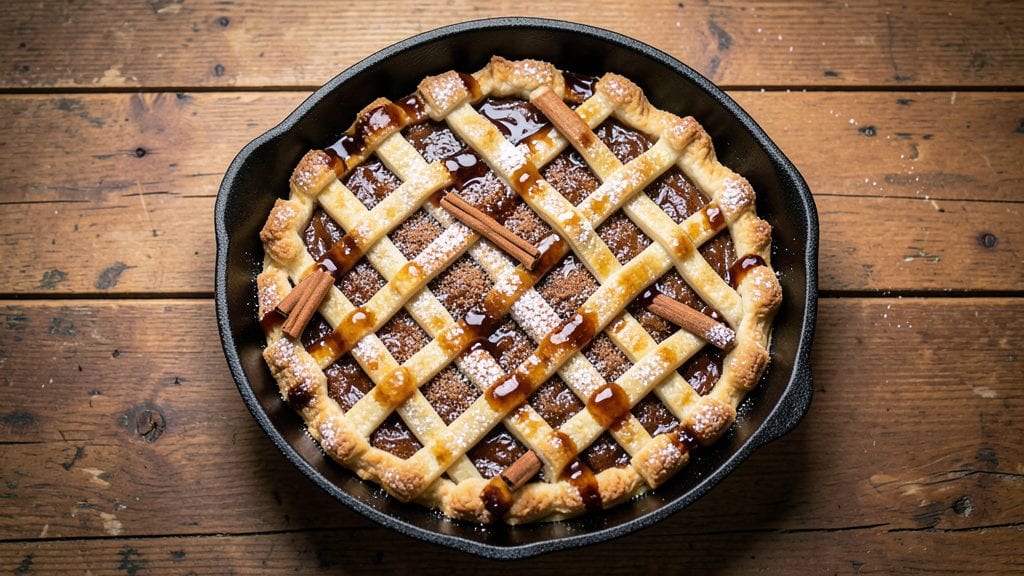
Paula Deen’s chess pie recipe delivers that unmistakable Southern sweetness—a buttery, molasses-spiced crust wrapped around a velvety vanilla custard that swirls into golden perfection.
The moment you pull it from the oven, that caramelized crust gives way to a creamy, dreamy center that tastes like home baking at its finest. I’ve recreated this classic using Paula’s signature techniques, ensuring every slice delivers that rich, spiced flavor balanced with sweet vanilla notes.
The key to this recipe lies in the crust—where molasses and spices create a deep, aromatic base that pairs beautifully with the custard. Unlike traditional chess pies, this version incorporates a swirled filling that creates striking visual appeal while keeping the texture impossibly tender.
The baking process is straightforward, but the patience in letting the pie set properly makes all the difference—no one wants a runny center!
What you’ll end up with is a pie that’s restaurant-quality at home, with a crisp crust that shatters slightly at the edges and a custard so smooth it melts on your tongue.
The aroma alone will have everyone gathering in the kitchen, and the first bite will have them asking for seconds. Whether you serve it warm with whipped cream or at room temperature with a sprinkle of pecans, this pie is pure comfort in every slice.
Perfect for holiday gatherings, family dinners, or when you simply crave a taste of the South. Let’s get baking—this recipe is worth every minute of waiting.
Ingredients for paula deen chess pie
Buttery crust, spiced molasses, and velvety vanilla custard—this pie brings Southern comfort to your table.
| Ingredient | Amount | Notes |
|---|---|---|
| All-Purpose Flour 🌾 | 2 cups | Sifted for light texture |
| Unsalted Butter 🧈 | 1 cup | Cold, cubed for crust |
| Dark Molasses 🍯 | ½ cup | Gotham preferred for depth |
| Granulated Sugar 🍚 | 1 cup | White sugar for balance |
| Light Brown Sugar 🍚 | ½ cup | Packed for moisture |
| Ground Cinnamon 🌿 | 2 tsp | Freshly ground preferred |
| Ground Ginger 🌿 | 1 tsp | For warm spice notes |
| Ground Cloves 🌿 | ½ tsp | Use sparingly for depth |
| Salt 🧂 | ½ tsp | Kosher or sea salt |
| Large Eggs 🥚 | 4 whole | Room temperature for custard |
| Heavy Whipping Cream 🥛 | 1 ½ cups | Full-fat for richness |
| Vanilla Extract 🍯 | 2 tsp | Pure Madagascar preferred |
| Granulated Sugar 🍚 | ¾ cup | For custard sweetness |
| Cornstarch 🌾 | 2 tbsp | For thick custard |
| Pecans 🌰 | ½ cup | Chopped for topping (optional) |
The molasses is where this pie shines. Gotham brand has that deep, rich flavor that stands up to the spices. Grab it from the baking aisle—it’s worth the extra few dollars. For the crust, cold butter is non-negotiable (trust me on this). Cut it into tiny cubes and toss with the flour before mixing. The spices? Penzeys or your local bulk bin for the freshest ground cinnamon, ginger, and cloves. If you’re using pre-ground, toast them in a dry pan for 30 seconds to wake up the flavors. The pecans? Trader Joe’s has the best price for raw ones—just toast and chop them yourself.
No molasses? Substitute with 1/4 cup maple syrup plus 1/4 cup dark brown sugar—it’ll be sweeter but still delicious. Short on butter? Vegetable shortening works in a pinch, but the flavor won’t be as rich. The custard can be made ahead and chilled overnight, which actually improves the texture. If you’re swirling the filling, use a piping bag or a plastic bag with a corner snipped off—it’s foolproof. And if you’re worried about a runny center, bake it 10 minutes longer than the recipe says (it’ll still taste perfect).
This pie tastes even better the next day—cover it loosely with foil while it cools to keep the crust crisp. Store leftovers in an airtight container for up to 5 days in the fridge. For serving, I like to sprinkle extra pecans on top right before cutting. The crust stays crisp for about 2 hours at room temperature, so serve it soon after baking if you’re impatient like me. Freezes beautifully for up to 3 months—just thaw overnight in the fridge.
Why You'll Love This Recipe
- Molasses Magic Simplicity: Between us, this pie comes together with just five pantry staples—no fancy techniques. You’ll mix, pour, and bake while the molasses and brown sugar do all the heavy lifting. Honestly, the crust alone (butter + flour + ice water) feels like cheating.
- Deep, Spiced Soul: That dark molasses? It’s the star—rich, almost caramel-like, with a hint of smokiness that lingers. The brown sugar adds a buttery crunch, and the whole thing has this warm, almost cinnamon-like depth that tastes like a hug from Paula’s kitchen.
- Weeknight Crowd-Pleaser: I’ve served this at potlucks, holiday dinners, and even as a quick dessert after a long day. It’s hearty enough for a main (pair with ice cream) but simple enough to throw together when you’re swamped. My kids beg for seconds—no one turns it down.
- Budget-Friendly Leftovers: A single pie costs me pennies but feeds six. The leftovers? Even better the next day—sliced warm with a scoop of vanilla ice cream or straight from the fridge. Plus, the ingredients last forever, so you’re not scrambling for substitutions.
Step-by-step instructions for Paula Deen's chess pie
Here's how to create Paula Deen's signature molasses-spiced crust with that signature vanilla custard swirl.
Prepare the Molasses-Spiced Crust
In a large bowl, combine the 2 cups all-purpose flour, 1 cup unsalted butter (cut into small cubes), 1 cup granulated sugar, 0.5 cup light brown sugar, 2 teaspoons ground cinnamon, 1 teaspoon ground ginger, 0.5 teaspoon ground cloves, and 0.5 teaspoon salt. Use your fingers or a pastry cutter to work the butter into the dry ingredients until the mixture resembles coarse crumbs with pea-sized butter pieces remaining.
Pour in the 0.5 cup dark molasses and mix with a wooden spoon until evenly distributed. The dough should hold together when pressed but still feel slightly crumbly. Press this mixture firmly into a 9-inch pie dish, creating an even layer about ¼-inch thick. Use the back of a spoon to smooth the edges and create a slight overhang. Chill in the refrigerator for 30 minutes while you prepare the filling.
Make the Vanilla Custard Filling
In a medium saucepan, combine the 1.5 cups heavy whipping cream, 0.75 cup granulated sugar, 2 tablespoons cornstarch, 2 teaspoons vanilla extract, and 4 whole large eggs. Whisk vigorously until the mixture is smooth and all ingredients are fully incorporated. Place the saucepan over medium heat and cook, stirring constantly with a wooden spoon, until the mixture thickens to a pudding-like consistency—this should take about 5-7 minutes. You'll know it's ready when the mixture coats the back of a spoon and leaves a clear path when you run your finger through it.
Remove from heat and let cool to room temperature. This step is crucial—if the filling is too hot when poured over the crust, it can cause the molasses layer to soften and lose its structure.
Assemble and Bake the Chess Pie
Preheat your oven to 375°F. Pour the cooled vanilla custard mixture evenly over the chilled molasses crust. The custard should fill the pie dish to about ½-inch below the rim. Sprinkle the 0.5 cup chopped pecans evenly over the top of the custard, pressing down gently so they adhere.
Bake for 45-50 minutes, until the custard is set and the edges are golden brown. You'll know it's done when the center is no longer jiggly and a toothpick inserted comes out clean. If the top begins to brown too quickly, tent the pie with aluminum foil to prevent over-browning.
Cool and Serve for Perfect Texture
Remove the pie from the oven and let it cool completely on a wire rack. This cooling process allows the layers to set properly and prevents the custard from becoming watery. The contrast between the spiced molasses crust and the smooth vanilla custard is what makes this pie so special. Serve at room temperature for the best texture and flavor—each bite should deliver that perfect balance of sweet, spicy, and creamy.
For an extra touch, you can dust the top with a light layer of powdered sugar before serving, but the pie's natural flavors are rich enough to stand on their own. Store any leftovers in the refrigerator for up to 3 days, though I doubt it will last that long!
Pro Tips For Making Paula Deen Chess Pie
- Whisk Molasses First: I learned this the hard way—dumping molasses into the dry ingredients first makes it easier to dissolve without clumping. Mix it with the butter and sugars before adding flour, and you’ll avoid that stubborn, grainy texture that ruins the whole pie.
- Cut Cold Butter: Use cold butter straight from the fridge (yes, even if you’re impatient like me) for the crust. It keeps the flakes distinct and prevents a tough, greasy mess. Pulse it in the food processor until it’s pea-sized—no smaller, or you’ll end up with a dense bottom.
- Skip the Overmixing: The moment the dough looks like wet sand, stop. Overworking it develops gluten, and your crust will turn out chewy instead of flaky. Press it into the pan firmly but gently—don’t press your frustration into it.
- Bake Low and Slow: That 375°F oven setting isn’t just a suggestion. Chess pie needs time to let the molasses caramelize properly without burning. If the edges brown too fast, tent it with foil and let the center set—rushing it makes the filling taste bitter.
Troubleshooting this dish
Crust Too Crumbly?
If your molasses-spiced crust breaks apart when pressing it into the pie dish, don’t panic—this is a common issue with high-fat doughs. The fix is simple: chill the dough for an extra 15-20 minutes before pressing.
Cold butter is key, so if your kitchen is warm, pop the dough back in the fridge for a bit. For extra stability, sprinkle 1 tablespoon of ice water over the dough and mix gently with a fork before pressing.
This binds the crumbs together without making the crust soggy. 🧊
Runny Custard Center
A watery custard center is usually caused by undercooking or overmixing the filling. First, always check the custard’s temperature before pouring—it should be 160°F (not scalding). If it’s still runny after baking, return it to the oven for 5-10 more minutes at 350°F, covered loosely with foil.
For next time, whisk the cornstarch into the cream first before adding eggs to prevent lumps, which can weaken the custard’s structure. A toothpick test is foolproof: insert it into the center—if it comes out clean, it’s done. If not, bake longer.
Molasses Flavor Too Strong
If the molasses flavor overpowers the vanilla custard, you’ve likely used too much. The recipe calls for ½ cup dark molasses, but if you prefer a milder taste, reduce it to ¼ cup and add ¼ cup maple syrup for sweetness.
For a sweeter, less intense flavor, increase the granulated sugar in the crust by 2 tablespoons. If you’ve already mixed the dough, balance the molasses by adding 1 extra teaspoon of vanilla extract to the custard—it’ll mellow the spice notes while enhancing the sweetness. 🍯
Custard Separates
Separation happens when eggs cook too quickly or the heat is too high. To prevent this, temper the eggs by whisking them into the warm cream mixture gradually. If separation occurs during cooking, immediately remove the pan from heat and whisk vigorously for 1-2 minutes to recombine.
For next time, use a double boiler (saucepan with a heatproof bowl) to cook the custard over simmering water—this gives you more control over the temperature.
If all else fails, you can still salvage it by straining the custard through a fine-mesh sieve before pouring it over the crust. 🥄
Crust Burns Before Custard Sets
An overbrowned crust while the custard is still jiggly is a classic baking dilemma. Tent the pie with aluminum foil as soon as the crust starts to darken (usually after 20-25 minutes).
If the custard isn’t set after baking, return the pie to the oven for 5-10 minutes at 325°F to finish cooking without burning the crust. For extra insurance, brush the crust edges with egg wash before baking—this creates a barrier that prevents over-browning.
If the crust is already too dark, serve the pie warm to soften the edges slightly. 🔥
Pecans Won’t Stick
Chopped pecans often slide off the custard if they’re not pressed down firmly. Before baking, lightly toast the pecans in a dry pan for 2-3 minutes until fragrant—this makes them stickier.
Press them into the custard with the back of a spoon, then drizzle 1 teaspoon of melted butter over them to help them adhere. If you’re using raw pecans, chill the pie for 10 minutes after baking before serving—the cold custard will help them stay in place.
For a foolproof method, pipe the custard into the pie dish first, then sprinkle pecans on top and press gently. 🌰
Nutrition facts
Frequently asked questions
Why does Paula Deen's chess pie have molasses in the crust?
The molasses adds a deep, caramelized sweetness that balances perfectly with the vanilla custard. It also creates that signature Southern flavor profile Paula Deen is known for—think warm spices like cinnamon and ginger that complement the molasses' richness. The combination gives the crust a unique texture and aroma that sets this pie apart from traditional custard pies.
Can I make this pie ahead of time?
This pie actually tastes better the next day. Let it cool completely, then cover loosely with foil and store at room temperature for up to 2 hours. For longer storage, refrigerate for up to 5 days or freeze for 3 months. The crust will stay crisp, and the custard will firm up beautifully. Just bring it to room temperature before serving for the best texture.
What's the secret to getting the perfect swirl in the custard?
Use a piping bag or a plastic bag with a corner snipped off to create clean swirls. First, pour half the custard into the pie, then pipe the remaining custard in a spiral pattern before baking. For extra flair, use a skewer to gently swirl the custard after pouring. The key is working quickly so the custard doesn't set before you create your design.
Can I substitute pecans with another nut?
Yes, but pecans are ideal because they hold their shape when toasted. For a different flavor, try chopped walnuts or even candied pecans. If you want to go nut-free, omit them entirely or sprinkle toasted coconut flakes on top. Just remember that pecans add both texture and a subtle sweetness that pairs perfectly with the molasses crust.
How do I know when the custard is fully set?
The custard is done when it's just set but still slightly jiggly in the center. Insert a toothpick—it should come out clean or with just a few moist crumbs. If it's still runny after baking, return to the oven for 5-10 more minutes at 350°F covered with foil. Overbaking can make the custard dry, so it's better to slightly underbake and finish in the oven.