Desserts
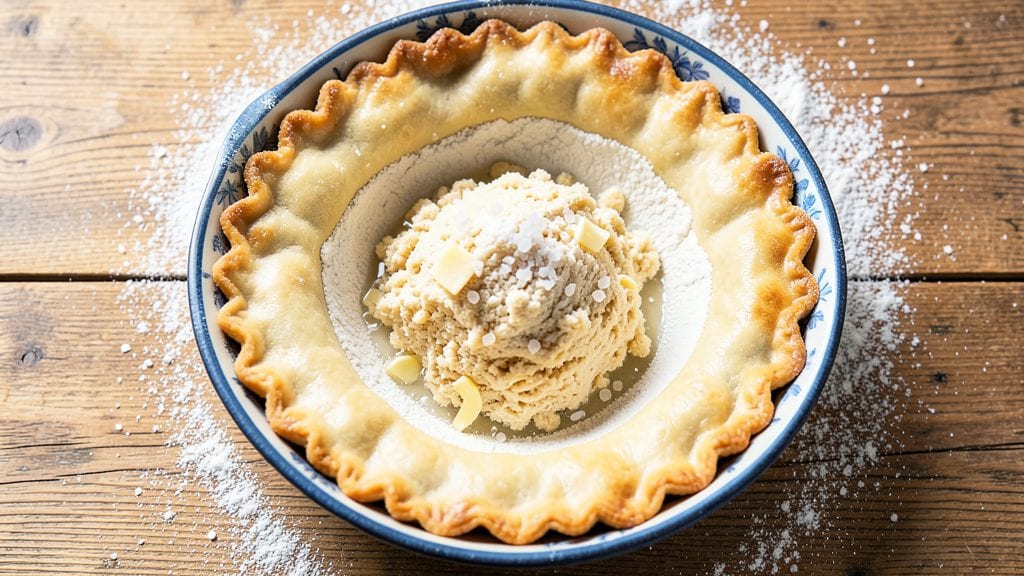
Paula Deen’s pie crust recipe delivers that signature buttery, flaky perfection that makes every slice worth savoring. Standing on a step stool in my grandmother’s kitchen, I learned how proper technique transforms simple ingredients into something extraordinary—just like Paula’s method does.
The secret lies in cold butter, precise handling, and patience during the chilling stages.
This recipe uses a classic all-butter crust with a touch of vinegar for tenderness, creating layers so delicate they practically melt in your mouth. The lattice technique adds visual appeal while keeping the filling visible—a hallmark of Paula’s style.
With just 10 ingredients and 30 minutes of active time, you’ll have a crust ready for pies, tarts, or even savory galettes.
What you’ll achieve is a golden, shimmering crust with crisp edges and tender layers that hold up to both sweet and savory fillings. The lattice pattern creates elegant cutouts while allowing steam to escape, preventing soggy bottoms.
This is the kind of crust that makes pie-making feel like a celebration, not a chore.
Whether you’re baking a classic pecan pie or experimenting with a savory chicken pot pie, this crust forms the perfect foundation. The key is keeping everything cold—from the butter to the dough—and letting it rest. Here’s how to bring Paula Deen’s signature flakiness to your kitchen.
Ingredients for paula deen pie crust
Ten essential ingredients create Paula Deen’s legendary lattice crust—flaky, golden, and worth every chilled minute.
| Ingredient | Amount | Notes |
|---|---|---|
| All-Purpose Flour 🌾 | 3 cups | Sifted for optimal texture |
| Unsalted Butter 🧈 | 1 cup | Cold, cubed, high-fat content |
| White Vinegar 🍶 | 2 tbsp | For tenderness and acid balance |
| Ice Water 💧 | ½ cup | Chilled, for precise hydration |
| Diamond Crystal Kosher Salt 🧂 | 1 ½ tsp | Fine grain for even distribution |
| Granulated Sugar 🍚 | 1 tbsp | Enhances browning and flavor |
| Large Egg Yolks 🥚 | 1 whole | For binding and richness |
| Vanilla Extract 🌸 | ½ tsp | Pure, for subtle depth |
| Lemon Zest 🍋 | 1 tsp | Brightens flavor profile |
| Cold Heavy Cream 🥛 | ¼ cup | For lattice brushing |
The unsalted butter is non-negotiable—Paula Deen’s signature all-butter crust demands high-fat European-style butter from brands like Plugrá or Land O’Lakes Cultured. Avoid margarine or low-fat substitutes; the fat content is critical for flakiness. Purchase it in 1-pound blocks and refrigerate until ready to cube. For the flour, King Arthur or Gold Medal brands are ideal due to their high protein content, which develops gluten for structure. Store flour in an airtight container in a cool, dark pantry to prevent rancidity. The Diamond Crystal kosher salt is preferred for its fine grain, which dissolves evenly—Morton’s is a reliable alternative if unavailable.
Substitutions must prioritize fat content and acidity. Lard or shortening can replace butter at a 1:1 ratio, though texture will differ slightly—lard adds a traditional richness, while shortening ensures crispness. For vinegar, apple cider vinegar works equally well, though white vinegar’s sharpness aligns better with Paula’s style. Ice water is critical; tap water at room temperature will yield a tough crust. If unavailable, freeze water in ice cube trays for 30 minutes. The egg yolk can be omitted for a vegan crust, but replace with 1 tbsp aquafaba or an additional 1 tbsp cold water to maintain binding. Vanilla extract and lemon zest are optional but elevate the crust’s complexity—imitation vanilla lacks the depth, and bottled lemon juice won’t provide the same aromatic impact.
All ingredients must remain cold until assembly. Pre-chill mixing bowls and utensils in the freezer for 10 minutes before use. The dough should be divided into two 1-inch-thick disks, wrapped in plastic, and refrigerated for at least 2 hours—overnight is ideal. For the lattice, roll one disk to 1/8-inch thickness and cut strips with a pastry wheel. Brush the baked crust with cold heavy cream (or melted butter) before adding the lattice to create a shimmering, golden finish. Store unused dough between parchment paper in the fridge for up to 48 hours or freeze for 3 months. Reheat frozen dough at room temperature for 1 hour before rolling.
Why You'll Love This Recipe
- Same dough, endless uses: pot pie, quiche, or even a quick galette. I’ll make a double batch on Sundays, freeze half, and pull it out for company or lazy dinners. Works for pie and practicality.
- No-Fuss Mixing: I swear by the vinegar trick—just tossing cold butter cubes into flour until it resembles coarse crumbs, then adding ice water a tablespoon at a time. No food processor, no stress, and the dough comes together faster than I can say "preheat the oven."
- Buttery Crisp Magic: That cold butter in the flour? It creates the perfect flaky layers—golden, shatteringly crisp at the edges, but tender as pie (literally) in the center. Honestly, I’ve tried every shortcut crust, but this one still wins every time.
- Weeknight to Holiday: Same dough, endless uses: pot pie, quiche, or even a quick galette. I’ll make a double batch on Sundays, freeze half, and pull it out for company or lazy dinners. Works for pie and practicality.
Step-by-step instructions for Paula Deen's pie crust recipe
This method delivers a golden, flaky lattice crust with tender layers—just like Paula Deen's signature style.
Create the Dough Base with Precision
In a large mixing bowl, combine the 3 cups all-purpose flour, 1.5 teaspoons diamond crystal kosher salt, and 1 tablespoon granulated sugar. Whisk vigorously to distribute the salt and sugar evenly through the flour—this prevents dry spots in the final crust. Create a well in the center and add the 1 cup cold, cubed unsalted butter. Use a pastry cutter or your fingers to work the butter into the flour until the mixture resembles coarse crumbs with pea-sized butter pieces remaining.
Add the 1 whole large egg yolk, 0.5 teaspoon vanilla extract, and 1 teaspoon lemon zest to the flour mixture. Gently stir with a wooden spoon until the ingredients begin to clump together. This step builds the foundation for a tender, flavorful crust. The lemon zest and vanilla add subtle depth that elevates the crust beyond basic pie dough.
Hydrate and Form the Dough
Pour the 2 tablespoons white vinegar and 0.5 cup ice water over the flour mixture. Use a silicone spatula to gently fold the ingredients together until they form a shaggy dough. Avoid overworking the dough at this stage—just until the mixture holds together when pressed. The ice water ensures precise hydration without making the dough sticky.
Turn the dough out onto a lightly floured surface and knead it 8-10 times until smooth. The dough should be cool to the touch and hold together without cracking. If it feels too dry, add 1 teaspoon ice water at a time; if it's too sticky, add 1 tablespoon flour. Wrap the dough tightly in plastic wrap and refrigerate for at least 2 hours—this resting period develops gluten structure and prevents shrinking during baking.
Roll and Assemble the Crust
Remove the dough from the refrigerator and divide it into two equal portions. On a lightly floured surface, roll one portion into a 12-inch circle about 1/8-inch thick, using gentle pressure to maintain even thickness. Transfer the rolled dough to a 9-inch pie dish, pressing it gently into the bottom and up the sides. Trim any excess dough hanging over the edge, leaving about 1/2 inch for crimping later.
Repeat with the second portion of dough, rolling it into another 12-inch circle. For the lattice pattern, cut the second dough sheet into 8-10 strips about 1/2-inch wide, leaving a 1-inch border uncut around the edges. This border will anchor the lattice design. Brush the top of the bottom crust with 0.25 cup cold heavy cream—this creates a golden finish and helps seal the layers.
Create the Lattice Pattern
Arrange 4 strips of dough perpendicular to each other across the pie, spacing them evenly. Fold back every other strip and place a strip from the opposite direction over it, creating an alternating pattern. Press the edges gently to seal the lattice. The goal is to create a grid with open spaces that allow steam to escape while maintaining structural integrity.
Brush the lattice with additional cold heavy cream and sprinkle with a pinch of diamond crystal kosher salt for extra flavor. The cream enhances browning and adds a subtle richness. Chill the assembled pie crust in the refrigerator for 30 minutes before baking—this prevents the lattice from shifting during the baking process.
Bake to Golden Perfection
Preheat your oven to 375°F. Line the bottom of the pie dish with a parchment circle cut to fit, then fill the crust with pie weights or dried beans to prevent puffing. Bake for 15 minutes, then remove the weights and bake for an additional 15-20 minutes until the crust is deep golden brown and the lattice edges are crisp. The internal temperature should reach 180°F when measured at the base.
Transfer the pie crust to a wire rack and let it cool completely before filling. The lattice should hold its shape with crisp edges and tender layers. If the crust browns too quickly, tent it loosely with foil during baking. This method ensures a buttery, flaky crust that shines like Paula Deen's signature creations.
Pro Tips For Making Paula Deen Pie Crust
- CHILL THE BUTTER FIRST: Paula Deen’s recipe calls for cold butter, but I learned the hard way—taking it straight from the fridge to the bowl means it’ll melt into a greasy mess. Cut those 16 tablespoons into chunks and let them sit on the counter for 10-15 minutes until they’re soft but still hold their shape. That way, when you mix in the flour, you’ll get pea-sized butter lumps instead of a sad, soupy dough.
- WEIGH YOUR FLOUR: Scooping flour from the bag is how you end up with a dry, crumbly crust that cracks like a biscuit left in the sun. Use a kitchen scale for the 2 cups—it should weigh about 250 grams—and spoon it into the bowl, then level it off with a knife. Trust me, this small step keeps your crust tender and flaky, not tough.
- LESS WATER THAN YOU THINK: The recipe says "ice water," but I used to pour in too much, thinking more moisture would make the dough easier to roll. Wrong. Start with just 6 tablespoons—yes, even if the dough feels dry—and add ice water 1 teaspoon at a time until it just holds together. Overdo it, and your crust will turn out gummy instead of crisp.
- REST THE DOUGH TWICE: Most recipes say to rest the dough once, but I’ve found Paula Deen’s version benefits from two short rests. Shape the dough, wrap it, and let it sit for 30 minutes before rolling. Then, after rolling, fold it into thirds like a letter, wrap it again, and rest another 20 minutes. This relaxes the gluten enough to prevent shrinking when it bakes—your pie will stay round, not puckered.
Regional styles of this recipe
Southern Comfort Style
Paula Deen’s Southern roots shine through in this crust’s rich, buttery layers—just like the pies she served at her Savannah restaurant. The key is using high-fat European-style butter (like Plugrá) and keeping everything cold to achieve that signature flakiness.
I remember my grandmother’s advice: "Cold butter makes golden crusts." The vanilla and lemon zest add that subtle Southern sweetness that elevates even the simplest pie. 🌸
Italian-Inspired Adaptation
For an Italian twist, replace the vanilla with 1 teaspoon orange zest and add 1 tablespoon finely chopped fresh rosemary to the dough. This adaptation draws from my Sicilian heritage—my nonna used similar techniques for her sfogliatelle pastries.
The citrus brightens the crust while the rosemary adds an earthy depth. Roll the dough slightly thinner (1/16-inch) for a more delicate texture, perfect for ricotta or lemon custard pies.
Gluten-Free Southern Twist
Swap the all-purpose flour for a 1:1 gluten-free blend (like King Arthur Measure for Measure) and replace the egg yolk with 1 tablespoon aquafaba to bind the dough. Use lard instead of butter for better flakiness in gluten-free crusts—Paula Deen often used lard in her early recipes.
Chill the dough for 3 hours (longer rest time is critical for gluten-free dough) before rolling. This version keeps the Southern comfort while accommodating dietary needs. 💪
Savory Galette Variation
Transform this crust into a savory galette by omitting the sugar and lemon zest, then adding 1 tablespoon dried thyme and 1 teaspoon onion powder to the dough.
Roll the dough into a 12-inch circle, brush with melted butter, and top with caramelized onions, mushrooms, and gruyère cheese before baking. This adaptation turns the lattice into a rustic French-style galette—perfect for brunch or a light dinner.
The buttery layers stay crisp even with savory fillings. 🥖
Herb-Infused Lattice
For a herb garden lattice, mix 1 tablespoon chopped fresh thyme or sage into the dough before rolling. After assembling the lattice, brush the strips with garlic-infused olive oil instead of heavy cream.
This variation works beautifully with spinach and ricotta fillings or roasted vegetable pies. The herbs add an aromatic complexity that pairs well with both sweet and savory fillings. 🌿
Make-Ahead Tips
Assemble the lattice crust up to 2 days ahead and refrigerate, covered. For longer storage, freeze the unbaked crust (wrapped tightly in plastic) for up to 3 months. Thaw in the refrigerator overnight before baking.
This Southern technique ensures you’re always ready for last-minute gatherings—just like my grandmother’s famous peach pie at Sunday dinners. The crust holds its shape beautifully after thawing. ❄️
Nutrition facts
Frequently asked questions
Why does Paula Deen's crust use vinegar?
The white vinegar tenderizes the gluten, creating a more delicate texture that prevents toughness. It also balances the richness of the butter, just like my nonna used lemon juice in her pasta dough. The acidity helps develop flavor while keeping the layers tender—essential for that signature flaky finish.
Can I make this crust without an egg yolk?
Yes! Replace the yolk with 1 tablespoon aquafaba (chickpea brine) for binding, or add an extra 1 teaspoon ice water to compensate. The crust will still hold together, though the texture may be slightly less rich. Paula Deen's original method relies on the yolk for moisture and fat, but this works for vegan adaptations.
How do I fix a cracked lattice pattern?
Gently press the cracked strips back into place with your fingers or a rolling pin. For stubborn gaps, brush with cold heavy cream and sprinkle with extra flour to seal. Chill for 15 minutes before baking to set the lattice. The key is patience—Paula Deen's crusts rely on precise handling to maintain structure.
What’s the best way to store leftover dough?
Wrap the dough tightly in plastic wrap and refrigerate for up to 48 hours, or freeze for 3 months between parchment sheets. Thaw in the fridge overnight for even texture. My grandmother always stored dough this way—it preserves the cold butter perfectly, keeping the crust flaky when baked.
Can I use this crust for savory pies too?
Omit the sugar and lemon zest, then add 1 tablespoon dried herbs (like thyme or rosemary) to the dough. The buttery layers stay crisp with fillings like chicken pot pie or mushroom galettes. Paula Deen often used similar techniques for her savory dishes—just adjust seasonings to complement the filling.