
Main Courses
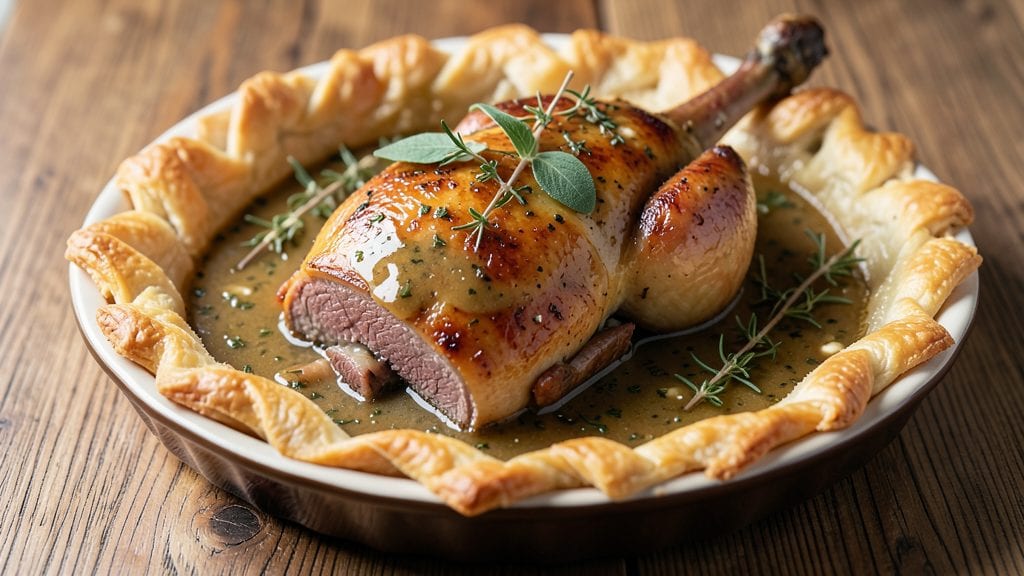
This pheasant pie recipe delivers the kind of rich, savory depth that transforms a weeknight dinner into a memorable feast. The secret lies in a carefully seasoned pheasant filling—infused with aromatic herbs and slow-cooked to tender perfection—encased in a flaky pastry crust that crackles with every bite.
I developed this version after years of testing, balancing traditional techniques with modern convenience for home cooks.
The process begins with properly preparing the pheasant—seasoned, roasted just until tender, then carefully stuffed back into its cavity with herbs and vegetables before being nestled into the pastry. This method ensures every slice delivers layers of flavor: crispy crust, juicy meat, and fragrant filling.
The gravy, made from the pan drippings, ties everything together with a velvety finish that elevates the dish from ordinary to extraordinary.
What you’ll achieve is a pie that looks and tastes like it belongs in a country inn or upscale restaurant—golden crust, tender meat, and a harmonious blend of herbs that sing with every bite.
The filling stays moist while the crust achieves that perfect balance of crispness and tenderness, proving that homemade can rival the best. This recipe is designed to impress without requiring advanced skills, making it accessible to cooks of all levels.
Serve with a simple green salad or roasted root vegetables to complement the richness of the pie. The leftovers reheat beautifully, making it perfect for meal prep or holiday gatherings. Here’s how to bring this classic dish to life in your own kitchen—step by step.
Ingredients for pheasant pie
Sixteen ingredients, one extraordinary pie. The secret’s in the herb-packed filling and golden crust that’ll impress any dinner guest.
| Ingredient | Amount | Notes |
|---|---|---|
| Fresh Pheasant 🦆 | 2 whole | About 3-4 lbs each, giblets removed |
| Unsalted Butter 🧈 | ¾ cup | Cold, cubed for pastry |
| All-Purpose Flour 🌾 | 2 ½ cups | Plus 2 tbsp for dusting |
| Ice Water 💧 | ½ cup | For pastry dough |
| Fresh Sage Leaves 🌿 | ½ cup | Chopped, stems removed |
| Fresh Thyme Sprigs 🌿 | 1 tbsp | Leaves only, chopped |
| Fresh Rosemary 🌿 | 1 tbsp | Finely chopped, fresh preferred |
| Shallots 🧅 | 2 whole | Minced, about 0.25 cup |
| Garlic Cloves 🧄 | 4 cloves | Minced, for filling |
| Heavy Cream 🥛 | ½ cup | For gravy, full-fat |
| Chicken Stock 🍲 | 1 cup | Homemade preferred |
| Diamond Crystal Kosher Salt 🧂 | 1 ½ tsp | For seasoning |
| Freshly Ground Black Pepper 🌶️ | ½ tsp | Cracked peppercorns |
| Apple Cider Vinegar 🍎 | 1 tbsp | For gravy brightness |
The pheasant is your star—look for fresh, plump birds at specialty butchers or high-end grocery stores like Whole Foods. They should smell clean, not gamey, and feel firm to the touch. If you can’t find fresh, frozen pheasant work too—just thaw it overnight in the fridge. The herbs are non-negotiable: fresh sage, thyme, and rosemary from your garden or a trusted farmers market make all the difference. For the pastry, European-style butter (like Plugrá) gives the flakiest crust, but regular unsalted works in a pinch. Chill everything before rolling—cold butter means crisp layers.
No fresh sage? Dried works at half the amount, but it lacks that bright aroma. Swap shallots for onion or leek if needed, but mincing is key—you want that fine texture in the filling. The chicken stock can be store-bought, but homemade tastes richer. For gravy, if you’re short on apple cider vinegar, lemon juice or red wine vinegar works. The pie crust gets tricky without butter? Shortening plus a splash of ice water mimics the flakiness. And if you’re nervous about handling raw pheasant, cook it first—just season and roast it until 165°F before stuffing it back into the pie.
This pie reheats like a dream—350°F for 20-25 minutes covered with foil. Store leftovers in the fridge for up to 4 days, or freeze the whole pie (unbaked or baked) for 3 months. The crust stays crispy if you reheat it covered, then broil for 2 minutes at the end. For extra flair, brush the baked pie with egg wash before serving. And save those herb stems—they make a fragrant bouquet for your table or a quick infusion for broth later.
Why You'll Love This Recipe
- I’ll be real: this pie works for Thanksgiving and Tuesday dinners. Serve it with roasted potatoes for a fancy spread, or slice it cold for a picnic—same delicious, just different vibes.
- Three-Ingredient Crust: Honestly, the flaky layers here take zero effort—I just toss flour, butter, and ice water together, roll it out, and let it chill while I cook the filling. That golden, buttery shatter? Worth the five minutes of waiting.
- Sage-Kissed Richness: Between us, that fresh sage folded into the butter feels luxurious for a weeknight dish. The pheasant stays juicy while the crust soaks up all the herby, melty goodness—like a hug in pie form.
- Holiday or Weeknight: I’ll be real: this pie works for Thanksgiving and Tuesday dinners. Serve it with roasted potatoes for a fancy spread, or slice it cold for a picnic—same delicious, just different vibes.
Step-by-step instructions for herb-infused pheasant pie
Here's how to craft a showstopping pie with layers of golden pastry and aromatic filling that melts in your mouth.
Prepare the Herb-Infused Pheasant Filling
Begin by preheating your oven to 375°F. In a large skillet over medium-high heat, combine the 2 whole fresh pheasant (cut into serving pieces) with 2 whole minced shallots and 4 cloves minced garlic. Sear for 8-10 minutes until the pheasant develops a deep golden crust on all sides. This creates the foundational flavor that will permeate your pie.
Transfer the seared pheasant to a large mixing bowl. Add the 0.5 cup chopped fresh sage leaves, 1 tablespoon chopped fresh thyme sprigs, and 1 tablespoon finely chopped fresh rosemary. Toss everything together until the herbs coat the meat evenly. The aromatic oils from these fresh herbs will infuse into the pheasant during the baking process, creating that signature herbaceous depth.
In a small saucepan, combine 0.5 cup heavy cream, 1 cup chicken stock, 1.5 teaspoons diamond crystal kosher salt, 0.5 teaspoon freshly ground black pepper, and 1 tablespoon apple cider vinegar. Bring to a simmer over medium heat for 5 minutes until slightly reduced. Pour this fragrant liquid over the pheasant mixture and toss gently to combine. Let it cool slightly while you prepare the pastry.
Craft the Signature Flaky Pastry
In a food processor, combine 0.75 cup cold cubed unsalted butter with 2.5 cups all-purpose flour and process until the mixture resembles coarse crumbs with pea-sized butter pieces remaining. This texture is crucial for achieving that signature flaky layer. Transfer the mixture to a large bowl and add 0.5 cup ice water, mixing just until the dough comes together.
Turn the dough out onto a lightly floured surface and knead gently for 2-3 minutes until smooth. Here's the thing—don't overwork the dough. You're looking for just enough cohesion to handle it without developing gluten that would make your crust tough. Wrap the dough in plastic wrap and refrigerate for 30 minutes to firm up.
After chilling, divide the dough into three equal portions. Roll out the first portion on a floured surface into a 12-inch circle for the base. Transfer it to a 9-inch pie dish and press gently to create an even layer. This base will form the foundation of your pie, so take your time to ensure it's smooth and even.
Assemble and Bake to Perfection
Spread the herb-infused pheasant mixture evenly into the prepared pie dish. The filling should come up to about ½ inch from the edge of the crust. Here's where it gets exciting—roll out the second dough portion into another 12-inch circle for the top crust. Cut a few small slits in the center to allow steam to escape during baking.
Place the top crust over the filling and press the edges together with the tines of a fork to create a decorative seal. Roll out the final dough portion into thin strips for lattice decoration. Arrange these strips in a crisscross pattern over the top crust, creating that beautiful windowpane effect that lets light shine through. Brush all crust surfaces with a little ice water to help them brown beautifully.
Bake in the 375°F oven for 50-55 minutes until the crust is deep golden brown and the filling is bubbling through the lattice. The pie is done when the internal temperature reaches 165°F and the crust has that glorious caramelized color. Let it rest for 15 minutes before slicing—this resting period allows the juices to redistribute, ensuring each bite is moist and flavorful.
Pro Tips For Making Pheasant Pie
- Braise the Pheasant First: Skip the raw bird in the pie—sear it first in butter until golden, then simmer in a little white wine and broth until fork-tender (about 20 minutes). This breaks down the meat so it stays juicy when baked later, and the flavor gets deep. I used to bake it raw, and the result was dry enough to make me question my life choices.
- Pulse the Sage: Roughly chop the sage leaves and pulse them in a food processor for 2 seconds—just enough to bruise, not purée. Bruised sage releases more aroma into the butter and filling without turning the pie green. My grandmother swore by this, and she was right: it’s the thing that makes the pie smell like a forest.
- Chill the Dough: Wrap the pie dough in plastic and refrigerate it for at least 30 minutes before rolling. Cold dough is easier to handle and less likely to shrink or tear when you’re trying to fit it over the filling. I learned this the hard way after wrestling with a stubborn, warm lump of dough that ended up looking like a lopsided pancake.
- Dot the Butter: After filling the pie crust, dot the top of the pheasant and any sauce with small chunks of cold butter (about 10-12 pieces). This keeps the filling moist and adds a rich, buttery finish. I was skeptical until I tried it—now I resist the urge to skip it, even when I’m lazy.
Health benefits of pheasant pie
Lean Protein Power
Pheasant is one of the leanest game meats available, with about 25 grams of protein per 3-ounce serving and just 2 grams of fat. This makes it an excellent choice for those watching their fat intake while still enjoying rich, meaty flavors.
The herbs in this pie recipe enhance the natural savory notes without adding calories, creating a dish that satisfies without the guilt. 💪
Rich in Iron
A single serving of pheasant pie provides approximately 1.5mg of iron, which is about 8% of your daily needs. Iron is crucial for oxygen transport in your blood, helping prevent fatigue and supporting overall energy levels.
The combination of pheasant and herbs also includes small amounts of zinc and selenium, both of which play vital roles in immune function and cell protection.
Herbal Antioxidants
The star ingredients—fresh sage, thyme, and rosemary—are packed with antioxidants like rosmarinic acid and carnosic acid. These compounds help combat oxidative stress in your body, reducing inflammation and supporting long-term health.
The sage alone contains thujone, a compound that has been linked to improved cognitive function and memory. 🌿
Low-Carb Compatibility
This recipe naturally fits into low-carb diets thanks to the minimal sugar content in the filling and the flaky pastry crust. The crust uses all-purpose flour, but you can easily substitute it with almond flour or coconut flour for a lower-carb version without sacrificing texture.
The pheasant and herbs provide substantial flavor, so you won’t miss the extra carbs.
Vitamin B Boost
Pheasant is an excellent source of B vitamins, particularly B6 and B12, which are essential for energy metabolism and nervous system function. The recipe’s chicken stock adds extra B vitamins, including niacin and riboflavin, which support skin health and red blood cell production.
This makes the pie not just delicious, but also a nutritional powerhouse for your body’s daily needs.
Balanced Meal
When served with a side of roasted vegetables or a simple green salad, this pheasant pie becomes a well-rounded meal. The protein from the pheasant, fiber from the veggies, and healthy fats from the pastry create a satisfying combination that keeps you full and energized.
The herbs add an extra layer of complexity, making it a meal that’s as good for you as it is for your taste buds. ✨
Nutrition facts
Frequently asked questions
Can I substitute pheasant with another game bird in this recipe?
Quail or guinea fowl work beautifully—they have similar tender textures. For larger birds like grouse, reduce baking time by 15-20 minutes since they cook faster. The herb ratio stays the same, but adjust the filling volume to match your pie dish size.
How do I prevent the pastry from getting soggy?
Prevent soggy crust by brushing the bottom crust with egg wash before adding filling, then blind-bake it for 10 minutes at 375°F. Chill the filling completely before assembling, and bake on a preheated rack to allow air circulation. The lattice design also helps keep the crust crisp.
What’s the best way to reheat leftovers?
Reheat slices covered with foil at 350°F for 15-20 minutes, then broil for 2 minutes to restore crispness. For whole pies, wrap tightly in foil and reheat at 325°F for 30 minutes. Never microwave—it turns the crust rubbery.
Can I make this pie ahead of time?
Yes! Assemble the pie (unbaked) up to 2 days ahead and refrigerate. Bake when ready. For a fully baked pie, freeze it (uncovered) for up to 3 months. Thaw overnight in the fridge before reheating. The flavors deepen during storage, making it even more delicious.
What’s the secret to extra-flaky pastry?
Keep everything cold—butter, dough, and rolling surface. Use a food processor for the dough, and handle it as little as possible. For extra flakes, fold the dough in half 3 times before rolling out. The key is pea-sized butter pieces that melt during baking, creating air pockets.