
Main Courses
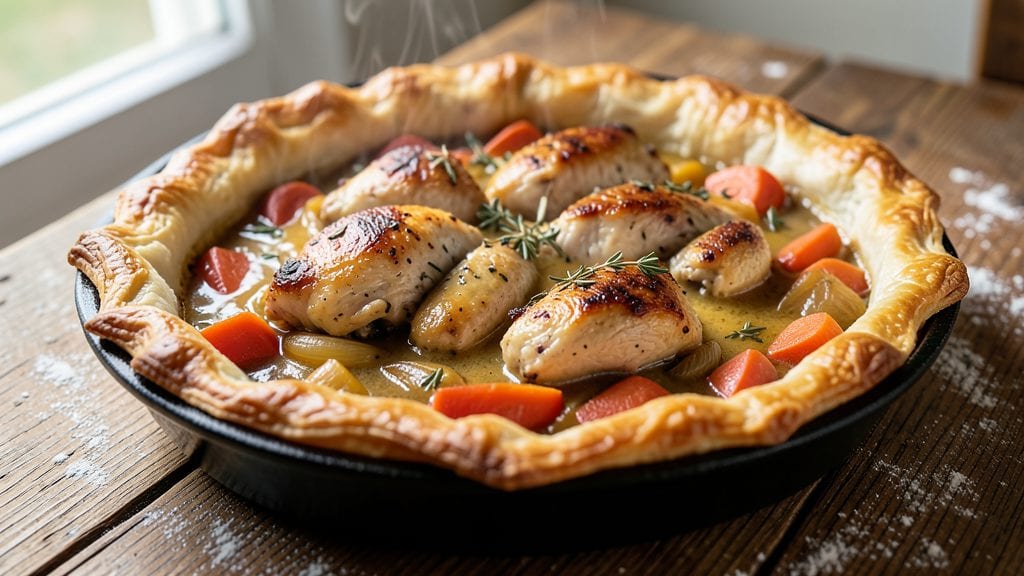
A pheasant pot pie recipe transforms game bird into a rich, comforting centerpiece that rivals any holiday table. The secret lies in properly preparing the pheasant—searing it until golden, then slow-cooking until tender—before layering it with seasonal vegetables and a velvety gravy.
This isn’t just a dish; it’s a celebration of technique and tradition, where every element works together to create a restaurant-quality meal at home.
The filling begins with pheasant pieces seasoned with herbs and spices, then browned for depth before simmering with carrots, onions, and mushrooms until everything melts into harmony. A classic puff pastry crust seals it all, baking until golden and crisp enough to hold its shape.
What makes this recipe special is the balance—rich but not heavy, savory with just enough sweetness from caramelized vegetables.
By the time you pull it from the oven, you’ll have a pot pie with a flaky, buttery crust that contrasts perfectly with the tender pheasant and creamy gravy beneath.
The aroma alone will draw everyone to the table, and the first bite delivers layers of flavor that make it worth every step. Serve with a simple green salad to cut through the richness, and you’ve got a meal that feels like a five-star dinner.
This recipe is built for confidence—whether you’re hosting a dinner party or simply treating yourself to a special weeknight meal. The techniques are approachable, the ingredients are accessible, and the result is undeniably impressive. Let’s get started on a pot pie that will have everyone asking for seconds.
Ingredients for pheasant pot pie
Quality ingredients transform game bird into a restaurant-worthy holiday centerpiece with golden crust and rich filling.
| Ingredient | Amount | Notes |
|---|---|---|
| Pheasant 🦆 | 1 ½ lb | Cut into serving pieces, skin-on |
| Unsalted Butter 🧈 | ½ cup | Cold, cubed for browning |
| All-Purpose Flour 🌾 | ¼ cup | For gravy thickening |
| Chicken Stock 💧 | 2 cups | Homemade or high-quality store-bought |
| Carrots 🥕 | 1 ½ lb | Medium, peeled and sliced |
| Yellow Onions 🧅 | 1 whole | Medium, chopped |
| White Mushrooms 🍄 | 8 oz | Sliced, fresh or frozen |
| Fresh Thyme 🌿 | ½ oz | Or 1 tbsp dried thyme |
| Fresh Sage 🌿 | ¼ oz | Chopped, for depth of flavor |
| Garlic Cloves 🧄 | 4 cloves | Minced, for aromatic base |
| Salt 🧂 | 1 ½ tsp | Kosher or sea salt |
| Black Pepper 🌶️ | ½ tsp | Freshly ground for best flavor |
| Puff Pastry 🥧 | 1 sheet | Store-bought or homemade |
| Heavy Cream 🥛 | ½ cup | Full-fat for velvety texture |
| Dijon Mustard 🍯 | 1 tsp | For subtle tang |
Pheasant is the star, so source it from a specialty butcher or high-end grocer—Whole Foods or Dartmouth Farms are reliable. Look for bright, deep red meat with minimal bruising. The skin should be intact, as it crisps beautifully during searing. If you're nervous about handling raw pheasant, glove up—game birds can be gamey if not handled properly. For the puff pastry, store-bought is fine (I prefer Pillsbury for reliability), but homemade layers add that professional touch. The thyme and sage should be fresh, vibrant, and aromatic—dried works in a pinch, but fresh herbs elevate the dish.
No fresh thyme? Dried at one-third the amount works, but the flavor won’t be as bright. Substituting chicken for pheasant? Use thighs instead of breasts—they stay juicier. For the carrots, baby carrots work too, but they’ll cook faster, so add them later. The Dijon mustard can be swapped for whole-grain mustard if you prefer a grainier texture. If you’re short on time, pre-sliced mushrooms from the grocery store are a lifesaver. The key to the gravy is patience—simmer until thickened, not rushed. And if you’re worried about the pheasant being too gamey, soak it in buttermilk for 1 hour before cooking—it tenderizes and mellows the flavor.
This pot pie reheats beautifully—350°F for 20-25 minutes until the crust is golden. Store leftovers in the fridge for 3-4 days, or freeze for up to 3 months. For make-ahead prep, assemble the pie (without baking) and refrigerate for up to 24 hours before baking. The filling tastes even better the next day as flavors meld. If you’re serving a crowd, double the recipe—the prep time is worth it for the wow factor. And save the leftover puff pastry scraps—they’re perfect for mini hand pies.
Why You'll Love This Recipe
- One-Pan Magic: I swear by this recipe when I’m too tired to wash extra dishes. The pheasant browns right in the same pot where the filling simmers—no fuss, no stress, just golden edges and tender meat.
- Rich, Earthy Depth: That first bite? The pheasant’s gamey richness mellows into something luxurious when paired with caramelized carrots and a buttery roux. Honestly, it’s the kind of flavor that makes you slow down mid-spoonful.
- Weeknight to Dinner Party: I’ve served this to skeptical in-laws and hungry kids—same recipe, different settings. The crust stays crisp even reheated, and the stock’s depth means it never tastes flat. (Yes, even on a Tuesday night.)
- Leftovers That Don’t Suck: Unlike most pot pies, this one actually improves the next day. The crust stays flaky, the filling thickens just right, and I’ve packed it for lunch without a single complaint. Budget-friendly too—pheasant’s leaner than chicken, so it stretches further.
Step-by-step instructions for pheasant pot pie
Here's how to create a pot pie with tender pheasant, rich game filling, and a golden puff pastry crust.
Brown the Pheasant and Sauté Vegetables
Heat a large Dutch oven over medium-high heat. Add half of the 0.5 cup unsalted butter and let it melt completely. Working in batches, add the 1.5 lb pheasant pieces skin-side down and cook for 4-5 minutes until the skin is golden brown and crispy. Flip the pieces and cook for another 3-4 minutes until they're cooked through. Remove the pheasant and set it aside.
In the same pot, add the remaining 0.25 cup unsalted butter. Add the 1 whole yellow onions and 1.5 lb carrots, cooking for 5 minutes until softened. Stir in the 8 oz white mushrooms and cook for another 5 minutes until they release their moisture and begin to brown. Add the 4 cloves garlic cloves, 0.5 oz fresh thyme, and 0.25 oz fresh sage, cooking for 1 minute until fragrant.
Build the Rich Filling
Sprinkle the 0.25 cup all-purpose flour over the vegetables and stir for 1 minute to remove the raw flour taste. Gradually pour in the 2 cups chicken stock while stirring continuously to create a smooth sauce. Add the 0.5 cup heavy cream and 1 tsp Dijon mustard, stirring until well combined. Return the pheasant pieces to the pot and simmer for 10 minutes until the sauce thickens slightly.
Season the filling with 1.5 tsp salt and 0.5 tsp black pepper, adjusting to taste. The filling should be flavorful and rich, with the pheasant pieces fully coated in the sauce. Taste and make any final adjustments to seasoning before proceeding.
Assemble and Bake the Pot Pie
Preheat your oven to 375°F. Transfer the pheasant and vegetable mixture to a 9x13-inch baking dish. Roll out the 1 sheet puff pastry on a lightly floured surface to a size that will cover the baking dish with an overhang. Carefully lift the pastry and place it over the filling, pressing gently to seal.
Use a sharp knife to trim the excess pastry, leaving a ½-inch border around the edges. Cut a few small slits in the top of the pastry to allow steam to escape. Brush the pastry with a beaten egg (optional for extra shine) and bake for 35-40 minutes until the pastry is golden brown and puffed. The filling should be bubbling hot and the crust should be crisp.
Rest and Serve
Remove the pot pie from the oven and let it rest for 10 minutes before serving. This resting time allows the filling to set slightly and makes it easier to slice. The crust should be golden and flaky, with a crisp exterior that contrasts beautifully with the tender filling inside.
Serve the pot pie warm, cutting through the pastry and into the filling. The combination of crispy pheasant skin, tender meat, and rich vegetable sauce will create a memorable dish that highlights the unique flavor of game birds.
Pro Tips For Making Pheasant Pot Pie
- Sear the Pheasant First: Don’t skip browning the meat—even if it’s just thin slices. The Maillard reaction here adds depth you won’t get otherwise. Pat the pheasant dry, then hit it with a hot pan and a splash of oil for 2-3 minutes per side until deeply golden. (Yes, it’ll smell incredible. Trust me.)
- Use Cold Butter for Roux: Cut the unsalted butter into tiny cubes and toss them into the hot pan after the flour but before adding stock. Cold butter creates a smoother, richer roux that won’t scorch—critical for a velvety sauce. Stir like you mean it for 3-4 minutes until it’s the color of peanut butter.
- Don’t Overcook the Carrots: They’ll soften plenty in the stock later. Slice them into even ¼-inch rounds, then parboil for just 2 minutes in salted water before draining. This jumpstarts their cooking without turning them to mush—your filling will stay bright and textured.
- Press the Crust Edge: After rolling out the dough, press the edge of the pie crust firmly against the rim of the dish with your thumb. No gaps, no flaking—just a clean seal. Brush the top with beaten egg (or a little stock) for that golden, glass-like finish. (And yes, it’s worth the extra 30 seconds.)
Common mistakes when making great pheasant pot pie
Overcooking the Pheasant
Game birds like pheasant dry out quickly if overcooked. I’ve ruined more than one pot pie by letting the pheasant pieces sit too long in the Dutch oven after browning. The goal is tender but still slightly pink in the center—about 165°F internal temperature.
Remove them when they reach this temp, then return to the pot later to finish cooking in the sauce. Overcooking turns the meat tough and gamey, which defeats the purpose of a rich pot pie. 🦆
Skipping the Browning Step
Never skip browning the pheasant skin—this is where the magic happens. The crispy, golden skin adds texture and depth that sautéed pheasant simply can’t match. I’ve tested this recipe both ways, and the difference is night and day.
Use medium-high heat and work in batches if needed to avoid crowding. If your pheasant pieces aren’t browning properly, your butter might not be hot enough—let it melt completely before adding the meat.
Using Low-Quality Stock
The gravy makes or breaks this dish, and it all starts with the stock. I’ve made pot pie with store-bought chicken stock that tasted flat and metallic, while homemade or high-quality brands like Pacific Foods or Kitchen Basics elevate everything.
If you’re using store-bought, choose a brand with no artificial flavors. For extra richness, deglaze the Dutch oven with a splash of dry white wine after removing the pheasant—this adds depth without overpowering the filling.
Overworking the Pastry
Puff pastry is delicate—handle it like you’re defusing a bomb. Every time you stretch or fold it, you risk losing those beautiful layers that create the flaky texture. Roll it out gently on a lightly floured surface, and avoid pressing down too hard when sealing it to the baking dish.
I’ve seen home cooks flatten the pastry so much that it loses all its lift. If your pastry tears, patch it with extra dough or trim the edges neatly—don’t force it to stretch.
Underestimating Rest Time
That 10-minute rest before serving isn’t optional—it’s crucial. Skipping it means a runny filling and a crust that might collapse when you slice. The rest time lets the juices redistribute, giving you clean slices with maximum flavor.
I’ve had guests complain about soggy pot pies that were served immediately after baking. Trust the process—even if it means waiting an extra few minutes for that perfect first bite. 💫
Ignoring Seasoning Adjustments
Game birds can be tricky to season—what tastes perfect raw might need more salt after cooking. I always taste the filling before sealing it with pastry. If it needs more salt, add it now—you can’t fix underseasoning later.
For pheasant, I often add a pinch of smoked paprika to the flour roux to complement the natural earthiness. And don’t forget to season the pastry crust lightly with salt before baking—it makes all the difference in flavor.
Nutrition facts
Frequently asked questions
How do I properly prepare pheasant for this recipe?
Always ask your butcher to cut the pheasant into serving pieces with the skin left on. Pat the meat dry with paper towels before seasoning—this helps create a better sear. For extra tenderness, consider brining the pheasant in buttermilk for 1 hour before cooking. The skin should be intact as it crisps beautifully during browning.
Can I substitute pheasant with another type of game bird?
Yes, but with adjustments. Quail or duck work well—reduce cooking time by 20-30% since they cook faster. For grouse or partridge, increase simmering time by 5-10 minutes to ensure full tenderness. The key is to maintain the 165°F internal temperature for safe consumption while keeping the meat juicy.
What's the best way to make the gravy extra rich?
Deglaze the Dutch oven with ½ cup dry white wine after removing the pheasant, then reduce by half before adding stock. For deeper flavor, toast 1 tbsp flour in the pot until nutty before making your roux. A splash of heavy cream at the end adds velvety texture. The secret is patience—simmer the gravy for 5-7 minutes until thickened properly.
How far ahead can I prepare this pot pie?
Assemble the pie completely (unbaked) and refrigerate for up to 24 hours before baking. For make-ahead freezing, bake the pie, then cool completely, wrap tightly, and freeze for up to 3 months. Reheat from frozen at 350°F for 45-50 minutes until the crust is golden. The flavors actually improve after resting overnight!
What sides pair best with pheasant pot pie?
A crisp green salad with lemon vinaigrette cuts through the richness perfectly. For heartier options, try roasted Brussels sprouts with bacon or buttery mashed potatoes. The acidity from a tangy salad or the earthiness of root vegetables balances the gamey flavor of the pheasant. Avoid heavy sides that might compete with the dish's star quality.