
Desserts
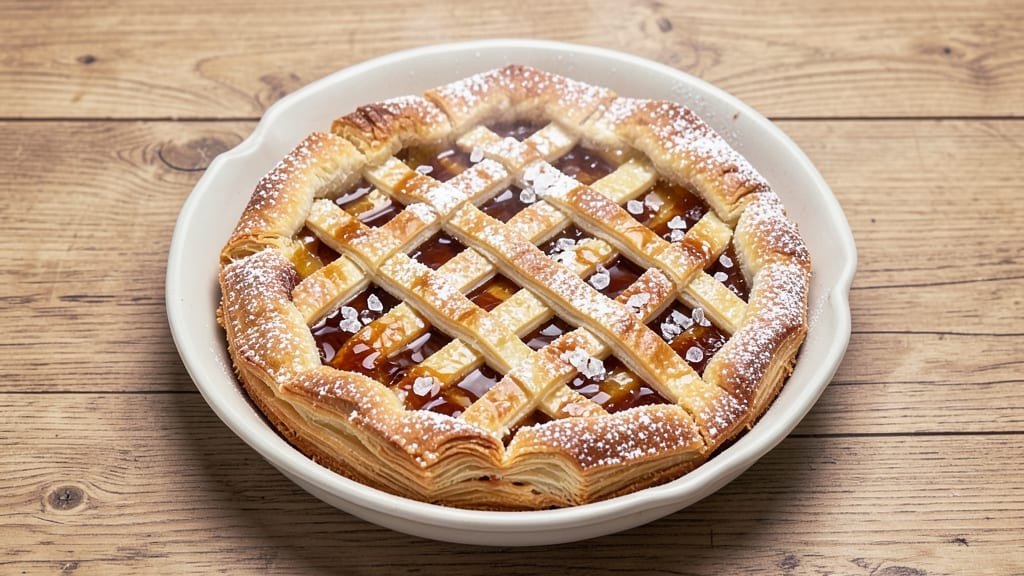
This puff pie recipe delivers the perfect balance of flaky layers, creamy vanilla custard, and a crunchy oat crown that takes dessert to another level.
The secret lies in a homemade puff pastry that achieves that signature crispness and lift, paired with a velvety custard filling that swirls beautifully when baked. I developed this recipe after years of perfecting the art of layering textures—each element must work together to create a showstopping dessert.
The process begins with crafting the puff pastry from scratch, which takes patience but yields results worth every minute. We'll fold and chill the dough multiple times to build those delicate, airy layers that make puff pastry so special.
For the filling, a rich vanilla custard gets swirled into the crust before baking, creating an elegant marbled effect. The real showstopper? A crunchy oat crown that encircles the pie, adding both visual appeal and satisfying texture contrast.
What you'll end up with is a golden-brown pie with a shatteringly crisp crust, creamy vanilla custard swirls, and a crunchy oat border that adds both structure and flavor.
The aroma alone will draw everyone to the table, and the first bite delivers that perfect combination of textures—flaky, creamy, and crunchy all at once. This isn't just dessert; it's an experience that will impress even the most discerning guests.
Whether you're serving this for a special occasion or treating yourself to a homemade indulgence, this recipe delivers professional-quality results with simple techniques. The key is attention to detail during the pastry folding and precise timing when baking the custard. Let's get started on creating your perfect puff pie.
Ingredients for puff pie
Eight ingredients transform into a showstopping pie with flaky layers, creamy swirls, and crunchy crowns.
| Ingredient | Amount | Notes |
|---|---|---|
| All-Purpose Flour 🌾 | 4 cups | Sifted for light texture |
| Unsalted Butter 🧈 | 2 cups | Cold, cubed for pastry |
| Ice Water 💧 | ½ cup | Chilled for dough handling |
| Salt 🧂 | ½ tsp | Fine sea salt preferred |
| Granulated Sugar 🍚 | 1 ½ cups | For custard sweetness |
| Whole Milk 🥛 | 2 cups | Full-fat for creaminess |
| Large Egg Yolks 🥚 | 6 whole | Room temperature preferred |
| Vanilla Extract 🌸 | 2 tsp | Pure, high-quality extract |
| Cornstarch 🌾 | 2 tbsp | For custard thickening |
| Old-Fashioned Rolled Oats 🥣 | 1 ½ cups | Blended into flour for crown |
| Light Brown Sugar 🍚 | ½ cup | Packed for crown sweetness |
| Ground Cinnamon 🌿 | 1 tsp | For crown flavor |
| Butter (for brushing) 🧈 | ¼ cup | Melted for golden finish |
| Powdered Sugar 🍚 | ¼ cup | For dusting finished pie |
The butter is non-negotiable—European-style unsalted butter has the highest fat content for that signature flakiness. Plugrá or Kerrygold are my go-tos, but any good brand works. Keep it cold when cutting into cubes—warm butter makes dough tough. For the oats, old-fashioned rolled oats blend better than quick oats, giving that perfect crunch. I buy mine in bulk from WinCo or Costco—way cheaper than the grocery store. The vanilla extract? Nothing but pure Madagascar bourbon vanilla—cheap imitation tastes like perfume. Store your butter in the freezer to keep it rock-hard for folding.
No European butter? Use regular unsalted butter but add an extra 0.25 tsp salt to the dough. Short on vanilla? Vanilla bean paste works too, but scrape out the seeds for extra flavor. The custard can use half-and-half instead of whole milk if you're watching fat, but trust me, full-fat makes it richer. For the oat crown, substitute crushed graham crackers if you're in a pinch—they add a similar crunch. And if you can't find cornstarch? Arrowroot powder at the same amount works perfectly. The key is keeping everything cold until the final bake—no shortcuts here.
This pie is all about timing—make the dough first, then the custard, so everything rests properly. The dough keeps 3 days wrapped in plastic in the fridge or 3 months frozen. The custard can be prepped a day ahead and stored in the fridge—reheat gently before swirling. The oat crown mix stays fresh 1 week in an airtight container. Once assembled, bake immediately—this isn't a pie that waits. And that melted butter for brushing? Do it right before baking—it'll disappear fast. Leftovers? Reheat in a 350°F oven for 10-12 minutes—the crust gets crispy again.
Why You'll Love This Recipe
- No-Fuss Dough: I swear by this recipe—just flour, butter, ice water, and a pinch of salt. No mixer, no waiting for dough to rise, just fold, chill, and roll. My hands stay clean, and the result is flaky layers that actually look impressive.
- Sweet Crisp Magic: That sugar in the dough? It caramelizes just enough to give every bite a delicate, buttery crunch. Not too sweet, not too dry—just the right amount of "I need another slice" satisfaction.
- Fills Any Need: Pack these into a pie dish for a dessert that’s lighter than your usual fruit pie, or use them as a crispy shell for savory quiches. Even my picky teenage nephew asked for seconds when I served them with Nutella—yes, even on a Tuesday night.
- Budget-Friendly Staples: You’re already using pantry basics, and the dough keeps for weeks in the fridge. Split one batch into four pies, freeze extras, and suddenly you’ve got a dessert solution that won’t break the bank or clutter your freezer with fancy ingredients.
Step-by-step instructions for vanilla swirl puff pie with crunchy oat crowns
This isn't just pie—it's a showstopper with flaky layers, dreamy vanilla swirls, and that irresistible oat crown crunch.
Craft the Puff Pastry Foundation
In a large bowl, whisk together the 4 cups all-purpose flour and 0.5 teaspoon salt. Cut in the 2 cups unsalted butter (cold and cubed) using a pastry cutter or your fingers until the mixture resembles coarse crumbs with pea-sized butter pieces. This is crucial—those butter pockets create the flaky layers.
Gradually add the 0.5 cup ice water, 1 tablespoon at a time, mixing gently until the dough just comes together. It should hold when pressed but still feel slightly dry. Turn it out onto a lightly floured surface and knead just 4-5 times until smooth. Wrap tightly in plastic and refrigerate for 1 hour—this resting period relaxes the gluten for perfect layers.
Build the Vanilla Custard Filling
In a medium saucepan, whisk together the 2 cups whole milk, 1.5 cups granulated sugar, 6 whole large egg yolks, 2 teaspoons vanilla extract, and 2 tablespoons cornstarch. Cook over medium heat, stirring constantly with a wooden spoon, until the mixture thickens enough to coat the back of the spoon—about 5-7 minutes. You'll see it transform from runny to a glossy, pudding-like consistency.
Immediately transfer the custard to a bowl and press plastic wrap directly onto the surface to prevent a skin from forming. Let it cool to room temperature, then chill in the refrigerator for at least 2 hours. This step is non-negotiable—the custard needs to set properly for clean swirls later.
Assemble the Pie Layers
Preheat your oven to 375°F. Roll out the chilled dough on a floured surface to a 12-inch circle (about ⅛-inch thick). Transfer it to a 9-inch pie dish, pressing gently to adhere to the bottom and sides. Trim excess dough, leaving a ½-inch overhang.
Pour the chilled vanilla custard into the crust, spreading it evenly. Roll out the remaining dough to another 12-inch circle. Brush the top surface with 0.25 cup melted butter (for brushing). Sprinkle 0.5 cup light brown sugar and 1 teaspoon ground cinnamon evenly over the butter. Fold the dough in half like a book, then in half again to create a 4-layer rectangle. Cut into ½-inch strips and arrange them in a swirl pattern over the custard.
Create the Crunchy Oat Crown
In a food processor, pulse the 1.5 cups old-fashioned rolled oats until they resemble coarse crumbs. Mix with 0.5 cup light brown sugar and 1 teaspoon ground cinnamon. Press this mixture firmly around the edge of the pie, creating a 1-inch wide border that extends up the sides. This crown will be your golden, crunchy finishing touch.
Brush the exposed custard with 0.25 cup melted butter (for brushing) and sprinkle lightly with 0.25 cup powdered sugar. Bake for 40-45 minutes until the crust is deep golden brown and the custard is just set (it should still jiggle slightly in the center). Let cool completely before slicing—this prevents the custard from oozing out.
The Grand Finale
Once completely cooled, run a sharp knife around the edge to separate the pie from the dish. Dust generously with additional powdered sugar right before serving. The contrast of the creamy vanilla custard, flaky puff pastry, and crunchy oat crown makes every bite unforgettable. Serve with a dollop of whipped cream if you're feeling extra indulgent!
Pro Tips For Making Puff Pie
- Chill the Butter First: Take your unsalted butter straight from the fridge—no softening needed. Cold butter creates those signature flaky layers, and skipping this step means your puff pastry will fight you instead of rising like it should. (I learned this the hard way after a sad, dense disaster.)
- Pulse, Don’t Overmix: Use a food processor, but stop the second the dough clumps together. Overmixing develops gluten, and your pie will turn out tough instead of light. Press the dough gently into the pan—no rolling required—then freeze it for 10 minutes before baking. (Yes, even if you're impatient like me.)
- Ice Water Only: No shortcuts here—ice water is non-negotiable. Room-temperature water makes the dough sticky and gummy, and your layers won’t separate properly. Fill a glass with ice cubes, add cold water, and let it sit for 5 minutes before using. (Your future self will thank you.)
- Preheat the Pan: Slide your puff pie into a preheated oven—no waiting. A cold pan means uneven baking, and your bottom crust will turn to paste while the top stays raw. Use the middle rack and bake at 375°F (190°C) for the first 10 minutes, then reduce to 350°F (175°C) to finish. (This is the thing that matters most.)
Troubleshooting this recipe
Dough Too Tough
The most common issue is overworking the dough or using warm butter. Keep your butter cold (I store mine in the freezer) and handle the dough minimally—just enough to bring it together.
If your dough feels tough after resting, let it rest an additional 30 minutes to relax the gluten. Over-kneading is the enemy of flaky layers. 💡
Custard Too Thin
If your custard isn't thickening properly, you're likely cooking it too fast. Reduce heat to low-medium and stir constantly with a wooden spoon. The moment it coats the back of the spoon, remove it from heat immediately.
For extra insurance, whisk in 1 extra teaspoon cornstarch mixed with 1 tablespoon cold milk if needed.
Swirls Not Holding
Cold custard is non-negotiable for clean swirls. If your custard is too warm when assembling, chill it at least 2 more hours. Also, use a sharp knife to cut the dough strips—dull blades crush the layers instead of creating clean cuts.
Press the strips firmly into the custard to prevent them from shifting during baking. ✨
Oat Crown Too Soft
The oat crown needs to bake until golden and crisp. If yours comes out pale, bake 5-10 minutes longer until deeply browned. For extra crunch, toast the oats in a dry pan over medium heat for 3-4 minutes before mixing with sugar and cinnamon.
This step makes all the difference in texture contrast.
Pie Sinking Mid-Bake
This usually means the custard was too hot when poured into the crust. Always use completely chilled custard (straight from the fridge) and assemble the pie at least 1 hour before baking.
The crust needs time to set before the custard warms up. If your pie starts sinking, tent it loosely with foil to slow the baking process.
Uneven Baking
Hot spots in your oven cause uneven baking. Rotate your pie halfway through baking (after 20-25 minutes) for even color and doneness. If your oven runs hot, reduce temperature to 350°F and bake 5-10 minutes longer.
A pie bird (or foil tent) helps regulate heat distribution for delicate desserts like this. 🌡️
Nutrition facts
Frequently asked questions
Can I make this puff pastry ahead of time?
The dough keeps beautifully in the fridge for 3 days wrapped tightly in plastic, or you can freeze it for up to 3 months. Just thaw it completely in the refrigerator before rolling. The custard can be prepped 1 day ahead and stored in the fridge—reheat it gently before assembling with the pastry.
What if I don't have a food processor for the oat crown?
No problem! Pulse the oats in a high-speed blender or even crush them with a rolling pin and a heavy pan. For extra crunch, toast the oats in a dry skillet over medium heat for 3-4 minutes before mixing with sugar and cinnamon. This step adds that satisfying texture contrast without needing fancy equipment.
Can I use store-bought puff pastry instead of making it from scratch?
While homemade gives the best results, you can use store-bought puff pastry in a pinch. Look for high-quality brands with visible layers. Roll it out to ⅛-inch thickness and follow the same assembly steps. Just note that the texture will be slightly less delicate—homemade is worth the effort for that signature flakiness!
How do I prevent the custard from curdling?
Curdling happens when heat builds too quickly. Always whisk constantly over medium-low heat and remove the custard from heat immediately when it coats the back of a spoon. For extra insurance, whisk in 1 extra teaspoon cornstarch mixed with 1 tablespoon cold milk if needed. Never let it boil vigorously—gentle heat is key.
Can I make this with a different flavor filling?
Swap the vanilla custard for chocolate ganache, caramel, or even savory options like cheese and herb. For fruit fillings, use pre-cooked compotes (like berry or apple) to avoid excess moisture. Just ensure your filling is completely chilled before assembling to maintain clean layers and proper texture.