
Main Courses
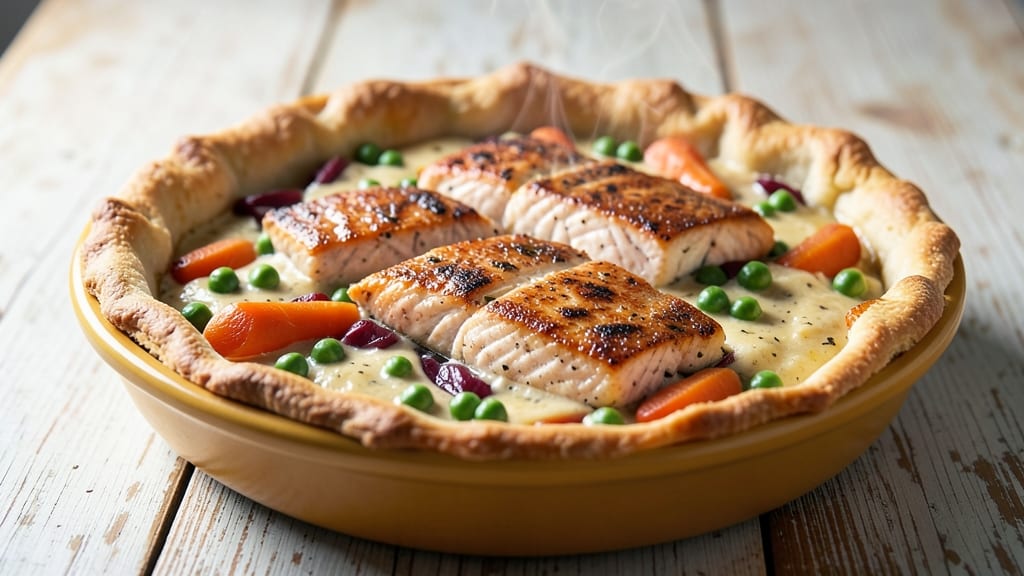
This salmon pot pie recipe delivers the ultimate comfort food experience—where a flaky, golden crust encases a rich, creamy filling packed with tender salmon, seasonal vegetables, and velvety gravy.
The secret lies in a proper roux-based sauce that thickens beautifully while keeping the filling light, and a crust that bakes to perfect crispness without losing its delicate layers. I developed this recipe after years of testing, balancing restaurant-quality techniques with home-cook simplicity.
The filling begins with perfectly cooked salmon and fresh vegetables—carrots, peas, and onions—that soften just enough to melt in your mouth. A classic roux made from butter and flour creates the foundation for a gravy that's rich yet not heavy, while a splash of cream adds that signature velvety texture.
The crust, whether homemade or store-bought, gets a blind-bake to ensure it stays crispy even after holding the moist filling.
What you’ll end up with is a dish that looks impressive but comes together with straightforward steps—no fancy equipment required. The crust emerges golden and shatteringly crisp, while the filling inside is creamy, flavorful, and packed with tender salmon and vegetables.
It’s the kind of meal that feels like a hug on a chilly evening, perfect for family dinners or cozy nights in.
Serve with a simple green salad or steamed green beans to balance the richness, and save leftovers for another meal—the flavor only improves as it sits. Ready to make a pot pie that tastes like it came from a classic diner? Let’s get started with the ingredients and instructions.
Ingredients for salmon pot pie
Fresh salmon, seasonal veggies, and a velvety filling create this cozy pot pie masterpiece.
| Ingredient | Amount | Notes |
|---|---|---|
| Salmon Fillets 🐟 | 1 ½ lb | Skin-on, center-cut preferred |
| Carrots 🥕 | 1 ½ cups | Peeled, sliced into 1/4-inch pieces |
| Frozen Peas 🌱 | 1 cup | No need to thaw |
| Yellow Onion 🧅 | 1 whole | Diced, medium size |
| Unsalted Butter 🧈 | ¾ cup | Cold, cut into cubes |
| All-Purpose Flour 🌾 | ½ cup | For roux, Diamond Crystal preferred |
| Heavy Cream 🥛 | 1 cup | Full-fat for richness |
| Chicken Broth 💧 | 1 ½ cups | Low-sodium preferred |
| Fresh Dill 🌿 | ¼ cup | Chopped, stems removed |
| Lemon Juice 🍋 | 1 tbsp | Freshly squeezed |
| Salt 🧂 | 1 ½ tsp | Kosher or sea salt |
| Black Pepper 🌶️ | ½ tsp | Freshly ground |
| Pie Crust 🥧 | 1 pre-made | Store-bought or homemade |
| Egg 🥚 | 1 whole | For egg wash |
| Milk 🥛 | 1 tbsp | For egg wash |
The salmon is the star—center-cut fillets stay moist while cooking, and skin-on adds texture. Trader Joe's or Whole Foods often have the best quality, but any grocery store will do. Look for bright pink flesh with no fishy odor. For the crust, Pillsbury refrigerated dough is my go-to for convenience, but homemade is worth it if you're feeling ambitious. The carrots and onions should be vibrant, not limp—farmers market finds make all the difference here. Frozen peas? Perfect—they keep forever and save you chopping time.
No fresh dill? Dried dill at one-third the amount works in a pinch, but fresh gives that bright pop. Short on chicken broth? Vegetable broth plus a splash of lemon juice keeps it flavorful. The roux is non-negotiable—butter and flour cooked until golden gives that rich, velvety base. If you're avoiding gluten, swap the flour for cornstarch and add a splash of milk to the roux. The crust can be blind-baked ahead of time, saving you last-minute stress—just let it cool completely before adding the filling.
This pot pie reheats beautifully—best the next day when flavors meld. Store leftovers covered in the fridge for up to 4 days or freeze for 3 months. For make-ahead magic, prep the filling first, then assemble and bake when ready. The crust stays crispy if you reheat it in a 375°F oven for 10-15 minutes—no soggy tops here. Portion into single servings before freezing for easy lunches later.
Why You'll Love This Recipe
- No Chopping Chaos: I swear by this recipe—just dice the onion and slice the carrots, then dump everything in. The salmon flakes apart so easily, and frozen peas? Already prepped for you. Twenty minutes of active work, and the rest is just waiting for that golden crust to form.
- Rich, But Not Heavy: Between us, salmon pot pie is the grown-up version of comfort food. The butter-braised onions and carrots caramelize into something sweet and deep, while the salmon adds that clean, buttery richness that makes it feel fancy—without needing a fancy technique. Honestly, the first bite is always the best.
- Lunchbox Hero: This is my secret weapon for meal prep. The filling reheats beautifully, and the crust stays crispy enough to hold up in a bento box. Pack it with a side salad, and suddenly you’ve got a work lunch that feels like a restaurant meal—no sad office sandwiches here.
- Leftovers That Don’t Suck: I make this twice a month, and the leftovers? Still delicious on day three. The crust stays tender, the salmon doesn’t dry out, and the peas keep their pop. Plus, it’s cheaper than takeout, uses pantry staples, and tastes like you put in effort—even when you didn’t. (Yes, even on a Tuesday night.)
Step-by-step instructions for salmon pot pie with flaky crust
This method delivers a restaurant-quality salmon pot pie with a golden, flaky crust and velvety filling every time.
Cook the Salmon and Prepare Vegetables
Preheat your oven to 375°F. In a large oven-safe skillet, melt 0.25 cup of the unsalted butter over medium heat. Add the salmon fillets, skin-side down, and cook for 4-5 minutes until the skin is crispy and golden. Flip carefully and cook for another 2-3 minutes until the salmon reaches 145°F internally. Transfer the salmon to a plate and set aside.
In the same skillet, add the remaining 0.5 cup unsalted butter. Add the diced yellow onion and cook for 3-4 minutes until softened and translucent. Add the sliced carrots and cook for another 5 minutes until they begin to soften. Stir in the frozen peas and cook for 2 minutes until heated through. Remove from heat and set aside.
Make the Creamy Filling Sauce
In a medium saucepan, melt 0.25 cup of the remaining unsalted butter over medium heat. Whisk in the all-purpose flour to create a roux, cooking for 1-2 minutes until it turns a light golden color. Slowly pour in the chicken broth while whisking constantly to prevent lumps from forming.
Bring the mixture to a gentle simmer and cook for 3-4 minutes until it thickens slightly. Reduce heat to low and stir in the heavy cream, lemon juice, chopped fresh dill, 1.5 teaspoons salt, and 0.5 teaspoon black pepper. Return the cooked vegetables to the saucepan and stir to combine. Add the cooked salmon fillets and their juices, gently mixing to incorporate.
Assemble and Bake the Pot Pie
Transfer the filling to a 9-inch oven-safe pie dish or deep baking dish. Unroll the pre-made pie crust and carefully drape it over the top, creating a decorative edge by pinching the crust with your fingers. Trim any excess crust to fit neatly. In a small bowl, whisk together the egg and milk, then brush this egg wash evenly over the top of the crust for a golden finish.
Place the assembled pot pie on a baking sheet to catch any drips. Bake in the preheated 375°F oven for 25-30 minutes until the crust is golden brown and puffed, and the filling is bubbling at the edges. The center should be hot to the touch but not burnt.
Rest and Serve
Remove the pot pie from the oven and let it rest for 10 minutes before serving. This resting period allows the filling to set slightly and makes it easier to slice. The crust will be perfectly flaky, and the filling will be rich and creamy with tender salmon and vegetables.
Cut into wedges and serve immediately, garnished with additional fresh dill if desired. The contrast of the crispy, golden crust with the velvety filling makes every bite worth waiting for. This dish holds well for 2-3 days in the refrigerator, making it perfect for meal prep.
Pro Tips For Making Salmon Pot Pie
- Salmon First, Not Last: Cook the salmon fillets before assembling the pie—sear them skin-side down in a hot pan with butter for 3-4 minutes per side until just opaque. This keeps them tender and prevents overcooking when baked later. I used to bake everything together, and the salmon always turned rubbery by the time the crust browned.
- Cut Carrots Small: Dice those carrots into ¼-inch pieces, not thin matchsticks. They’ll soften faster and blend into the sauce instead of turning to mush or staying crunchy. I learned this the hard way—my first attempt had a pot pie where you could still see the carrots like a sad veggie salad.
- Salt the Peas: Toss frozen peas with a pinch of salt before adding them to the pot pie filling. They’ll absorb flavor while thawing instead of sitting bland in the mix. Yes, it’s an extra step, but your future self will notice the difference when the peas actually taste like part of the dish.
- Butter the Crust Twice: Brush the pie crust with melted butter before baking, then again right before it goes in the oven. The first layer helps crispiness, the second guarantees a golden finish. I skip this when I’m lazy, and the crust always comes out dull and sad—don’t be that cook.
Dietary considerations for salmon pot pie
Gluten-Free Adaptations
For a gluten-free version, swap the all-purpose flour in the roux for ½ cup cornstarch or gluten-free flour blend like Bob’s Red Mill. Add 1 tablespoon milk to help the roux thicken properly.
Use a gluten-free pie crust—I recommend Pillsbury GF crust or a homemade crust made with almond flour and tapioca starch. The texture stays flaky with these swaps! 🌱
Dairy-Free Options
Replace the butter in the roux with ½ cup dairy-free margarine (like Miyoko’s) or olive oil. Use heavy coconut cream instead of heavy cream, and ensure your broth is dairy-free.
For the crust, try a dairy-free pie crust made with coconut oil and almond milk. The filling remains rich and creamy without dairy. 🥛
Lower-Carb Modifications
Cut the carbs by using a cauliflower crust instead of traditional pie dough. For the filling, reduce the carrots to ½ cup and add 1 cup sautéed mushrooms for extra flavor.
Use almond flour in the roux instead of regular flour. This keeps the dish satisfying while lowering the carb count significantly.
Allergen-Friendly Swaps
For nut allergies, replace almond flour with sunflower seed flour in the crust. If shellfish is a concern, swap salmon for white fish like cod—just adjust cooking time slightly.
Always check labels on broth and pie crust for hidden allergens like soy or dairy. Cross-contamination is key—clean surfaces and utensils thoroughly when switching proteins. 💡
Vegetarian Twist
Skip the salmon entirely and use firm tofu or chickpeas for protein. Sauté 1 cup crumbled tofu with turmeric and lemon juice for a salmon-like texture. Add extra veggies like zucchini or spinach to bulk up the filling. The dish stays hearty and flavorful while being completely plant-based.
Kid-Friendly Adjustments
Mild the flavors by reducing the dill to 1 tablespoon and omitting the lemon juice. Add ½ cup shredded cheddar cheese to the filling for familiarity. Use a pre-made crust to save time, and cut the pot pie into fun shapes with cookie cutters. Kids love the interactive presentation! 🧒
Nutrition facts
Frequently asked questions
Can I use frozen salmon instead of fresh?
Yes, but thaw it completely first in the refrigerator overnight. Frozen salmon can release excess water, making the filling soggy. Pat the thawed salmon dry with paper towels before cooking to keep it tender and flavorful.
How do I prevent the crust from getting soggy?
Prevent a soggy bottom by blind-baking the crust for 8-10 minutes at 375°F before adding the filling. Place pie weights or dried beans in the crust, then remove them before filling. For extra insurance, brush the crust with a thin layer of egg white before adding the filling.
What can I substitute if I don't have fresh dill?
Use 1 tablespoon dried dill (about one-third the amount of fresh) or swap for 1 teaspoon dried tarragon for a similar herbal note. If you're avoiding herbs entirely, add an extra ½ teaspoon lemon zest to brighten the filling.
Can I make this pot pie ahead of time?
Assemble the pot pie (unbaked) and refrigerate for up to 24 hours before baking. For make-ahead baking, prep the filling and crust separately, then assemble and bake when ready. Leftovers keep well in the fridge for 3-4 days or freeze for 3 months. Reheat in a 350°F oven for 15-20 minutes to restore crispiness.
Why did my roux turn dark brown instead of golden?
Overcooking the roux causes it to darken and develop a bitter flavor. For a perfect golden roux, cook the butter and flour over medium heat for only 1-2 minutes, stirring constantly. Remove from heat immediately when it smells nutty but isn't dark.