Main Courses
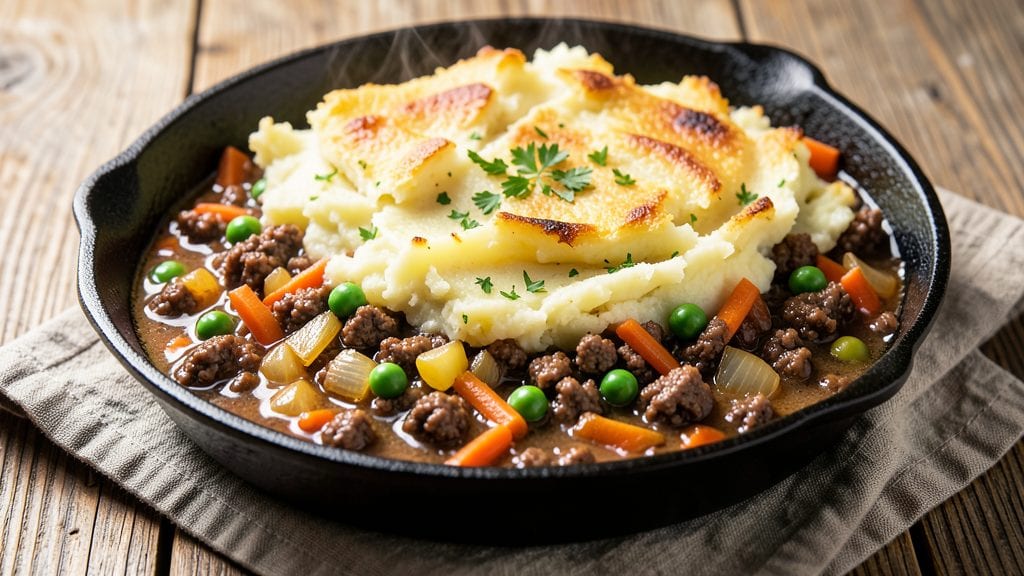
This skillet shepherd's pie recipe delivers all the comfort of classic shepherd's pie with the convenience of one-pan cooking. The secret to success lies in browning the meat properly and creating a golden, flaky mashed potato crust that seals in all those hearty flavors.
After years of testing variations, I’ve perfected a method that keeps the filling juicy while achieving that coveted crispy top—no separate baking dish required.
The beauty of this skillet approach is how it transforms traditional techniques into something simpler without sacrificing quality. You’ll start by browning ground beef with onions and garlic, then layer it with peas, carrots, and a rich gravy.
The mashed potato topping isn’t just for show—it’s what creates that irresistible flaky texture when baked. And because everything cooks in one pan, cleanup becomes a breeze, making this the ideal weeknight dinner that still feels special.
What you end up with is a dish that’s hearty enough to satisfy a crowd but simple enough for a weeknight. The filling stays moist and flavorful, while the mashed potato crust achieves that perfect balance of crispy edges and tender centers.
The aroma alone will have everyone gathering at the table, and the first bite delivers all the comfort of a classic shepherd’s pie with the ease of modern cooking.
Serve this skillet shepherd’s pie with a side of crusty bread to soak up any extra gravy, or pair it with a simple green salad for a balanced meal.
The recipe scales easily for larger gatherings, and leftovers reheat beautifully—though I doubt they’ll last that long. Ready to make this your new go-to comfort dish?
Ingredients for skillet shepherd's pie
Pantry staples plus a few fresh ingredients for that perfect flaky crust and hearty filling.
| Ingredient | Amount | Notes |
|---|---|---|
| Ground Beef 🥩 | 1 ¼ lb | 80% lean, finely chopped |
| Yellow Onion 🧅 | 1 whole | Diced, medium size |
| Garlic Cloves 🧄 | 3 cloves | Minced, fresh preferred |
| Carrots 🥕 | 1 ½ cups | Diced, small dice |
| Frozen Peas 🌽 | 1 cup | Thawed, no need to drain |
| Beef Broth 💧 | 1 cup | Low-sodium preferred |
| All-Purpose Flour 🌾 | 1 tbsp | For gravy thickening |
| Russet Potatoes 🥔 | 2 lbs | Peeled, boiled and mashed |
| Unsalted Butter 🧈 | ½ cup | Cold, cubed for topping |
| Milk 🥛 | ¼ cup | Whole milk for creaminess |
| Salt 🧂 | 1 ½ tsp | Kosher or sea salt |
| Black Pepper 🌶️ | ½ tsp | Freshly ground preferred |
| Dried Thyme 🍃 | ½ tsp | Or 1 tbsp fresh |
| Worcestershire Sauce 🍯 | 1 tbsp | For depth of flavor |
The ground beef is where the flavor starts. 80% lean gives you that perfect balance of juiciness and texture—90% lean gets dry. Most grocery stores carry it pre-chopped, but if you're buying a whole package, grab the chuck roast section and run it through your food processor for finer texture. The onions and garlic? Yellow onions work best here—they caramelize beautifully. If you've got fresh thyme, use that instead of dried—it adds a brightness the dried version can't match. I always grab mine from the bulk section at Whole Foods or Trader Joe's for the freshest flavor.
No beef broth? Chicken broth works in a pinch, but beef is ideal. The frozen peas can be swapped for green peas or corn if that's what you've got. For the potatoes, Yukon Golds are a great alternative to russets—they're creamier when mashed. The butter matters here—unsalted so you control the seasoning. If you're short on time, instant mashed potatoes work (just add extra butter for creaminess), but homemade is worth the extra 10 minutes. The Worcestershire sauce adds that umami kick—don't skip it if you've got it, but it's not dealbreaker if you don't.
This reheats beautifully—honestly tastes better the next day once everything melds. Keeps 4-5 days in the fridge, freezes for 3 months. I portion mine into containers so lunches are sorted for the week. For the flakiest top, don't skip the cold butter on the mashed potatoes. The secret is pressing down firmly with a fork before baking. And if you're making this ahead? Assemble it, cover with foil, and bake it right before serving—keeps everything warm and crispy.
Why You'll Love This Recipe
- One-Pan Magic: I swear by this recipe on nights when I’d rather not wash a million dishes. Brown the beef, toss in the onions and garlic, and boom—everything cooks in the same skillet. The carrots soften just enough to melt into the sauce, while the peas stay bright and pop with every bite.
- Rich & Earthy Depth: That slow-cooked beef with the caramelized onions and garlic? It’s the kind of flavor that lingers. The mashed potatoes on top add a creamy contrast, and honestly, the way the crust gets golden while the filling stays saucy is pure comfort.
- Weeknight Workhorse: I make this for lazy Mondays, potlucks, or when my college-aged kids show up hungry. Double the recipe, freeze half, and you’ve got a ready-to-bake meal later—no fancy plating, just pure satisfaction.
- Budget-Friendly Powerhouse: Ground beef stretches far, frozen peas add color without cost, and onions/garlic bulk up the flavor for pennies. Leftovers reheat beautifully, and I’ve fed six people for under $15 with this—no guilt, just good food.
Step-by-step instructions for skillet shepherd's pie
Here's how to make this one-pan wonder with a crispy, golden potato topping and savory beef filling.
Cook the Beef Filling
Heat a large skillet over medium-high heat. Add the 1.25 lb ground beef and cook until browned, breaking it apart with a wooden spoon. You'll know it's ready when the beef loses its raw color and starts to crisp around the edges—about 5-6 minutes. This step is crucial for developing deep flavor.
Once the beef is browned, add the diced yellow onion and cook for 3-4 minutes until softened. Stir in the minced garlic cloves and cook for another 30 seconds until fragrant. You'll smell that wonderful garlic aroma filling your kitchen—this is when you know you're on the right track. Add the diced carrots and cook for 2 more minutes.
Pour in the 1 cup beef broth, the 1 tbsp Worcestershire sauce, and the 0.5 tsp dried thyme. Bring to a simmer and let it cook for 5 minutes until the liquid reduces slightly. Sprinkle the 1 tbsp all-purpose flour over the mixture and stir well to thicken the sauce. This creates a rich gravy that will hold everything together.
Prepare the Potato Topping
While the filling simmers, peel the 2 lbs russet potatoes and boil them in salted water until fork-tender, which should take about 15 minutes. Drain the potatoes and mash them with the 0.5 cup unsalted butter and 0.25 cup milk until smooth. Season with 1 tsp salt and 0.25 tsp black pepper. The mixture should be light and fluffy—this is what will give your shepherd's pie that flaky, golden top.
For extra flavor, stir in the remaining 0.5 tsp salt and 0.25 tsp black pepper. This extra seasoning ensures the potato topping is well-seasoned even after it bakes. Spread the mashed potatoes evenly over the beef mixture in the skillet, creating a smooth, even layer. Use a spatula to press down gently on the edges to help them crisp up during baking.
Bake to Golden Perfection
Preheat your oven to 400°F. Place the skillet in the oven and bake for 20-25 minutes, or until the top is golden brown and crispy. The edges should be slightly darker than the center, and you should see a few spots of caramelization. This is the moment you've been waiting for—the flaky, golden crust that makes shepherd's pie so irresistible.
To check if it's done, run a knife through the potato topping. If it slides in easily and comes out clean, your shepherd's pie is ready. If it's still a bit soft, return it to the oven for another 5 minutes. The filling should be hot and bubbly, with the potatoes perfectly crisp on top and creamy underneath.
Add the Peas and Serve
Remove the skillet from the oven and sprinkle the thawed frozen peas evenly over the top. The peas will sink slightly into the creamy potato topping, adding a pop of color and freshness. Let it sit for 2-3 minutes to allow the peas to heat through and absorb some of the flavors from the filling.
Serve immediately while the topping is still crispy and the filling is hot. The contrast of the flaky, golden potato crust with the hearty, savory beef filling is what makes this dish so special. Enjoy your homemade shepherd's pie with a side of steamed green beans or a simple salad for a complete meal.
Pro Tips For Making Skillet Shepherd'S Pie
- Brown the Beef Properly: Don’t just toss in the ground beef and stir—break it up into small, even crumbles with a wooden spoon while it cooks. High heat for 3-4 minutes until it’s no longer pink (yes, even if it means your kitchen smells like a pub). Undercooked beef ruins the whole dish, and overcrowding the pan makes it steam instead of brown.
- Sweat the Onions Slow: After browning the meat, push it to the side of the skillet and add sliced onions with a pinch of salt. Cook them on medium-low for 8-10 minutes until translucent and slightly caramelized—no rushing. This builds flavor that frozen peas can’t replicate, and it’s the thing that makes your shepherd’s pie taste homemade.
- Thin the Mashed Potatoes: Skip the buttery, gluey potato topping by mixing in 2-3 tablespoons of milk or cream while mashing. Spread the mixture thinly over the filling—about ¼-inch thick—and broil for 3-5 minutes until golden. Thick toppings hide the filling; a lighter layer lets the beef shine and crisps up better.
- Add Peas Last: Stir in frozen peas only in the final 2 minutes of cooking—no thawing needed. They’ll soften just enough to blend into the sauce without turning mushy. If you add them earlier, they’ll turn to mush and water down the filling, making the whole pie soggy. (Trust me, I’ve learned this the hard way.)
Troubleshooting your skillet shepherd's pie
Undercooked Filling Fix
If your filling isn't fully cooked by the time the potato topping is golden, simply return the skillet to the oven for 5-10 extra minutes uncovered. The heat will continue cooking the filling while keeping the potato top crispy.
I've found that checking the internal temperature with a meat thermometer (165°F) is foolproof—just probe the beef mixture through the potato layer. 🌡️
Soggy Top Prevention
To avoid a mushy potato crust, resist the urge to open the oven door during baking. Every time you peek, you risk letting moisture escape and creating steam that softens the top. Instead, use the oven light to check progress.
Also, make sure your skillet has enough surface area—if it's overcrowded, the potatoes will steam instead of crisp. A 12-inch cast iron skillet works perfectly for this recipe.
Uneven Baking
If one side of your shepherd's pie is browning faster than the other, rotate the skillet halfway through baking. I like to use oven mitts to carefully turn the pan 180 degrees for even cooking.
Another trick is to place a small baking sheet under the skillet if your oven has hot spots—this helps distribute heat more evenly. For extra insurance, try baking on the middle rack where heat is most consistent.
Peas Overcooking
When adding peas at the end, don't let them sit too long after coming out of the oven or they'll turn mushy. I recommend adding them just before serving and letting them heat through for 1-2 minutes at most.
For a prettier presentation, use a small spoon to create little wells in the potato topping where you can nestle the peas before baking. This keeps them separate and vibrant-looking. 🥕
Gravy Too Thin
If your gravy ends up too watery, simply remove the skillet from the oven and let it sit for 5 minutes to thicken naturally. The residual heat will help the flour in the gravy do its job.
For an instant fix, mix 1 tsp cornstarch with 1 tbsp cold water, stir it into the gravy, and let it simmer for 1 minute until thickened. This works wonders without altering the flavor profile.
Potato Top Too Dense
If your mashed potato topping comes out compacted and heavy rather than fluffy, you likely didn't mash the potatoes enough before mixing in the butter and milk. For next time, use a potato ricer or food mill to achieve that light, airy texture.
Another tip: don't overwork the mashed potatoes—just until smooth. The residual starch from the potatoes helps create that beautiful flaky crust when baked. 💫
Nutrition facts
Frequently asked questions
Can I use ground turkey or chicken instead of beef?
Ground turkey works beautifully and is a leaner option, while chicken adds a milder flavor. Just reduce cooking time slightly since poultry cooks faster than beef. For best results, use 93% lean ground turkey to mimic beef's texture. Season with extra herbs like thyme or rosemary to compensate for the milder taste.
How do I make this vegetarian?
Swap the beef for 1 lb lentils or mushrooms (cremini or portobello) sautéed with onions and garlic. Use vegetable broth instead of beef broth, and add 1 tsp soy sauce or 1 tbsp tomato paste for umami depth. The potato topping stays the same, and you'll get that same hearty texture without meat.
Why is my potato topping not crispy?
Crispy topping comes from two key factors: cold butter in the mashed potatoes and proper baking technique. Make sure you're using cold cubed butter (not melted) and pressing down firmly with a fork before baking. Also, avoid opening the oven door during cooking—every peek releases steam that softens the crust. A 12-inch cast iron skillet helps achieve that perfect crisp.
Can I make this ahead of time?
Yes! Assemble the dish completely (without peas) and refrigerate for up to 24 hours before baking. When ready to bake, add the peas just before serving. For leftovers, store in an airtight container and reheat in the oven at 350°F for 10-15 minutes to restore crispiness. The flavors actually improve overnight as everything melds together.
What's the best skillet for this recipe?
A 12-inch cast iron skillet is ideal because it retains heat evenly and creates that perfect crispy crust. If you don't have cast iron, a heavy oven-safe stainless steel skillet works too. Avoid non-stick pans—they don't get hot enough for proper browning. For even cooking, place your skillet on the middle oven rack where heat is most consistent.