Desserts
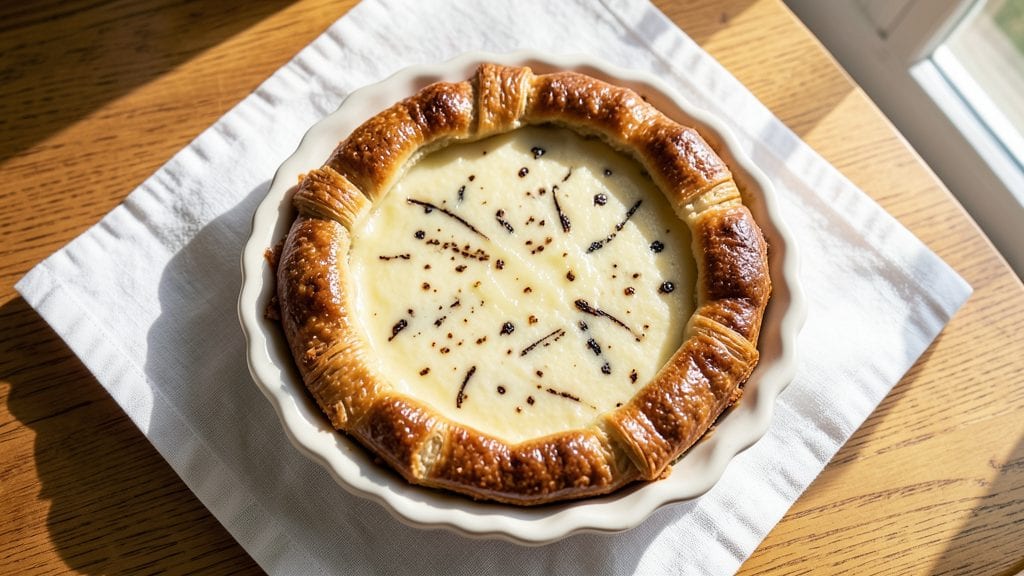
This traditional French silk pie recipe brings the delicate elegance of classic French pâtisserie to your kitchen with its signature creamy almond filling and crisp oat crown. The origins trace back to 19th-century French bakeries, where this pie became a symbol of refined dessert craftsmanship.
What makes it truly special is the contrast between the silky-smooth almond custard and the perfectly crisp oat topping, a technique that requires precision but delivers restaurant-quality results.
The recipe begins with a simple yet essential step: preparing the almond cream filling, which combines ground almonds, sugar, and eggs to create that signature velvety texture.
The key to success lies in tempering the eggs properly to avoid curdling, while the oat crown requires careful baking to achieve its signature crispness without burning.
This pie isn't just a dessert—it's a testament to French baking traditions that have stood the test of time, yet remains accessible for home bakers.
Once baked to golden perfection, the pie reveals its true magic: a light, airy center that practically melts in your mouth, topped with a crown of oats that shatters at the slightest touch.
The vanilla infusion elevates the almond cream to new heights, creating layers of flavor that balance sweetness with subtle nutty depth. This is the kind of dessert that feels indulgent yet sophisticated, perfect for special occasions or when you want to impress without resorting to overly complicated techniques.
While this recipe stays true to its traditional roots, modern adaptations—like vegan versions using coconut milk or aquafaba—prove its versatility. Whether you're recreating a classic or putting your own spin on it, this pie is a blank canvas for creativity.
Let's get started on crafting your own masterpiece of French pâtisserie.
Ingredients for traditional french silk pie
French pâtisserie meets home baking: almond silk meets crisp oat crown perfection.
| Ingredient | Amount | Notes |
|---|---|---|
| Ground Almonds 🥜 | 1 ½ cups | Finely ground, not almond flour |
| Granulated Sugar 🍚 | 1 ¼ cups | Superfine preferred for smoothness |
| Large Eggs 🥚 | 4 whole | Room temperature for best texture |
| Unsalted Butter 🧈 | ¾ cup | Cold, cubed for tempering |
| Vanilla Extract 🌿 | 1 tbsp | Pure Madagascar preferred |
| Salt 🧂 | ¼ tsp | Fine sea salt preferred |
| Old-Fashioned Rolled Oats 🌾 | 2 cups | Not quick oats, toasted lightly |
| Brown Sugar 🍯 | ½ cup | Packed, for oat crown |
| Light Brown Sugar 🍯 | ¼ cup | For oat crown crispness |
| Unsalted Butter 🧈 | ½ cup | Cold, cubed for oat crown |
| Vanilla Bean Paste 🌿 | 1 tsp | For intensified vanilla flavor |
| Pinch Salt 🧂 | 1 pinch | Enhances oat crown flavor |
| Heavy Cream 🥛 | ½ cup | For brushing oat crown |
The ground almonds are non-negotiable—Bob's Red Mill or Anthony's Goods are my go-tos for that ultra-fine texture. If you're using almond flour, pulse it in a food processor until it's almost powdery. The sugar should be superfine—regular granulated will make the filling grainy. Eggs need to be room temperature, so pull them out 30 minutes before mixing. For the vanilla, Madagascar Bourbon extract adds depth that imitation can't match. If you can't find it, Taster's Choice is a solid backup—just double the amount.
No vanilla bean paste? Seedless vanilla beans scraped into the mix work too. Short on butter? European-style unsalted butter like Plugrá has higher fat content, so use it sparingly. The oats must be old-fashioned rolled oats—quick oats won't crisp up right. For the oat crown, toast the oats in a dry pan for 5 minutes first (that's what gives it that nutty aroma). No vanilla bean paste? Pure vanilla extract plus a pinch of cinnamon mimics the depth. And if you're feeling fancy, toasted coconut flakes mixed into the oat crown add a gourmet touch.
The almond cream keeps 3 days in the fridge, covered tightly—it's best fresh, but reheats beautifully. The oat crown? Eat it within 2 days or it gets soggy. For make-ahead magic, bake the filling first, then assemble and bake the crown the next day. The pie freezes 2 months if you wrap it airtight—thaw overnight in the fridge. Pro tip: Brush the warm oat crown with melted butter right out of the oven for extra crispness (trust me on this).
Why You'll Love This Recipe
- No Fuss, No Mess: I swear by this recipe because it’s literally three bowls and a whisk—no rolling dough, no blind baking, no stress. The ground almonds and sugar blend into a smooth batter that just happens to be perfect every time, even if I’m distracted (looking at you, midday coffee slump).
- Velvet Magic: Between us, that first bite of the custard—creamy, not too sweet, with just a whisper of vanilla—is ridiculously good. The butter adds this buttery richness that makes it feel like a fancy dessert, but honestly? It’s just eggs and patience. (And maybe a tiny bit of cheating with the vanilla.)
- Picnic or Party: This pie travels beautifully—no crumbly crust to fall apart, no filling that leaks. Pack it for a brunch, a potluck, or even just a lazy Sunday with coffee. My neighbor’s kids asked for seconds at a summer picnic, and I’ve since been roped into baking it for every gathering. (Worth it.)
- Budget-Friendly Luxury: Ground almonds might sound fancy, but a bag lasts forever, and the rest? Eggs, sugar, butter—pantry staples that don’t break the bank. Plus, the leftovers? Still chef’s kiss the next day, whether reheated or eaten cold. I’ve fed a crowd for under $20 and still had slices for breakfast.
Step-by-step instructions for traditional French silk pie
Here's how to create that signature French silk pie texture with a perfect oat crown—silky custard meets crispy perfection.
Prepare the Almond Base
In a food processor, combine the 1.5 cups ground almonds and 1.25 cups granulated sugar. Pulse until the mixture resembles fine sand, about 30 seconds. This ensures even distribution and a smooth texture in your custard.
Transfer the almond-sugar mixture to a medium bowl. Add the 4 whole large eggs, 1 tbsp vanilla extract, and 0.25 tsp salt. Whisk vigorously for 3-4 minutes until the mixture is pale, thick, and completely smooth. The batter should coat the back of a spoon—this is your silk pie base.
I like to use a fine-mesh sieve at this stage to remove any almond skins or lumps. This step is crucial for achieving that signature velvety texture. The mixture should be at room temperature before proceeding to ensure even baking.
Assemble the Pie Crust
Preheat your oven to 350°F. In a separate bowl, combine the 2 cups old-fashioned rolled oats, 0.5 cup brown sugar, 0.25 cup light brown sugar, 0.5 cup unsalted butter (cold, cubed), 1 tsp vanilla bean paste, and 1 pinch salt. Mix until the butter is evenly distributed throughout the oats.
Press this oat mixture firmly into a 9-inch pie dish, creating an even layer about ½-inch thick. The oats should be packed tightly—this will form your crispy crown. Bake for 12-15 minutes until the edges are golden brown and the center is set but still slightly soft.
Remove from the oven and immediately pour the almond custard mixture over the hot oat crust. Return to the oven and bake for an additional 25-30 minutes until the custard is set but still slightly jiggly in the center. This is the moment that matters—overbaking will make your pie dry.
Finish with the Creamy Topping
While the pie bakes, heat the 0.5 cup heavy cream in a small saucepan over medium-low heat until it just begins to simmer. Remove from heat and stir in 1 tsp vanilla bean paste and 1 pinch salt. Let it cool slightly but remain warm.
Once the custard is set but still slightly jiggly, remove the pie from the oven. Immediately pour the warm vanilla cream over the custard. The cream should spread evenly across the surface, creating a glossy finish. Return the pie to the oven for 5-7 minutes to set the cream.
Here's the thing—this final step is what elevates your pie from good to exceptional. The warm cream creates that signature French silk pie sheen while adding a luxurious vanilla depth. Let the pie cool completely at room temperature before slicing—this allows the flavors to meld and the texture to set perfectly.
Rest and Serve
Allow the pie to cool completely at room temperature for at least 2 hours. This resting period is crucial—it lets the custard firm up while keeping that signature silk-like texture. The oat crown should be crispy on the outside and slightly chewy inside.
To serve, run a thin knife around the edges to loosen the pie from the dish. Slide a spatula underneath and lift the pie onto a serving plate. The custard should be smooth and creamy, with just a hint of firmness when cut. The oat crown should crackle with each bite, providing a delightful textural contrast.
Slice into wedges and serve immediately. Each bite should deliver that perfect balance of crispy oat crown, silky almond custard, and rich vanilla cream. This is the traditional French silk pie experience—elegant, creamy, and utterly satisfying.
Pro Tips For Making Traditional French Silk Pie
- Toast Your Almonds: DESCRIPTION: Spread ground almonds on a dry skillet over medium-low heat for 3-4 minutes, stirring constantly—just until they smell nutty and toasted. I learned this the hard way: skipping this step leaves the pie tasting flat, like almond-flavored chalk. (Yes, even if you’re impatient like me.)
- Whisk Eggs Like Mad: DESCRIPTION: Beat the eggs until they’re thick, pale, and triple in volume—no streaks, no lumps. Use a stand mixer with the whisk attachment for 3-4 minutes; your arm will thank you later. Thin batter = dense pie. (And no, "almost mixed" doesn’t count.)
- Butter the Pan Well: DESCRIPTION: Melt 1 tablespoon of butter in the pie dish, then wipe it out with a paper towel—leave a thin film. This keeps the almond crust from sticking like glue. I used to skip this; now I just sigh when I see someone’s pie stuck to the pan.
- Chill the Batter: DESCRIPTION: Let the almond mixture sit in the fridge for 15-20 minutes before baking. This prevents cracking and helps the sugar caramelize evenly. Sounds weird, but it works—your pie will be smoother and less likely to sink in the middle. (Your future self will thank you.)
Dietary considerations for this traditional french silk pie
Gluten-Free Adaptations
To make this pie gluten-free, replace the rolled oats with a gluten-free oat blend certified for celiac disease, like Bob's Red Mill Gluten-Free Rolled Oats. For the almond custard, ensure your ground almonds are certified gluten-free—Anthony's Goods is my go-to brand.
The texture remains identical, but always check labels for cross-contamination warnings. 🌾
Dairy-Free Options
For a dairy-free version, swap the butter in the oat crown for coconut oil (use ½ cup melted) and the heavy cream topping for coconut cream (chilled overnight).
The custard stays dairy-free by using egg whites instead of whole eggs, or aquafaba (chickpea brine) for a vegan twist—¼ cup aquafaba whipped to stiff peaks replaces 2 egg whites. The texture remains silky when baked properly. 🥥
Nut-Free Substitutions
If almonds are a concern, replace the ground almonds with finely ground sunflower seeds (toasted for depth) or white rice flour for a neutral base. For binding, add 1 tbsp cornstarch to the custard to compensate for lost structure.
The flavor shifts slightly toward nut-free but maintains the pie's signature creaminess. Always toast seeds or flour to enhance flavor. 🌻
Lower-Sugar Versions
Reduce the granulated sugar in the custard by ⅓ cup and replace it with ½ cup unsweetened applesauce or mashed banana for natural sweetness. In the oat crown, use ¼ cup less brown sugar and add 1 tsp maple syrup for moisture.
The pie stays rich but with a more balanced sweetness—perfect for those watching sugar intake. 🍯
Egg-Free Considerations
For an egg-free custard, use ½ cup unsweetened applesauce or ¼ cup aquafaba (whipped) as a binder. Add 1 tbsp cornstarch to thicken the mixture, and ensure the custard is fully set before baking the oat crown.
The texture becomes slightly denser but retains its velvety quality. Always bake egg-free versions at 325°F to prevent over-browning. 🥚
Allergen Cross-Contamination
When adapting for allergies, use separate utensils and cleaned equipment to avoid cross-contamination. For nut-free kitchens, store ground almonds in a sealed container away from other ingredients. If baking for multiple dietary needs, prepare the pie in small batches or use disposable pie dishes to minimize risks.
Safety first—always label adapted pies clearly for guests. 🛡️
Nutrition facts
Frequently asked questions
Why does the almond custard need to be so smooth?
The ultra-smooth texture is what gives this pie its signature "silk" quality. When you whisk the almond mixture for 3-4 minutes until it coats the back of a spoon, you eliminate all lumps and create a velvety consistency that melts in your mouth. Any grit or almond skins will make the final texture grainy instead of silky.
Can I make this pie without a food processor?
Yes, but with extra effort! Grind the almonds into a fine powder using a mortar and pestle or a coffee grinder (pulse in batches). Sift the mixture through a fine-mesh sieve to remove any remaining skins. The texture won't be quite as smooth as processed almonds, but it will still work beautifully. Just expect to whisk the custard for an extra 5 minutes to compensate.
What's the secret to getting the oat crown perfectly crispy?
Toast the oats in a dry pan for 5 minutes before mixing with butter and sugar—this develops their nutty flavor. Press the mixture firmly into the pie dish so it's ½-inch thick, and bake it 12-15 minutes before adding the custard. The key is patience: let it cool completely (2 hours) before slicing, or the crown will soften.
Why does my custard look curdled after baking?
Curdling usually happens when eggs are added to hot almonds or butter, or if the mixture isn't whisked enough. Always temper the eggs by whisking them into the almond mixture gradually, then adding cold butter. Also, ensure your eggs are room temperature—cold eggs can cause separation. If it happens, strain the custard through a fine sieve before baking.
Can I make this pie ahead of time?
The almond custard can be prepared 1 day ahead and stored in the fridge. Assemble the pie just before baking—this keeps the oat crown crispy. For a fully made-ahead version, bake the pie, cool completely, then wrap tightly in plastic. Reheat slices in a 300°F oven for 10 minutes to restore crispness. The flavors actually improve after resting overnight.