
Desserts
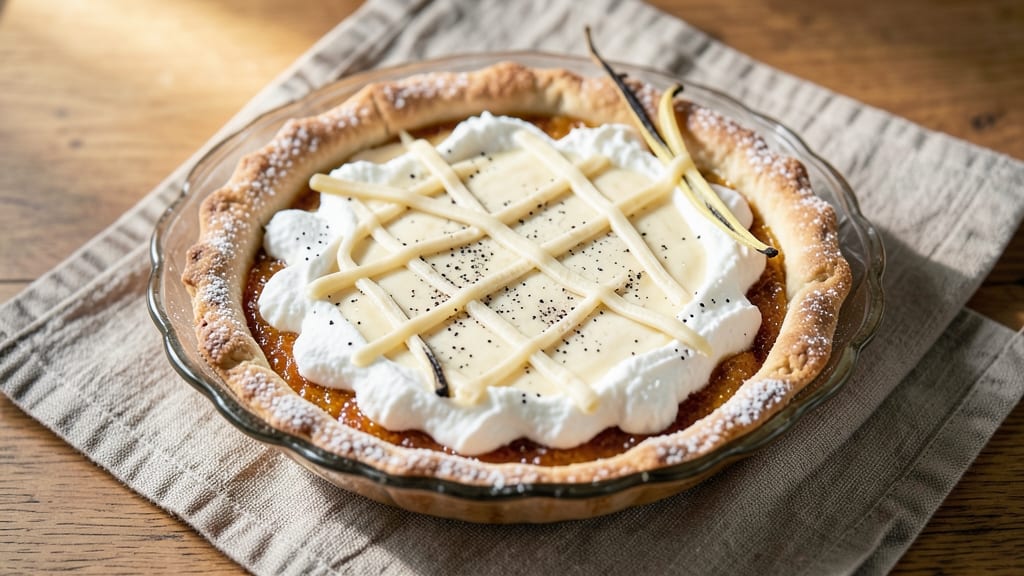
This wacky pie recipe redefines dessert expectations by blending sweet vanilla swirls with a crunchy oat crown in a single, unexpected bite. The genius lies in its two distinct textures—creamy custard layers and toasted oat clusters—all baked into one cohesive pie.
I created this after years of experimenting with unconventional dessert combinations, and it’s become a crowd-pleaser at every gathering.
The oat crown on top isn’t just decorative—it’s a structural game-changer, providing a satisfying crunch that contrasts perfectly with the soft vanilla filling. The crust, a buttery shortbread base, holds everything together while adding a subtle sweetness.
What makes this recipe truly special is how the oats caramelize during baking, creating a golden, nutty topping that ties the pie together.
By the time it emerges from the oven, you’ll have a pie that looks as intriguing as it tastes—vanilla swirls peeking through the oat crown, with a custard that’s rich but not heavy.
The contrast of textures and flavors makes every slice feel like a surprise, yet the method is straightforward enough for home bakers. This isn’t your typical pie—it’s a dessert that sparks conversation.
Serve it warm with a scoop of vanilla ice cream or dusted with powdered sugar for an elegant touch. The best part? Leftovers reheat beautifully, making it perfect for meal prep. Let’s bake something unforgettable.
Ingredients for wacky pie
Sixteen ingredients transform into a dessert that surprises with every bite—creamy vanilla custard beneath a toasted oat crown.
| Ingredient | Amount | Notes |
|---|---|---|
| All-Purpose Flour 🌾 | 2 ½ cups | Sifted for light texture |
| Unsalted Butter 🧈 | 1 ½ cups | Cold, cubed for crust |
| Granulated Sugar 🍚 | ¾ cup | For crust sweetness |
| Large Eggs 🥚 | 1 whole | Room temperature |
| Vanilla Bean Paste 🍦 | ½ oz | Or 1 tsp vanilla extract |
| Heavy Cream 🥛 | 1 ½ cups | Full-fat for richness |
| Milk 🥛 | ½ cup | Whole milk preferred |
| Old-Fashioned Rolled Oats 🥣 | 2 cups | Toasted for oat crown |
| Brown Sugar 🍚 | ½ cup | Packed, for oat crown |
| Ground Cinnamon 🌿 | 1 tbsp | Freshly ground preferred |
| Diamond Crystal Kosher Salt 🧂 | ½ tsp | Fine grain preferred |
| Pure Vanilla Extract 🍦 | 1 tsp | For custard infusion |
| Cornstarch 🌾 | 2 tbsp | For custard thickening |
| Powdered Sugar 🍚 | ¼ cup | For dusting finished pie |
The oat crown demands attention—old-fashioned rolled oats toasted in butter until golden create that signature crunch. Bob's Red Mill or Quaker brands deliver consistent quality. For the crust, European-style butter (like Plugrá) adds superior flavor, though regular unsalted works fine. The vanilla bean paste elevates the custard beyond basic extract—look for brands like Madagascar Bourbon for authentic depth. Sift the flour to avoid dense layers; King Arthur or Gold Medal are reliable choices for consistent results.
No vanilla bean paste? Double the vanilla extract and add a pinch of ground vanilla bean seeds for complexity. Substitute rolled oats for quick oats, but toast them longer to compensate for their denser structure. The custard requires precise thickening—cornstarch is non-negotiable here. For a lighter texture, whisk the egg yolks and milk separately before combining. The brown sugar in the oat crown can be swapped for light muscovado sugar for a molasses note, though regular brown works perfectly. Pre-grated cinnamon loses potency quickly; grind whole sticks fresh if possible.
Store the pie at room temperature for up to 2 days—the oat crown stays crisp best when not refrigerated. For longer storage, wrap tightly in plastic and refrigerate for 5 days, though the texture will soften slightly. Reheat slices in a 350°F oven for 5-7 minutes to restore the oat crown's crunch. Freeze portions for up to 3 months—thaw overnight in the fridge before reheating. The vanilla custard reheats beautifully, making this an ideal make-ahead dessert for gatherings.
Why You'll Love This Recipe
- No-Fuss Crust: I swear by this shortcut—just mix flour, butter, and a pinch of salt until it almost holds together, then slap it in the pan. No rolling, no fuss, and it still gets golden and crispy. (Yes, even if you’re squinting at the time.)
- Vanilla Magic: That little vanilla bean paste? It’s the secret weapon. The warm, buttery crust with the creamy, lightly sweetened filling gets this deep, cozy flavor that tastes like a bakery made it—but honestly, you’re the one who did.
- Leftovers for Days: This pie cuts like a dream, reheats beautifully, and keeps for weeks in the fridge. I’ve sent slices to work with my kid, packed them in school lunches, and still had half left for my own breakfast. No waste, just pure convenience.
- Budget Bakery Feel: Flour, butter, sugar, eggs—these are pantry staples that won’t break the bank. You’re getting that rich, satisfying pie experience without the fancy ingredient list or the grocery bill to match. (My wallet thanks me every time.)
Step-by-step instructions for vanilla swirls and oat crowns in one bite
A three-layered masterpiece combining crisp pastry, velvety custard, and toasted oat crown—each element must be perfect.
Create the Signature Crust
In a large mixing bowl, combine the 2.5 cups all-purpose flour with the 0.75 cup granulated sugar and 0.5 tsp diamond crystal kosher salt. Cut in the 1.5 cups cold, cubed unsalted butter using a pastry cutter or your fingers until the mixture resembles coarse crumbs with pea-sized butter pieces. This texture is critical—it ensures flaky layers rather than dense dough.
Add the 1 whole large egg and gently mix until just combined. Avoid overworking the dough; press it into a disk, wrap in plastic, and chill for 30 minutes. This resting period relaxes the gluten, preventing shrinking during baking. While it chills, preheat your oven to 375°F and grease a 9-inch pie dish.
Assemble the Custard Layer
In a saucepan, whisk together the 1.5 cups heavy cream, 0.5 cup milk, 0.5 oz vanilla bean paste, and 1 tsp pure vanilla extract. Warm over medium heat until steaming but not boiling. In a separate bowl, whisk the 2 tbsp cornstarch with 0.25 cup powdered sugar to create a smooth slurry.
Slowly pour the slurry into the warm cream mixture while whisking constantly. Return to heat and cook until the custard thickens enough to coat the back of a spoon—about 5-7 minutes. Immediately pour into the chilled pie crust and spread evenly. The custard should be at room temperature when baked, so let it sit for 10 minutes before proceeding.
Prepare the Oat Crown
Toast the 2 cups old-fashioned rolled oats in a dry skillet over medium heat for 3-4 minutes, stirring constantly, until golden brown and fragrant. Remove from heat and mix with 0.5 cup packed brown sugar, 1 tbsp ground cinnamon, and the 0.5 tsp diamond crystal kosher salt. The mixture should smell like a spiced autumn morning.
Press the toasted oat mixture firmly around the edges of the pie crust, creating a thick, continuous ring. This crown will bake into a crisp, caramelized barrier that contrasts beautifully with the custard's softness. Bake the entire pie at 375°F for 35-40 minutes, until the crust is golden and the custard is set but still slightly jiggly in the center.
Finish with Precision
Remove the pie from the oven and let it cool completely at room temperature—at least 2 hours. This patience ensures the custard sets properly without weeping. Dust the finished pie generously with an additional 2 tbsp powdered sugar through a fine-mesh sieve for a snowy finish. Serve chilled or at room temperature, cutting into clean slices that reveal the perfect swirl of vanilla custard beneath the oat crown.
The final result should be a pie where every bite delivers three distinct textures: the buttery crust, the silky custard, and the crunchy oat topping. Each element must be executed with precision to achieve this harmony.
Pro Tips For Making Wacky Pie
- Chill the Dough: After mixing your flour, butter, and sugar, pop the dough in the fridge for at least 30 minutes—yes, even if you’re eager. I learned this the hard way when my first batch spread like a pancake into the oven. Cold butter behaves better, and the pie crust won’t turn into a sad, greasy mess.
- Scrape the Vanilla: Don’t just eyeball that vanilla bean paste—scrape out every last bit of seeds and pod with a small knife. The paste is cheap insurance, but the real flavor hides in those tiny specks. Trust me, your pie will taste like you actually used a real vanilla bean.
- Don’t Overmix: Once your eggs and sugar are blended, stop stirring the second it’s smooth. Overmixing incorporates too much air, and your pie filling will end up dense instead of light. Two minutes max—set a timer if you’re distracted like I am.
- Rotate the Pan: If your pie crust is browning unevenly, rotate the pan halfway through baking. The oven’s hot spots are real, and your crust will thank you for the even treatment. I used to ignore this, and one side always came out like a sad, undercooked afterthought.
Essential equipment for great wacky pie
Crust Perfection Tools
A 9-inch pie dish is essential—opt for a ceramic or glass dish with a removable bottom for easy release. I recommend Pyrex for even heat distribution, or Nordic Ware Natural Stoneware for that classic bakeware look.
For the crust, a pastry cutter (like the OXO Good Grips) ensures even butter distribution, but a fork works in a pinch. Chill the dough on a baking sheet lined with parchment paper for easy transfer to the pie dish. 🧈
Custard Mastery Gear
Thickening custard requires precision, so a heavy-bottomed saucepan (like All-Clad Stainless) prevents scorching. A fine-mesh sieve helps dust powdered sugar evenly over the finished pie, while a digital kitchen scale ensures accurate measurements—especially for the custard slurry.
A thermometer (like Thermoworks Thermapen) confirms the custard reaches 170-175°F for perfect thickness. 🌡️
Oat Crown Essentials
The oat crown demands a nonstick skillet (I use Calphalon) to toast the oats evenly without burning. A spatula helps press the oat mixture firmly into the crust edges, creating a sturdy crown.
A fine-mesh strainer sifts powdered sugar beautifully, while a pie server with a serrated edge ensures clean slices that showcase the custard swirls. 🍚
Baking with Confidence
An oven thermometer (like Thermoworks Oven Thermometer) verifies your oven’s accuracy—critical for achieving the perfect 375°F bake. A cooling rack prevents soggy crusts by allowing air circulation. For reheating leftovers, a handheld blowtorch (like Salton) torches the oat crown to restore its crunch. 🔥
Budget-Friendly Swaps
No fancy tools? A wooden spoon works for stirring custard, and a rolling pin flattens the crust. Toast oats in a heavy oven-safe skillet instead of a stovetop pan.
A plastic wrap makes a fine substitute for parchment paper. The key is attention to detail—even basic tools can yield restaurant-quality results with proper technique. 💡
Nutrition facts
Frequently asked questions
Why does this pie have oats on top?
The oat crown isn't just decorative—it's a textural game-changer! The toasted oats create a satisfying crunch that contrasts perfectly with the silky vanilla custard beneath. When baked, they caramelize slightly, adding a nutty depth that complements the sweetness. This unexpected element makes every bite exciting while keeping the dessert cohesive.
Can I make this pie ahead of time?
This dessert actually improves with time. Let it cool completely, then store at room temperature for up to 2 days—the oat crown stays crisp best when not refrigerated. For longer storage, wrap tightly and refrigerate for 5 days. The custard reheats beautifully, so warm slices in a 350°F oven for 5-7 minutes to restore the oat crown's crunch before serving.
What if I don't have vanilla bean paste?
No problem! Double the vanilla extract and add a pinch of ground vanilla bean seeds for complexity. For even better flavor, infuse the heavy cream with vanilla by heating it with a split vanilla bean (scraped seeds) for 10 minutes before making the custard. The vanilla extract will still deliver that signature flavor, just with slightly less depth.
How do I prevent a soggy crust?
Prevent sogginess by letting the custard cool completely before baking, and ensuring the crust is fully chilled before adding the filling. Another pro tip: Blind-bake the crust for 10 minutes at 375°F before adding the custard. This creates a barrier that keeps the crust crisp. Always let the pie cool completely on a wire rack before slicing—this patience prevents moisture from seeping into the crust.
Can I make this pie gluten-free?
Yes, but with adjustments. Replace the all-purpose flour with a 1:1 gluten-free baking flour blend (like Bob's Red Mill) and add ½ tsp xanthan gum to improve texture. For the oat crown, use certified gluten-free rolled oats. The custard remains unchanged, but test the crust separately to ensure proper texture—gluten-free crusts can be more delicate.