Salads
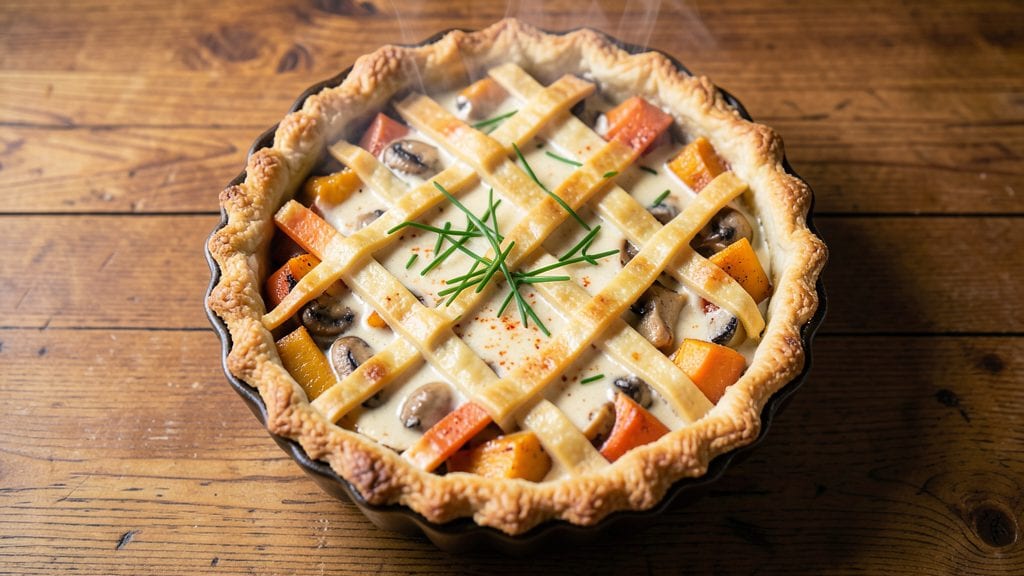
Amy’s vegetable pot pie recipe delivers all the comfort of a classic pot pie—just layers of tender vegetables, creamy sauce, and a golden crust that makes it feel like a restaurant-worthy meal without relying on meat.
After years of perfecting the balance between flaky crust and rich filling, I’ve created a version that’s both traditional and adaptable, whether you’re using a homemade crust or store-bought for convenience.
The secret lies in sautéing the vegetables until they’re just tender, then layering them with a velvety sauce that thickens beautifully during baking.
The filling is where the magic happens, combining seasonal vegetables like carrots, peas, and corn with a savory blend of herbs and spices that deepen in flavor as the pie bakes.
A simple egg wash on the crust ensures a golden, crackly finish, while the option for a lattice pattern adds visual appeal without sacrificing structure. This recipe is designed to be foolproof—perfect for weeknight dinners or special occasions—with enough flexibility to use pre-cooked fillings or gluten-free crust if needed.
By the time it emerges from the oven, you’ll have a pot pie with a crisp, golden crust that contrasts beautifully with the tender, flavorful filling beneath.
The aroma alone will have everyone gathering around the table, and the first bite delivers a perfect balance of textures—creamy sauce, tender vegetables, and that satisfying crunch of the crust.
It’s the kind of dish that feels indulgent yet remains light enough to pair with a simple side salad or crusty bread.
Serve it hot with a light beverage like iced tea or a crisp white wine to complement the savory flavors. This recipe is also perfect for meal prep—leftovers reheat beautifully, making it an ideal solution for busy schedules.
Whether you’re a seasoned home cook or just starting out, this vegetable pot pie is sure to become a staple in your rotation.
Ingredients for amy's vegetable pot pie
Golden crust, creamy filling, and tender veggies make this pot pie a vegetarian showstopper.
| Ingredient | Amount | Notes |
|---|---|---|
| All-Purpose Flour 🌾 | 2 ½ cups | For homemade crust or store-bought |
| Unsalted Butter 🧈 | ¾ cup | Cold, cubed for crust |
| Ice Water 💧 | ½ cup | For dough elasticity |
| Salt 🧂 | 1 tsp | Fine sea salt preferred |
| Fresh Chives 🌿 | ¼ cup | Finely chopped for garnish |
| Heavy Cream 🥛 | 1 ½ cups | Full-fat for richness |
| Vegetable Broth 💧 | 1 ½ cups | Low-sodium preferred |
| Cornstarch 🌾 | 1 tbsp | For sauce thickening |
| Carrots 🥕 | 1 ½ lb | Peeled, sliced into rounds |
| Green Peas 🌱 | 1 cup | Fresh or frozen, thawed |
| Sweet Corn 🌽 | 1 cup | Fresh kernels or thawed frozen |
| Yellow Onion 🧅 | 1 whole | Diced, medium size |
| Garlic Cloves 🧄 | 3 cloves | Minced for sauce |
| Fresh Thyme 🌿 | ¼ cup | Leaves only, chopped |
| Fresh Parsley 🌿 | ¼ cup | Chopped for filling |
The crust is everything—flaky, golden, and sturdy enough to hold the filling. Pillsbury Classic or Whole Foods homemade crusts work perfectly, but if you're feeling ambitious, the butter-flour-ice water combo gives you that restaurant-style flakiness. For the veggies, Trader Joe's frozen peas and corn save time, but fresh is ideal if you've got it. The carrots should be uniform slices—about 1/4-inch thick—for even cooking. Pro tip: Toss them with a pinch of salt before sautéing to keep them crisp.
No fresh thyme? Dried works at one-third the amount, but fresh gives that bright, earthy flavor. Short on parsley? Fresh basil or cilantro works in a pinch, though parsley's mild taste keeps it from overpowering. The vegetable broth is non-negotiable—Pacific Foods or Swanson low-sodium versions are my go-tos. For extra richness, stir in 2 tablespoons of Greek yogurt or sour cream with the cream. And if you're gluten-free, King Arthur gluten-free flour or a pre-made GF crust handles the job beautifully.
This pie reheats like a dream—just cover with foil and bake at 375°F for 15-20 minutes. Keeps in the fridge for 4-5 days, freezes for 3 months (wrap tightly in foil!). For meal prep, assemble the pie without baking, then refrigerate the unbaked pie for up to 24 hours before baking. The aroma alone will have your whole house gathering around the table.
Why You'll Love This Recipe
- No-Fuss Dough: The crust is just flour, butter, and ice water—no rolling pins or fancy tricks. I swear, even my 10-year-old could handle it (and did, proudly).
- Herb-Packed Crisp: That golden crust meets the creamy filling, and the fresh chives? They turn it from good to I’ll make this again tomorrow. Simple, but it’s the little details.
- Leftovers for Days: This keeps like a dream—reheat slices in the oven, and it’s like fresh. Honestly, I’ve had it for breakfast, lunch, and dinner without getting sick of it.
- Budget Magic: Butter and flour stretch far, and you can swap veggies based on sales. My wallet and my family both win—no guilt, just flavor.
Step-by-step instructions for amy's vegetable pot pie recipe
Here's how to create a luscious, golden crust over tender veggies and creamy filling—every bite is pure comfort.
Prepare the Homemade Crust
In a large bowl, whisk together the 2.5 cups all-purpose flour and 1 teaspoon salt. Cut in the 0.75 cup cold, cubed unsalted butter using a pastry cutter or your fingers until the mixture resembles coarse crumbs with pea-sized butter pieces. This texture is crucial for flaky layers.
Gradually add the 0.5 cup ice water, 1 tablespoon at a time, mixing gently with a fork until the dough just comes together. Avoid overmixing—just until the dough holds when pressed. Shape into a disk, wrap in plastic, and chill for 30 minutes. The cold dough prevents shrinking and ensures a crisp crust.
Sauté the Vegetable Base
In a large skillet, melt 2 tablespoons unsalted butter over medium heat. Add the 1 whole yellow onion, sliced, and cook for 5 minutes until softened. Stir in the 3 cloves minced garlic and 0.25 cup chopped fresh thyme, cooking for 30 seconds until fragrant.
Add the 1.5 lb peeled, sliced carrots, 1 cup sweet corn, and 1 cup green peas. Cook for 6-8 minutes until the carrots begin to soften but still hold their shape. Pour in the 1.5 cups vegetable broth and simmer for 5 minutes until the liquid reduces slightly. This step builds deep flavor into the filling.
Create the Creamy Sauce
In a separate bowl, whisk together the 1.5 cups heavy cream, 1 tablespoon cornstarch, and 0.25 cup chopped fresh parsley. Slowly pour this mixture into the skillet with the vegetables, stirring constantly. Cook over medium-low heat for 3-4 minutes until the sauce thickens to a velvety consistency.
Taste and adjust seasoning with additional salt if needed. Remove from heat and let cool slightly—this prevents the crust from getting soggy when added later. The sauce should coat the back of a spoon smoothly, indicating proper thickening.
Assemble and Bake the Pot Pie
Preheat your oven to 375°F. Roll out the chilled dough on a lightly floured surface to a 12-inch circle. Transfer to a 9-inch pie dish, trimming excess dough. Spoon the vegetable filling into the crust, mounding it slightly in the center.
Fold the edges of the dough over the filling to create a sealed border. Cut 4-5 slits in the center for steam to escape. Brush the top with a beaten egg (optional for extra shine). Bake for 40-45 minutes until the crust is golden brown and the filling bubbles through the slits.
Finish with Fresh Herbs and Serve
Remove the pot pie from the oven and let it rest for 10 minutes before slicing. Sprinkle the top generously with 0.25 cup finely chopped fresh chives for a pop of color and brightness. The crust should be crisp, the filling bubbly, and the herbs fresh—each bite combines textures perfectly.
Serve immediately with a side salad or crusty bread. The contrast of the flaky crust against the creamy, savory filling makes this pot pie a showstopper. Leftovers keep well for 3 days in the refrigerator, and the flavors only deepen overnight!
Pro Tips For Making Amy'S Vegetable Pot Pie
- Chill the Dough Properly: I learned this the hard way—rolling out warm pie dough is a recipe for a soggy bottom. Wrap the dough in plastic and refrigerate for at least 30 minutes (or up to 2 days) before rolling. The colder it is, the easier it is to handle, and the crust will hold its shape better in the oven.
- Cut Butter into Flour First: Skip the ice water for a second and cut the cold butter into the flour until it resembles coarse crumbs. This creates pockets that steam into flaky layers, not a dense, greasy mess. My grandmother swore by this, and she was right: the texture makes all the difference.
- Vent the Top Crust: Don’t seal the top crust completely—cut a few small slits (about 1/2-inch wide) before baking. This lets steam escape, preventing a soggy filling and giving you that perfect golden-brown finish. (Yes, even if you’re impatient like me.)
- Toast the Chives: After baking, sprinkle the fresh chives over the pie while they’re still piping hot. The heat wilts and slightly crisps them, intensifying their flavor and making them pop against the creamy filling. I was skeptical until I tried it—now I never skip it.
Essential equipment for this recipe
Pie Dish Essentials
For this recipe, a 9-inch deep-dish pie plate is ideal—it holds the filling without overflowing while allowing room for the crust to expand. I recommend Corelle stoneware for its heat distribution, or Ceramic Plus for durability.
Avoid glass if baking on a stovetop—it can crack under temperature shifts. For a rustic look, try a cast-iron skillet (like Lodge) lined with parchment paper. 🥧
Dough Tools
A pastry cutter or fork works for mixing the crust, but I prefer a bench scraper to divide the dough evenly. For rolling, a 12-inch rolling pin (like OXO Good Grips) prevents dough from sticking.
If short on time, use a pie crust roller—it saves effort and ensures uniform thickness. Keep your tools chilled in the freezer for 5 minutes before use to prevent sticking. ❄️
Sauce Thickening
Thickening the sauce requires precision. A whisk (like Cuisinart stainless steel) prevents lumps when combining cornstarch and cream. For testing doneness, a spoon or silicone spatula lets you check the sauce’s consistency—it should coat the back of a spoon smoothly.
If the sauce splits, whisk in 1 teaspoon cold water to fix it instantly. 💡
Steam Venting
Use a sharp paring knife to cut 4-5 slits in the crust’s center before baking. This prevents steam buildup, which can cause the crust to puff unevenly. For a decorative touch, try a lattice cutter (like Wilton’s) to create a classic pattern.
If you don’t have one, use kitchen scissors to trim strips of dough and weave them over the filling. 🌟
Baking Gear
A lightweight aluminum pie pan bakes faster than glass but requires a baking sheet underneath to catch drips. For even browning, rotate the pie halfway through baking if your oven has hot spots.
A digital thermometer (like Thermoworks Sous Vide) ensures your oven hits 375°F accurately—critical for a golden crust. 🌡️
Finishing Touches
Fresh herbs need a small chef’s knife for chopping—chives should be ¼-inch slices for even distribution. A pastry brush (like Westcott’s) applies egg wash evenly for a glossy finish.
For extra shine, mix 1 tablespoon water with the egg wash. Let the pie rest 10 minutes before slicing to set the filling. 🌿
Nutrition facts
Frequently asked questions
Can I make this vegetable pot pie ahead of time?
Yes! Assemble the unbaked pie and refrigerate it for up to 24 hours before baking. For make-ahead baking, cover tightly with foil and bake at 375°F for 50-55 minutes (the extra time accounts for the cold start). Leftovers keep well in the fridge for 4-5 days or freeze for 3 months—just reheat covered with foil for 15-20 minutes.
What vegetables can I substitute for the carrots, peas, and corn?
This recipe is flexible! Try zucchini, mushrooms, or spinach for extra veggies. For heartier options, add diced potatoes or butternut squash (simmer them first to soften). If you love legumes, swap peas for white beans or lentils. Just adjust cooking times—mushrooms and spinach cook faster than carrots.
How do I fix a soggy bottom crust?
Prevent soggy crusts by chilling the filling for 10 minutes before adding it to the crust, and always preheat your oven to 375°F. If your pie still turns out soggy, try baking it on a preheated baking sheet lined with parchment paper. For a quick fix, brush the bottom crust with a thin egg wash before adding filling—it creates a barrier.
Can I make this pot pie gluten-free?
Use a gluten-free all-purpose flour blend (like King Arthur) for the crust, and check that your vegetable broth is certified gluten-free. For extra stability, add 1 tablespoon xanthan gum to the flour mix. Store-bought gluten-free pie crusts also work well—just follow the package instructions for rolling and baking.
What’s the best way to reheat leftovers?
Cover the pot pie with foil and reheat at 350°F for 15-20 minutes until warmed through. For a crispier crust, place it under the broiler for 2-3 minutes at the end. Microwaving isn’t recommended—it makes the crust rubbery. If reheating from frozen, add 10-15 minutes to the baking time.