
Desserts
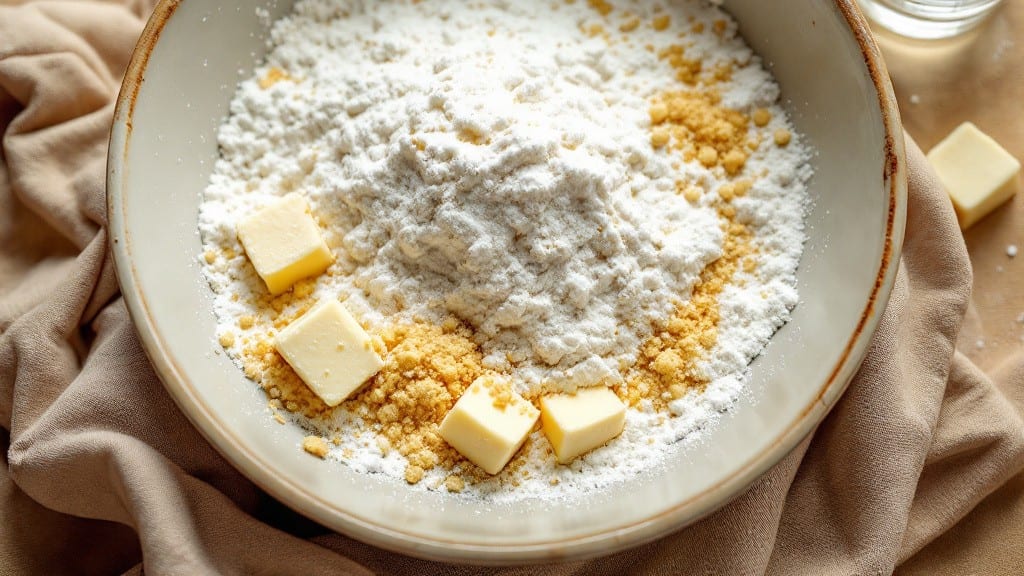
Creating a basic pie pastry recipe with cold butter layers that stay perfectly flaky is the foundation of any great pie—whether sweet or savory. This method delivers a crisp, tender crust that holds its shape even when filled with juicy fruit or rich fillings.
The secret lies in keeping everything cold and working quickly to preserve those delicate butter layers.
This recipe uses simple ingredients—flour, cold butter, salt, and ice water—to create a versatile crust suitable for apple pies, quiches, or even savory galettes. The key technique involves cutting butter into the flour until it resembles coarse crumbs, then hydrating just enough to bind without losing that flaky texture.
Blind-baking the crust ensures it stays sturdy under any filling.
By following these precise steps, you'll achieve a golden-brown crust with flaky, melt-in-your-mouth layers that separate cleanly. The result is a professional-quality pastry that's foolproof for beginners and worth perfecting for seasoned bakers.
Whether you're making a classic apple pie or a savory chicken pot pie, this crust will elevate your dish every time.
Ready in just 30 minutes with minimal effort, this recipe delivers restaurant-quality results at home. The same technique works for both sweet and savory applications, making it a must-have in any kitchen. Let's get started on creating your perfect pie base!
Ingredients for basic pie pastry
Four essential ingredients create the perfect flaky pie crust foundation—flour, cold butter, ice water, and salt.
| Ingredient | Amount | Notes |
|---|---|---|
| All-Purpose Flour 🌾 | 2 ½ cups | Sifted for light texture |
| Unsalted Butter 🧈 | 1 cup | Cold, cubed into 1/2-inch pieces |
| Ice Water 💧 | ½ cup | Chilled in freezer for 1 hour |
| Fine Sea Salt 🧂 | ½ tsp | Kosher preferred for balance |
| Granulated Sugar 🍚 | 1 tbsp | Optional for sweet applications |
| Cornstarch 🌾 | 1 tbsp | For extra tenderness (optional) |
| Large Egg Yolk 🥚 | 1 whole | For egg wash (optional) |
| Whole Milk 🥛 | 1 tbsp | For egg wash (optional) |
The butter is non-negotiable—European-style or cultured butter like Plugrá or Land O'Lakes European Style delivers the best flavor and flakiness. Buy it in the freezer section and let it sit at room temperature for 30 minutes before cubing. King Arthur or Bob's Red Mill flour works best due to their high protein content, but any all-purpose flour in your pantry will do. The ice water is critical; freeze it in ice cube trays for easy measuring. For a tender crust, Diamond Crystal salt dissolves more slowly than table salt, so use it if you have it. Pre-sift your flour to eliminate lumps and improve texture.
No cold butter? Freeze your cubed butter for 20 minutes to mimic the effect. Running short on ice water? Use cold tap water from the fridge—just don’t let it warm up. Skip the sugar for savory pies, but add it for sweet fillings like apple or berry pies. Cornstarch is optional but creates an extra-tender crust; substitute with an extra tablespoon of flour if needed. For the egg wash, use pasteurized eggs if concerned about raw egg consumption. The milk in the wash adds shine and helps with browning—whole milk works best, but any milk will do in a pinch.
Store dough between parchment paper in the fridge for up to 3 days or freeze for 3 months. Let dough sit at room temperature for 15 minutes before rolling to prevent cracking. For blind-baking, use pie weights or dried beans to prevent puffing. Pre-bake crusts at 375°F for 15-20 minutes until golden. Leftover dough can be re-rolled once—just handle gently to avoid tearing. The key to success? Keep everything cold and work quickly to preserve those delicate butter layers.
Why You'll Love This Recipe
- No-Fuss Foundation: I swear by this for lazy days—just cold butter, flour, and ice water. No warm butter to handle, no waiting for dough to chill. Honestly, it’s the kind of recipe that makes me feel like a baking pro without the stress.
- Butter Love: That cold, cubed butter melting into flaky layers? Chef’s kiss. The sugar just adds this subtle sweetness that makes everything—from fruit pies to savory galettes—feel extra special. Not to mention, the salt cuts through the richness perfectly.
- Endless Pairings: Need a crust for Thanksgiving? A quick hand pie for a picnic? This works for it all. I’ve used it for apple, cherry, quiche, and even a sweet potato pie—no need to reinvent the wheel every time.
- Budget-Proof Magic: Flour, butter, salt, sugar—these are pantry staples that won’t break the bank. And because it keeps well in the fridge (or freezer!), I can make a double batch and never stress about running out. Between us, that’s a game-changer for busy weeks.
Step-by-step instructions for cold butter pie pastry
Here's the method for achieving that signature flaky, melt-in-your-mouth texture every time.
Combine Dry Ingredients for Optimal Texture
In a large mixing bowl, whisk together the 2.5 cups all-purpose flour, 0.5 teaspoon fine sea salt, 1 tablespoon granulated sugar, and 1 tablespoon cornstarch. The sugar adds subtle sweetness while balancing the salt, and the cornstarch creates a tender crumb. Sift the mixture once to ensure even distribution and remove any lumps that could disrupt the pastry's delicate layers.
I like to press the flour mixture through a fine-mesh sieve directly into the bowl to maximize aeration. This step is crucial—it prevents dense pockets in your final pastry. Once sifted, use a rubber spatula to gently break up any remaining clumps by hand, ensuring a perfectly smooth base for the butter incorporation.
Cut in Cold Butter for Maximum Flakiness
Add the 1 cup unsalted butter, still cold and cubed into ½-inch pieces, to the flour mixture. Using a pastry cutter or two forks, work the butter into the flour until the mixture resembles coarse crumbs with pea-sized butter pieces remaining. This technique, called "cutting in," creates those signature flaky layers by trapping butter between flour layers.
Work quickly but deliberately—overhandling warms the butter and melts it prematurely. You should still see visible butter pieces when you press the mixture together. If the dough starts to stick, chill the bowl in the freezer for 2-3 minutes to firm up the butter. This step ensures the butter stays cold enough to create steam during baking, which puffs the layers.
Gradually Add Ice Water for Cohesion
With a fork or your fingers, gradually sprinkle in the ½ cup ice water, 1 tablespoon at a time, mixing gently after each addition. The ice water helps bind the dough while keeping the butter cold. Stop adding water as soon as the dough begins to come together when pressed—it should hold its shape but still feel slightly crumbly.
Here's the thing—this dough should be cold and stiff, not soft and pliable like store-bought pie crust. If it's too dry, add 1 teaspoon more ice water; if too wet, chill for 10 minutes to firm up. The goal is a dough that's just cohesive enough to handle without sticking. Wrap the dough tightly in plastic wrap and refrigerate for at least 1 hour to fully chill and relax the gluten.
Roll and Shape for Even Thickness
On a lightly floured surface, roll the chilled dough into a ¼-inch thick circle, about 12 inches in diameter. Keep the dough moving and rotate it often to maintain even thickness. If it resists rolling, let it rest for 5 minutes in the fridge to firm up. The key here is consistency—thinner edges will bake faster than thicker centers, leading to uneven doneness.
Transfer the rolled dough to a parchment-lined baking sheet and gently fold it in half to create a semicircle. This makes it easier to fit into pie dishes without stretching. If you're making a double crust, roll out a second identical disc. For extra flakiness, brush the bottom crust with a mixture of the 1 whole large egg yolk and 1 tablespoon whole milk, then sprinkle with a pinch of salt before adding filling.
Blind-Bake for Perfect Structure
Preheat your oven to 375°F. For a bottom crust, fit it into your pie dish and prick the base all over with a fork to prevent bubbling. Line with parchment paper, fill with pie weights or dried beans, and bake for 15 minutes. Remove the weights and bake for an additional 5-7 minutes until the edges are light golden brown and the base is set but not colored.
For a top crust, roll it out and place it over the filling, trimming excess and sealing the edges with a fork. Brush with the egg wash and cut decorative slits for steam to escape. Bake until the crust is deep golden brown and the filling is bubbly. The cold butter layers will create those beautiful, airy pockets—proof you've achieved perfect flakiness.
Pro Tips For Making Basic Pie Pastry
- CHILL THE BUTTER FIRST: Take that cold butter straight from the fridge—yes, even if it feels stubborn. Cut it into ½-inch cubes and let them sit on the counter for exactly 10 minutes before mixing. This keeps the dough workable without turning it greasy, and I learned this the hard way after making a mess of a flaky crust because the butter melted too fast.
- MEASURE FLOUR BY SPOONING: Don’t scoop flour from the bag into your measuring cup—pack it in loosely, then level it off with a straight edge. Too much flour makes the dough tough, and I used to overdo it without realizing it. A cup of flour should weigh about 125 grams (4.4 oz) when packed lightly, not more.
- WORK FAST WITH ICE WATER: Keep your ice water in a separate container and add it one tablespoon at a time while mixing. If the dough gets sticky too soon, you’ve added too much—there’s no going back. I now keep a small bowl of ice water nearby and add it gradually to avoid a gloopy disaster.
- REST THE DOUGH LONGER: Give the dough a full 30 minutes in the fridge before rolling—yes, even if you’re in a hurry. This relaxes the gluten and makes it easier to handle. I used to skip this and end up with a tough, uneven crust that fought me every step of the way. Trust me, the extra time pays off.
Pro cooking tips for this dish
Butter Temperature Secrets
The most critical factor in flaky pie crust is using cold butter—I mean cold. Cube your butter and freeze it for 20 minutes before using if it’s not already firm.
The ideal temperature is 35-40°F—any warmer and the butter will melt during mixing, creating a tough crust instead of flaky layers. I test by pressing a cube with my finger; if it leaves a dent but doesn’t smear, it’s perfect. 🧈
Cutting In Like a Pro
Use a pastry cutter or two forks to work the butter into the flour until you get pea-sized butter pieces with coarse crumbs. The goal is to create thin, even layers of butter between the flour.
If the mixture feels too dry, chill it for 2-3 minutes—never add warm water. I’ve ruined crusts by rushing this step, so take your time. The butter should still be visible when you press the dough together.
Ice Water Magic
Never use room-temperature water—ice water is non-negotiable. Freeze water in an ice cube tray for easy measuring, and add it 1 tablespoon at a time while mixing gently. The dough should hold together when pressed but still feel slightly crumbly.
If it’s too sticky, chill it for 10 minutes before proceeding. This step ensures the butter stays cold while binding the dough just enough for handling. ❄️
Resting Prevents Cracks
After shaping, rest the dough for at least 1 hour in the fridge. This relaxes the gluten and prevents shrinking or cracking when you roll it out. I like to wrap it tightly in plastic wrap to maintain moisture.
If you’re in a hurry, chill it for 30 minutes—just handle it gently when rolling. The longer it rests, the easier it becomes to work with and the flakier the final crust will be.
Rolling Technique Matters
Roll the dough from the center outward, rotating it quarter-turns to maintain even thickness. Aim for ¼-inch thickness—thicker spots will bake faster and burn. If the dough resists, let it rest for 5 minutes in the fridge.
I use a rolling pin with a marble base (like the OXO Good Grips) for better control. Fold the rolled dough in half before transferring to prevent stretching when fitting into pie dishes.
Blind-Baking Tricks
For blind-baking, use pie weights or dried beans (like black beans) to weigh down the crust. Bake at 375°F for 15 minutes, then remove the weights and bake for another 5-7 minutes until golden. If the edges brown too quickly, cover them with foil.
For extra crispiness, brush the baked crust with a 1:1 egg yolk and milk wash before adding filling. This creates a beautiful, golden finish while sealing in moisture. 💫
Nutrition facts
Frequently asked questions
Why does my pie crust turn out tough instead of flaky?
The most common cause is butter that's too warm. Always use cold butter (35-40°F) and keep everything chilled. Overworking the dough or adding too much water also creates toughness. Work quickly and handle the dough minimally to preserve those delicate butter layers.
Can I make this pie crust without butter?
Yes! For a dairy-free version, substitute 1 cup cold vegetable shortening or 1 cup coconut oil (solid) for the butter. Keep the dough cold and follow the same technique. The texture will be slightly different but still delicious for both sweet and savory pies.
How do I prevent my pie crust from shrinking?
Shrinking happens when the dough isn't properly chilled before rolling. Always rest the dough for at least 1 hour in the fridge after mixing. Handle it gently when transferring to pie dishes, and avoid stretching it to fit. For extra insurance, blind-bake the crust before adding filling.
What's the best way to store leftover pie dough?
Wrap the dough tightly in plastic wrap and refrigerate for up to 3 days. For longer storage, freeze it for 3 months. When ready to use, let it sit at room temperature for 15 minutes before rolling. Never refreeze thawed dough.
Can I use this crust for savory pies like quiche?
This versatile crust works perfectly for savory applications. For extra flavor, add 1 tablespoon dried herbs (like thyme or rosemary) to the flour mixture. The same cold butter technique creates flaky layers that pair beautifully with egg-based fillings.