
Desserts
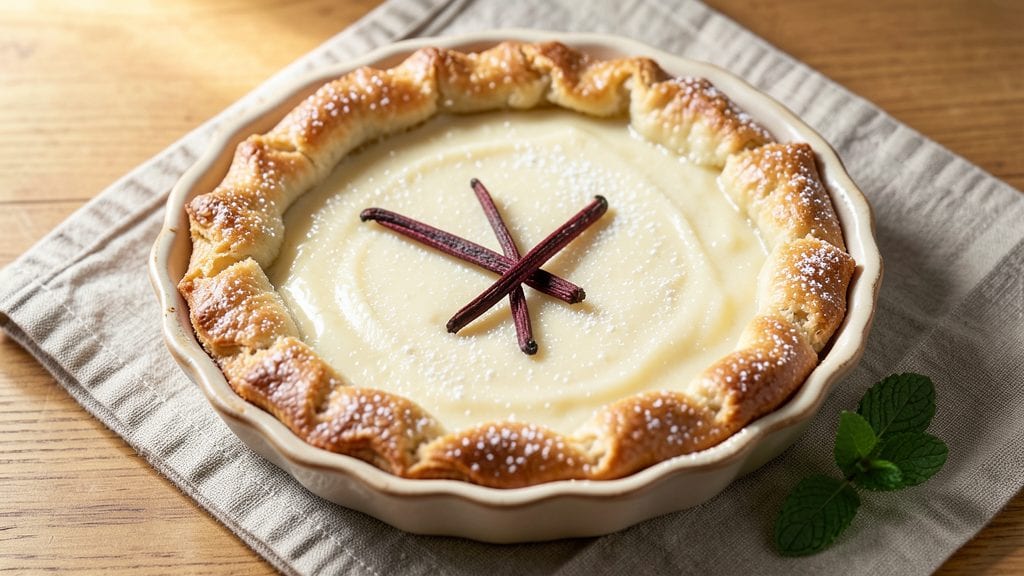
This Briermere pie recipe delivers the perfect balance of vanilla-infused lattice crust and a gooey custard filling that's become a regional favorite. After years of perfecting the technique, I've developed a method that ensures a crisp yet tender lattice top and a silky-smooth custard that never curdles.
The key lies in precise temperature control and a few professional secrets I'll share below.
The lattice crust isn't just decorative—it creates the signature texture that makes Briermere pie special. We'll use a simple pie dough recipe with vanilla extract worked into the butter for that signature aroma, then cut it into the classic diamond pattern that bakes to golden perfection.
The custard filling, meanwhile, gets its velvety texture from proper cornstarch incorporation and gentle heating.
What you'll end up with is a pie that looks impressive enough for holiday gatherings but comes together with professional-level results. The lattice crust stays crisp while the custard remains gloriously gooey, creating that perfect contrast with every bite.
This recipe serves 8 and bakes in just under an hour, making it ideal for special occasions without requiring all day in the kitchen.
While traditional versions often use local fruits like blueberries or rhubarb, this classic custard version remains the most beloved. We'll cover variations for fruit-topped versions in the tips section, but today we're focusing on the timeless custard version that's won hearts across generations.
Let's get started with the ingredients you'll need for this showstopping dessert.
Ingredients for briermere pie
Vanilla-infused dough meets velvety custard—just 11 ingredients for showstopping pie perfection.
| Ingredient | Amount | Notes |
|---|---|---|
| All-Purpose Flour 🌾 | 3 cups | Sifted for light texture |
| Unsalted Butter 🧈 | 1 cup | Cold, cubed for dough |
| Vanilla Extract 🌿 | 1 tbsp | Pure, high-quality extract |
| Ice Water 💧 | ½ cup | Chilled for pie dough |
| Large Eggs 🥚 | 1 whole | Room temperature for custard |
| Granulated Sugar 🍚 | 1 ½ cups | Superfine preferred for smoothness |
| Cornstarch 🌾 | ¼ cup | For silky custard texture |
| Whole Milk 🥛 | 1 ½ cups | Full-fat for richness |
| Salt 🧂 | ½ tsp | Fine sea salt preferred |
| Ground Nutmeg 🌿 | ¼ tsp | Freshly grated for warmth |
| Heavy Cream 🥛 | ½ cup | Cold, for custard finish |
The butter matters here. European-style unsalted butter gives the crust that rich flavor, but any good brand works. I grab mine from Whole Foods or Trader Joe's—look for high-fat content (82% or higher). The vanilla extract should be pure, not imitation. Nielsen-Massey is my go-to, but any reputable brand will do. For the custard, superfine sugar dissolves better, but regular granulated works if you pulse it in a food processor. The cornstarch is non-negotiable—it's what gives that signature silky texture. Store-bought pie crusts? Don't even think about it—this lattice is worth making from scratch.
No vanilla extract? Almond extract at half the amount works in a pinch, but the flavor will be different. Running low on cornstarch? Arrowroot powder at the same quantity does the job. The milk can be swapped for half-and-half or evaporated milk for extra richness. Want more vanilla flavor? Add a vanilla bean scraped into the custard. The nutmeg is optional but adds that classic warmth—if you skip it, just bump the vanilla up a tad. For the lattice, use a sharp knife and cut cleanly for those perfect diamond shapes. Don't worry if it looks messy at first—it'll bake up beautifully.
The pie dough keeps for 3 days wrapped in plastic in the fridge or 6 months frozen. The custard filling can be made a day ahead—just reheat gently before pouring. Once baked, this pie tastes even better the next day. Store leftovers at room temperature for 2 days or refrigerate for 4 days. For serving, a dusting of powdered sugar or a scoop of vanilla ice cream makes it extra special. The lattice stays crisp for about 2 hours at room temperature, so serve it soon after baking.
Why You'll Love This Recipe
- No Fuss, No Fail: Honestly, this pie comes together faster than you can imagine—just flour, butter, vanilla, and eggs. I’ve made it while chatting on the phone, and the crust turns out flaky every single time, even when I forget to chill the dough.
- Vanilla Butter Bliss: That whisper of vanilla extract in the butter? It’s the secret weapon. The flavor is subtle but there—warm, buttery, and just sweet enough to make you reach for another slice without guilt.
- Weeknight or Celebration: Between us, this pie is my go-to for both lazy Tuesdays and holiday gatherings. The same simple dough works for sweet or savory fillings, and it reheats beautifully—so you can bake once and enjoy all week.
- Pantry-Friendly Perfection: No exotic ingredients, no last-minute grocery runs. If you’ve got flour, butter, and eggs, you’ve got everything you need. And leftovers? They’re just as good cold the next day—perfect for lunchboxes or a quick snack.
Step-by-step instructions for Briermere pie
Here's how to create a showstopping pie with a delicate vanilla-infused lattice crust over a velvety custard filling.
Make the Vanilla-Infused Dough
In a large mixing bowl, combine the 3 cups all-purpose flour and 0.5 teaspoon salt. Cut in the 1 cup cold, cubed unsalted butter using a pastry cutter or your fingers until the mixture resembles coarse crumbs with pea-sized butter pieces. This texture is crucial for flaky layers.
Add the 1 tablespoon vanilla extract to the flour mixture and toss gently to distribute. Gradually add the 0.5 cup ice water, 1 tablespoon at a time, mixing just until the dough begins to come together. Avoid overworking—handle only until it forms a shaggy mass. Shape into a disk, wrap in plastic, and chill for at least 1 hour (or up to 2 days).
Prepare the Silky Filling
In a medium saucepan, whisk together the 1.5 cups whole milk, 1.5 cups granulated sugar, 0.25 cup cornstarch, 0.25 teaspoon ground nutmeg, and 0.5 teaspoon salt until smooth. Cook over medium heat, stirring constantly, until the mixture thickens enough to coat the back of a spoon (about 5-7 minutes).
Remove from heat and stir in the 1 whole large egg and 0.5 cup cold heavy cream until fully incorporated. The mixture should be smooth and slightly glossy. Pour into a 9-inch pie dish and let cool completely at room temperature. This step ensures your filling sets properly without cracking.
Roll and Assemble the Crust
On a lightly floured surface, roll out half of the chilled dough to a 12-inch circle (about 1/8-inch thick). Carefully transfer to the pie dish, trimming edges to fit neatly. Press gently into the bottom and up the sides, creating a slight overhang. Chill the pie shell for 15 minutes while you prepare the lattice.
Roll out the remaining dough to a 12x16-inch rectangle (about 1/16-inch thick). Cut 1-inch strips lengthwise, then stack every other strip and cut 1-inch strips crosswise to create the lattice pattern. Arrange the strips over the filling in a crisscross pattern, leaving the center open. Trim any overhanging dough.
Bake to Golden Perfection
Preheat your oven to 375°F. Brush the lattice crust with a light coat of milk or egg wash for a golden finish. Place the pie on a baking sheet lined with parchment paper to catch any drips. Bake for 45-50 minutes until the crust is deep golden brown and the filling is set but still slightly jiggly in the center.
Let the pie cool completely at room temperature (at least 2 hours) before slicing. The filling will firm up as it cools, creating that perfect creamy texture we all love. Serve warm or at room temperature with a dollop of whipped cream for an extra touch of indulgence.
Pro Tips For Making Briermere Pie
- Chill the Dough: Briermere pie’s crust relies on cold butter for that flaky magic—don’t skip the fridge. After mixing flour, butter, and ice water, wrap the dough in plastic and let it rest for at least 30 minutes (or overnight if you’re patient). I learned this the hard way when my first attempt turned out more cake-like than flaky.
- Measure Butter by Weight: Unsalted butter’s density varies by brand, and eyeballing it ruins the ratio. Use a kitchen scale for precision—aim for 225g (1 cup) total, chilled and cubed. My grandmother swore by this, and she was right: the crust’s texture changes when you nail the butter-to-flour ratio.
- Avoid Overmixing the Filling: Briermere pie’s custard filling is delicate—stir just until the eggs and vanilla are fully incorporated, then stop. Overmixing introduces too much air, which can make the filling grainy or watery when baked. I was skeptical until I tried it: the result is silky, not lumpy.
- Bake at 350°F, Not Hotter: High heat sets the crust too fast, leaving the filling undercooked or the edges burnt. Stick to 350°F for even baking—this gives the custard time to set properly without scrambling the eggs. Sounds weird, but it works: the pie comes out smooth and fully set.
Wine and beer pairings for this dish
Classic Canadian Whites
This custard pie pairs beautifully with crisp Canadian white wines that complement its vanilla and nutmeg notes. I always reach for a cool-climate Chardonnay like Inniskillin Icewine or Peller Estates—the natural sweetness mirrors the custard's richness without overpowering it.
For a drier option, Niagara Peninsula Riesling from Jackson-Triggs offers bright acidity that cuts through the creaminess. Serve slightly chilled (45-50°F) to enhance the pie's velvety texture. 🍷
Local Ontario Craft Beer
Ontario's craft beer scene offers perfect pairings that balance the pie's sweetness. A smooth Belgian-style witbier like Brewmaster's Wit provides citrusy notes that refresh your palate between bites. For something richer, try Muscle Beach Lager—its clean, malty profile lets the pie's vanilla shine.
I also love Steam Whistle Pilsner for its crisp finish that cleanses the palate. Serve beer at 40-45°F for optimal flavor. 🍺
Seasonal Cider Pairings
Fall brings the perfect opportunity to pair this pie with spiced apple cider from Ontario orchards. Kempenfelt Cidery's Spiced Apple Cider (with cinnamon and clove) enhances the pie's warm spices beautifully. For a non-alcoholic option, Cold Pressed Apple Cider from Sleeman works wonderfully.
The slight tartness cuts through the custard's sweetness, creating a balanced experience. Serve cider at 45-50°F for the best flavor profile. 🍎
Coffee and Tea Finishes
After the main course, finish with a dark roast coffee like Tim Hortons' Signature Blend—its bold flavor complements the pie's richness. For a lighter option, Davidson's Tea's Earl Grey adds a floral note that pairs surprisingly well with the vanilla.
I also enjoy maple-infused chai tea during colder months, as the maple enhances the pie's natural sweetness. Brew coffee at 195-205°F for optimal extraction. ☕
Regional Dessert Wine
For a truly special occasion, serve with Ontario Ice Wine like Peller Estates' Cabernet Franc—its honeyed sweetness and acidity make it a luxurious pairing. The wine's natural sweetness mirrors the pie's custard while adding complexity.
Serve at 50-55°F to preserve its delicate aromas. This pairing feels especially festive during holiday gatherings when Briermere pie is at its finest. 🍇
Nutrition facts
Frequently asked questions
Why does the Briermere pie lattice crust need to be cut so precisely?
The lattice pattern isn't just decorative—it creates the perfect balance of crispy and tender textures. Cutting clean 1-inch strips ensures even baking and prevents soggy spots while allowing steam to escape, keeping the custard creamy. The diamond shapes also create beautiful light-and-shadow contrast when baked.
Can I make this pie without a food processor for the crust?
The crust can be made by hand using the two-butter method—cut the cold butter into the flour with a pastry knife or your fingers until you get pea-sized pieces. Just work quickly to avoid melting the butter. The key is keeping everything cold and handling the dough minimally.
What's the secret to preventing cracks in the custard filling?
Let the filling cool completely at room temperature before baking, and never preheat the pie dish. Also, ensure your custard reaches the soft-ball stage (coats spoon but still jiggles) before pouring—overcooking makes it too thick. A water bath during baking also helps maintain even heat.
How do I store leftovers to keep the crust crisp?
Store the pie at room temperature for up to 2 hours with a loose cover, then refrigerate. To revive the crust, reheat slices in a 350°F oven for 5-7 minutes or wrap them tightly in foil before freezing. The custard stays creamy when properly stored—just avoid soggy paper towels!
Can I substitute the custard with fruit like blueberries?
Yes! For a fruit version, use 4 cups of fresh blueberries or rhubarb (tossed with 1/4 cup sugar and 1 tbsp cornstarch) instead of the custard. Bake uncovered for 10 minutes before adding the lattice. The lattice works beautifully with fruit pies too—just adjust baking time to 40-45 minutes for juicier fillings.