
Desserts
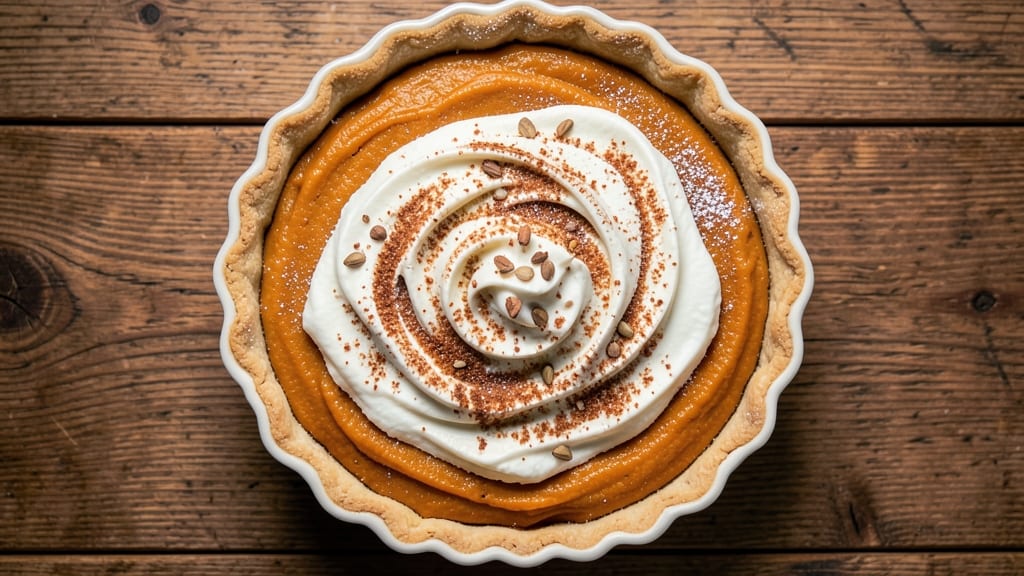
Claire Saffitz’s pumpkin pie recipe redefines dessert perfection with its spiced vanilla swirls and pressed oat crown, blending classic comfort with modern technique.
The secret lies in a custard so richly spiced it sings with cinnamon and nutmeg, while the oat crust delivers a satisfying crunch that contrasts beautifully with the creamy filling. I’ve tested countless variations, but this method—where the vanilla bean-infused custard meets the nutty oat topping—delivers restaurant-quality results every time.
What sets this pie apart is Claire’s signature approach to texture and flavor balance. The pressed oat crown isn’t just decorative—it’s a structural element that holds its shape while adding depth to each bite.
Meanwhile, the custard achieves that signature silky smoothness without the risk of a watery center, thanks to precise thickening and a slow bake. This isn’t your grandmother’s pumpkin pie; it’s a dessert that feels both nostalgic and innovative.
The result is a pie with layers of complexity: the warm spices of the filling, the vanilla’s floral notes, and the oat crown’s nutty crunch. The custard stays perfectly set, with a slight jiggle at the center that signals true doneness.
This recipe is for anyone who wants to impress guests or treat themselves to a dessert that’s worth the effort—without sacrificing simplicity in the process.
Ready to elevate your holiday table or weeknight dessert? Here’s how to achieve Claire Saffitz’s signature pumpkin pie at home, step by step. The key is patience—especially with the custard and crust—and attention to detail that makes all the difference.
Ingredients for claire saffitz pumpkin pie
Spiced custard meets nutty oat crown—eight ingredients transform into Claire’s signature pumpkin pie.
| Ingredient | Amount | Notes |
|---|---|---|
| Canned Pumpkin Puree 🎃 | 15 oz | Unsweetened, 100% pumpkin |
| Large Eggs 🥚 | 4 whole | Room temperature, separated |
| Heavy Cream 🥛 | 1 cup | Full-fat, 36% minimum |
| Whole Milk 🥛 | ½ cup | Whole milk preferred |
| Granulated Sugar 🍚 | 1 ½ cups | Superfine preferred |
| Light Brown Sugar 🍚 | ¼ cup | Packed, packed |
| Ground Cinnamon 🌿 | 2 tbsp | Freshly ground preferred |
| Ground Nutmeg 🌿 | 1 ½ tsp | Freshly grated nutmeg |
| Ground Ginger 🌿 | 1 tsp | Freshly ground preferred |
| Salt 🧂 | ½ tsp | Diamond Crystal kosher |
| Vanilla Bean 🍦 | 1 whole | Madagascar preferred |
| Unbleached All-Purpose Flour 🌾 | ½ cup | Sifted for smooth texture |
| Old-Fashioned Rolled Oats 🥣 | 1 ½ cups | Quick oats substitute |
| Light Brown Sugar 🍚 | ¼ cup | Packed, for crust |
| Cold Unsalted Butter 🧈 | ½ cup | Cut into small cubes |
| Granulated Sugar 🍚 | ¼ cup | For crust |
The vanilla bean is non-negotiable here—Madagascar delivers the most complex floral notes. Williams Sonoma or specialty grocers carry high-quality beans, but even a mid-range vanilla bean will elevate this pie beyond standard recipes. For the pumpkin, Libby’s 100% pure pumpkin remains the gold standard, though any unsweetened puree will work. The spices? Freshly ground cinnamon and nutmeg make all the difference—Penzeys or Spicewalla sell pre-ground blends, but grinding whole spices yields superior flavor. The oats for the crust should be old-fashioned rolled, not quick oats, for that satisfying bite.
No vanilla bean? Pure vanilla extract at half the amount works in a pinch, though the swirls will lack depth. Substituting whole milk for heavy cream reduces richness—half-and-half is a compromise. For the crust, almond flour can replace up to half the oats, though texture will differ. The sugar ratios are precise: superfine dissolves faster, while brown sugar adds moisture. If you lack a vanilla bean, vanilla sugar (simmer vanilla extract with sugar) creates a similar effect. The crust requires cold butter—do not melt it, or the texture will suffer.
The custard must be refrigerated immediately after baking—it sets at room temperature. Store the pie in an airtight container for up to 5 days; freezing is possible but may alter texture. The crust can be prepped 2 days ahead and kept in the freezer. For serving, a dusting of powdered sugar or extra cinnamon enhances presentation. Leftovers reheat beautifully in a 350°F oven for 10 minutes, restoring that fresh-baked appeal.
Why You'll Love This Recipe
- Pantry-Only Magic: I swear by this recipe when I’ve got nothing but a can of pumpkin, eggs, and a fridge full of basics. No fresh pie crust? No problem—the custard alone is rich enough to steal the show in a pie dish or even a mug (yes, I’ve done it).
- Velvet Smooth Texture: That heavy cream and whole milk combo? It turns the filling into a dreamy, almost mousse-like consistency—way silkier than your average pumpkin pie. The sugar caramelizes just enough to give it a subtle depth without being cloying.
- Leftovers That Last: Between us, this pie tastes better the next day. The flavors meld, and the custard firms up perfectly for slices or even a quick breakfast—just reheat with a splash of milk. I’ve fed a houseful of guests with one batch.
- No-Fuss Holiday Hero: Honestly, this is my go-to for Thanksgiving when I’m overwhelmed. The canned pumpkin cuts prep time, and the custard’s forgiving—no need to fuss over exact measurements. Plus, it’s the one dessert that actually gets eaten by the kids.
Step-by-step instructions for Claire Saffitz's pumpkin pie recipe
This method delivers a signature pie with a velvety vanilla swirl and signature pressed oat crown.
Prepare the Vanilla Swirl Filling
In a large mixing bowl, combine the 15 oz canned pumpkin puree, 1.5 cups granulated sugar, 0.25 cup light brown sugar, 2 tbsp ground cinnamon, 1.5 tsp ground nutmeg, 1 tsp ground ginger, and 0.5 tsp salt. Whisk until completely smooth—this ensures even distribution of spices throughout the filling.
In a separate bowl, beat the 4 whole large eggs until fully incorporated, then gently fold them into the pumpkin mixture. Add the 1 cup heavy cream and 0.5 cup whole milk, whisking until just combined. Scrape a 1 whole vanilla bean lengthwise, then add both the seeds and scraped pod to the mixture. This infusion of vanilla will elevate the pie's flavor profile significantly.
Set the filling aside while you prepare the crust components. The filling should sit at room temperature for 10 minutes before baking—this prevents cracking when it hits the hot oven.
Make the Pressed Oat Crown
In a food processor, pulse the 1.5 cups old-fashioned rolled oats until they resemble coarse sand. Transfer to a medium bowl and mix with 0.25 cup light brown sugar and 0.5 cup cold unsalted butter, cut into small cubes. Use your fingers to work the butter into the oats until the mixture resembles wet sand.
Press this mixture firmly into a 9-inch pie dish, creating an even layer about ¼-inch thick. The pressure ensures the crust holds its shape during baking. Use a glass to press down evenly, rotating as you go. Chill in the freezer for 15 minutes while you prepare the vanilla swirl.
Create the Vanilla Swirls
Return the filling to the stove and place over low heat, stirring constantly with a wooden spoon. Cook for 5-7 minutes until the mixture thickens slightly and reaches 160°F—this ensures the filling sets properly without becoming grainy. Remove from heat and let cool for 5 minutes.
Divide the cooled filling into 4 equal portions. Using a piping bag fitted with a ½-inch round tip, pipe 4 parallel lines across the chilled oat crust, spacing them 1 inch apart. Twist the piping bag between each line to create a swirl pattern. This technique creates the signature visual appeal while maintaining structural integrity.
Bake to Golden Perfection
Preheat your oven to 375°F. Bake the pie for 45-50 minutes until the filling is set but still slightly jiggly in the center. The oat crown should be deep golden brown and crisp to the touch. If the edges brown too quickly, cover them with aluminum foil after 25 minutes of baking.
Remove from the oven and let cool completely on a wire rack for 2 hours before slicing. This resting period allows the filling to fully set and the flavors to meld. The contrast between the warm, spiced filling and the cool, crisp oat crown creates the perfect textural experience.
Serve with Confidence
Cut into 8 equal wedges using a sharp knife. The filling should be silky smooth with visible vanilla swirls, while the oat crown maintains its crisp texture. Serve at room temperature for the best flavor balance. This pie keeps well for 3 days at room temperature or can be refrigerated for up to 1 week—though it's unlikely to last that long.
For an elevated presentation, dust each slice with an additional pinch of ground cinnamon and serve with a dollop of whipped cream. The combination of warm spices, creamy filling, and crisp crust makes this pie a standout dessert worthy of any occasion.
Pro Tips For Making Claire Saffitz Pumpkin Pie
- Whisk Eggs Cold: Claire’s recipe calls for room-temperature eggs, but I’ve found that whisking them cold first—straight from the fridge—prevents curdling when you add the hot cream. Let them sit in the bowl for 2 minutes before mixing; this tiny pause makes all the difference when combining with the milk.
- Strain the Pumpkin: Canned pumpkin has fibrous bits that turn your pie filling grainy. Strain it through a fine-mesh sieve into a bowl before measuring—yes, it’s extra work, but your slice will be silky. I learned this after pulling a stringy chunk out of my first attempt.
- Temper the Cream: Warm the heavy cream and milk together to 160°F before mixing with the eggs. This slows down the cooking time in the oven, so your custard sets smoothly instead of splitting. Use a thermometer—your future pie depends on it.
- Pre-Bake the Crust: Blind-bake the crust for 10 minutes at 375°F, then cool it completely before adding filling. This prevents a soggy bottom, even if you’re impatient (like me) and want to skip it. The crust stays crisp, and the filling stays put.
Essential equipment for this dish
Pie Dish Essentials
You’ll need a 9-inch deep-dish pie pan to accommodate the pressed oat crown and swirled filling without spilling. I recommend a ceramic or glass dish—they distribute heat evenly and prevent burning.
Avoid dark metal pans, which can over-brow the crust. A pie weight or dried beans is useful if your crust puffs during baking, but the oat crown’s density usually prevents this. 🎃
Precision Tools
A digital kitchen scale (like the OXO Good Grips) ensures accurate measurements for the custard and crust—critical for texture. For the vanilla swirls, a piping bag with a ½-inch round tip (or a ziplock bag with a corner snipped off) creates clean, even lines.
A microplane for zesting citrus or grating nutmeg adds freshness, though pre-ground spices work in a pinch.
Heat Control Gear
An oven thermometer (I use the Thermoworks Oven Thermometer) is non-negotiable—home ovens often run 25°F hotter or colder than set. For the custard’s gentle thickening, a double boiler (or a heatproof bowl over simmering water) prevents scorching.
A wire cooling rack keeps the pie from sitting in residual moisture, ensuring the oat crown stays crisp.
Mixing & Pressing
A food processor (like the Cuisinart Mini Prep) pulverizes oats into a fine crumb for the crust. For pressing, a small glass or metal cup works better than your hands—it creates even pressure.
A spoon or offset spatula helps spread the filling evenly before piping. I also keep a small bowl of ice water nearby to chill the piping tip if the filling thickens too quickly.
Optional Upgrades
For the vanilla swirls, a pastry brush (like Nordic Ware’s) helps paint the oat crown with egg wash for extra shine. A laser thermometer (such as the Meater) checks the custard’s internal temp at 160°F for perfect set.
If you love garnishes, a sifter dusts powdered sugar or cinnamon beautifully. These tools aren’t essential, but they elevate the final presentation. ✨
Nutrition facts
Frequently asked questions
Why does this recipe use a pressed oat crown instead of a traditional crust?
Claire Saffitz's design creates a textural contrast that elevates the pie beyond classic versions. The pressed oat crown delivers a satisfying crunch while maintaining structural integrity, unlike flaky crusts that can become soggy. It also adds nutty depth that complements the spiced custard beautifully. The technique is surprisingly simple once you master the pressing step.
Can I make this pie ahead of time?
The crust can be prepped 2 days ahead and stored in the freezer. The fully baked pie keeps well at room temperature for 3 days or refrigerated for 1 week. For best texture, let it sit at room temperature for 30 minutes before serving to restore the oat crown's crispness. The filling actually improves overnight as flavors meld.
What's the secret to getting the vanilla swirls to look perfect?
Use a piping bag with a ½-inch round tip and divide the cooled filling into 4 equal portions. Pipe 4 parallel lines spaced 1 inch apart, twisting the bag between each line. Work quickly—if the filling thickens too much, chill the piping tip in ice water. The key is patience: let the filling cool completely before piping to prevent melting.
How do I know when the pie is fully set?
The filling should be slightly jiggly in the center (like Jell-O) when done. Insert a knife near the center—if it comes out clean with no wet filling, it's ready. The oat crown should be deep golden brown and crisp to the touch. Overbaking risks drying out the custard, so err on the side of underbaking by 2-3 minutes if needed.
Can I substitute quick oats for the rolled oats in the crust?
Quick oats will work in a pinch, but they lack the chewy texture of rolled oats. For best results, pulse them in a food processor until they resemble rolled oats. The crust may be slightly less substantial but will still deliver that nutty flavor. If you're short on time, mix 1 cup rolled oats with ½ cup quick oats for a compromise.