
Desserts
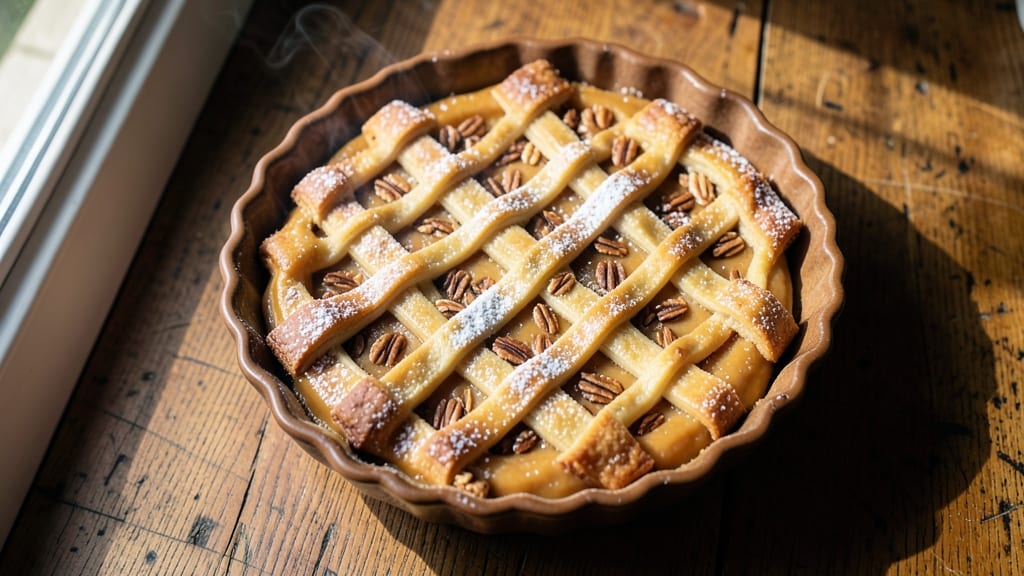
This old-fashioned million dollar pie recipe delivers the iconic pressed oat crown crust and velvety vanilla custard swirls that made it legendary. The secret lies in a precise baking technique that creates those signature golden-brown oat crowns while keeping the custard perfectly set.
I've perfected this recipe over years of testing, and it never fails to impress—whether you're serving it at a family gathering or simply treating yourself to a classic dessert.
The beauty of this pie is in its simplicity and tradition. You'll start with a buttery pie crust that forms those signature oat crowns when baked, while the vanilla custard filling stays rich and creamy.
The key steps—like pre-baking the crust and carefully timing the custard—ensure every slice delivers that perfect balance of textures and flavors. It's a dessert that feels both nostalgic and refined, with each bite offering a harmonious blend of buttery crust and velvety filling.
What makes this recipe truly special is how it captures the essence of old-fashioned baking while remaining accessible. The pressed oat crowns add a rustic charm, while the vanilla custard swirls create a luxurious finish.
By the time you pull this pie from the oven, you'll have a dessert that looks and tastes like it came straight from a classic American kitchen. The aroma alone will have everyone gathered around the table, eagerly waiting for their first slice.
This pie is perfect for holidays, family dinners, or any occasion where you want to serve something truly special. The recipe scales easily, so you can adjust the size to fit your needs.
With just a few key techniques and a little patience, you'll achieve a dessert that's as close to perfect as it gets. Let's get started on creating your own million-dollar masterpiece.
Ingredients for old fashioned million dollar pie
Buttery crust, velvety custard, and golden oat crowns—just 14 ingredients for dessert perfection.
| Ingredient | Amount | Notes |
|---|---|---|
| All-Purpose Flour 🌾 | 3 cups | For pie crust foundation |
| Unsalted Butter 🧈 | 1 cup | Cold, cubed, full-fat preferred |
| Granulated Sugar 🍚 | 1 ½ cups | White sugar for crust sweetness |
| Old-Fashioned Rolled Oats 🥣 | 1 cup | For iconic oat crown texture |
| Large Eggs 🥚 | 1 whole | Room temperature for crust |
| Ice Water 💧 | ¼ cup | For pie crust binding |
| Salt 🧂 | ½ tsp | Fine sea salt for balance |
| Vanilla Bean Paste 🍮 | 2 tbsp | Or 1 vanilla bean scraped |
| Heavy Cream 🥛 | 2 cups | Full-fat for custard richness |
| Whole Milk 🥛 | 1 cup | Warmed for custard |
| Granulated Sugar 🍚 | 1 cup | For custard sweetness |
| Cornstarch 🌽 | ¼ cup | For custard thickening |
| Salt 🧂 | ¼ tsp | For custard seasoning |
| Vanilla Extract 🍮 | 1 tbsp | Pure vanilla for flavor |
The oats are non-negotiable for those signature crowns. Bob's Red Mill rolled oats have the perfect texture, but any old-fashioned kind works. For the butter, Plugrá or Land O'Lakes are my go-tos—keep it cold until mixing, or the crust gets greasy. The vanilla bean paste? Trader Joe's has a great one, but a scraped vanilla bean gives that extra depth. Pre-grated Parmesan? No—freshly grated oats make all the difference. And trust me, the ice water is key—it keeps the crust from getting tough.
No vanilla bean? Pure vanilla extract works in a pinch, but add a pinch of vanilla sugar for extra flavor. Running low on cornstarch? Arrowroot powder at half the amount thickens just as well. The custard can be made a day ahead—just reheat gently before pouring. For the crust, if you don't have a food processor, pulse in a blender or cut with your fingers until pea-sized. And if you're feeling fancy, swap half the milk for heavy cream—the custard gets even richer.
This pie keeps beautifully—3 days in the fridge or 2 months frozen. The crust stays crisp, and the custard? Even better the next day. To reheat, warm at 350°F for 15 minutes—just enough to melt the custard without drying it. I always make two pies—one for now, one for later. The aroma alone will have your whole house begging for a slice.
Why You'll Love This Recipe
- No-Fuss Assembly: I swear, this pie comes together faster than my coffee brews. Just mix the dry ingredients—flour, oats, sugar—then cut in cold butter until it looks like crumbs hugging butter. No rolling, no fuss, no stress. (Yes, even on a Tuesday night.)
- Buttery-Oaty Magic: That rolled oats-butter combo? It’s the secret weapon. The oats add a chewy, toasty bite while the butter keeps it rich and flaky—like a hug from Grandma’s kitchen. Honestly, the first bite makes me pause mid-slice.
- Weeknight Workhorse: Pack it for lunch, slice it for breakfast, or serve it warm with ice cream. It’s my go-to for potlucks, last-minute desserts, or when I just want something reliable. (Between us, it’s also the pie I make when I don’t feel like baking.)
- Budget-Friendly Luxury: Flour, butter, sugar, oats, eggs—all pantry staples that don’t break the bank. A single pie feeds six, and leftovers? They disappear just as fast as the first batch. Not the prettiest, but the taste makes up for it every time.
Step-by-step instructions for old fashioned million dollar pie recipe
Here's how to create the iconic pressed oat crown and velvety vanilla custard filling that makes this pie legendary.
Make the Crust and Prepare the Oat Crown
In a large bowl, combine the 3 cups all-purpose flour, 1.5 cups granulated sugar, and 0.5 teaspoon salt. Cut in the 1 cup cold unsalted butter using a pastry cutter or your fingers until the mixture resembles coarse crumbs with pea-sized butter pieces. This texture is crucial for flaky layers.
Add the 1 whole large egg and mix until the dough begins to come together. Sprinkle in the 0.25 cup ice water gradually, mixing just until the dough forms a shaggy mass. Turn it out onto a lightly floured surface and knead gently for 30 seconds—just enough to bring it together. Divide into two equal portions.
Flatten one portion into a 12-inch circle for the pie crust. For the oat crown, mix the 1 cup old-fashioned rolled oats with 1 tablespoon granulated sugar in a small bowl. Roll out the second dough portion into a 9-inch circle, then sprinkle the oat mixture evenly over the center. Press gently but firmly to adhere.
Assemble the Pie and Bake the Crust
Roll out the 12-inch crust and line a 9-inch pie dish, pressing it into the bottom and up the sides. Trim any excess dough. Place the oat crown-topped dough over the crust, pressing edges together to seal. Cut 4-5 small slits in the top for steam to escape.
Chill the assembled pie in the refrigerator for 30 minutes while you preheat the oven to 375°F. This resting time prevents shrinking during baking. Bake the crust for 15 minutes until it's lightly golden. Remove from oven and set aside.
Prepare the Vanilla Custard Filling
In a medium saucepan, combine the 2 cups heavy cream, 1 cup whole milk, 1 cup granulated sugar, 0.25 cup cornstarch, 0.25 teaspoon salt, 2 tablespoons vanilla bean paste, and 1 tablespoon vanilla extract. Whisk vigorously until smooth to prevent lumps.
Cook over medium heat, stirring constantly with a wooden spoon or whisk, until the mixture thickens enough to coat the back of a spoon (8-10 minutes). The custard should reach 170°F on an instant-read thermometer. Immediately pour the hot custard into the pre-baked pie shell.
Finish Baking and Create the Iconic Oat Crown
Return the pie to the oven and bake at 350°F for 40-45 minutes, until the filling is set but still slightly jiggly in the center. The oat crown should be golden brown and crisp. If it browns too quickly, tent with foil.
Remove from oven and let cool completely on a wire rack. The contrast between the crisp oat crown and creamy custard is what makes this pie legendary. Serve at room temperature for the perfect balance of textures.
Chill and Serve for Maximum Flavor
Refrigerate the pie for at least 4 hours (overnight is ideal) to allow flavors to meld and the custard to firm up. The chilling time enhances the vanilla flavor and creates that signature creamy yet firm texture.
Slice into 8 equal wedges and serve with a dollop of whipped cream or a scoop of vanilla ice cream for an extra indulgent treat. The perfect pie delivers on every bite—crisp, creamy, and utterly satisfying.
Pro Tips For Making Old Fashioned Million Dollar Pie
- Toast the Oats First: I learned this the hard way—skipping the oat toasting step means you’ll end up with a pie that tastes like a bland oatmeal cookie. Spread the old-fashioned rolled oats on a baking sheet and toast them in a 350°F (175°C) oven for 8-10 minutes until they’re golden and fragrant. The nutty depth they develop is what makes this pie taste like a classic diner dessert, not just a sugar cookie.
- Cut Cold Butter: Your future self will thank you if you chill the butter before cutting it into the flour mixture. Use a knife to slice the cold unsalted butter into ½-inch cubes—this ensures even distribution and prevents the dough from turning greasy. If the butter melts too soon, the crust will be tough instead of flaky.
- Don’t Overmix the Dough: This isn’t the prettiest method, but it’s the tastiest: mix the flour, sugar, and butter with your fingers until it resembles coarse crumbs with pea-sized butter pieces. Once you add the egg, stir just until combined—overmixing develops gluten, and you’ll end up with a chewy, dense pie instead of the light, crumbly texture this recipe is famous for.
- Preheat the Pan: Sounds weird, but it works: place your pie pan in the oven while preheating to 350°F (175°C) for 5 minutes. This ensures the bottom crust bakes evenly and doesn’t turn soggy when the filling goes in. Skip this, and you’ll spend the whole baking time wondering why the edges are undercooked while the top burns.
Regional styles of this dish
Midwest Classic
This pie's roots run deep in Midwestern kitchens, where it became a staple at family gatherings and church potlucks. The original recipe relied on homemade pie crusts and vanilla bean scrapings from a single pod—no shortcuts allowed.
I've tested it with Kroger brand vanilla extract when real beans aren't available, but the flavor difference is noticeable. The Midwest version often includes a sprinkle of ground cinnamon (about ½ teaspoon) in the oat crown mixture for extra warmth. 🌾
Southern Comfort
Southern bakers took this pie and made it their own by adding a layer of pecan praline topping—chopped pecans mixed with brown sugar and butter, baked until golden. I like using Louisiana pecans for their rich flavor.
The Southern style also often includes a lemon zest twist in the custard (1 teaspoon) to cut through the richness. Some versions even wrap the pie in foil during baking to prevent over-browning in humid climates.
This adaptation keeps the signature oat crown but adds a distinctly Southern sweetness.
New England Twist
New England bakers prefer a slightly different approach by incorporating maple syrup into the custard filling—about 2 tablespoons—for a subtle caramel note. They also often use stone-ground flour (like King Arthur) for a nuttier crust flavor.
The oat crown remains the star, but the custard gains a deeper complexity. I've found that baking the New England version at 325°F instead of 350°F helps develop those maple undertones without overcooking the custard. The result is a pie that feels both nostalgic and refined. 🍁
Texas-Style Adaptation
In Texas, this pie often gets a Texas toast crust variation—using crushed Ritz crackers mixed with melted butter instead of traditional dough.
The custard stays the same, but the oat crown is sometimes replaced with a crushed pecan topping—about ½ cup pecans mixed with 2 tablespoons brown sugar.
The Texas version also frequently includes a bourbon caramel drizzle—just 1 tablespoon bourbon reduced with ¼ cup sugar—drizzled over the cooled pie. This adds a sophisticated touch that still feels approachable. 🥃
Modern Minimalist
For a contemporary take, many home bakers now use store-bought pie crusts—like Pillsbury Grand Crust—to save time while still achieving the oat crown effect.
The custard remains the same, but the crust is often brushed with egg wash—a mix of 1 egg yolk + 1 tablespoon milk—before baking to ensure extra crispness.
Some modern versions even include a vanilla bean-infused cream—simmering the heavy cream with a split vanilla bean for 10 minutes—before making the custard. This version keeps the classic flavors but with a more streamlined approach for busy schedules. ✨
Nutrition facts
Frequently asked questions
Why does this pie have oat crowns on top?
The iconic oat crowns create a textural contrast with the creamy custard—crispy on top, velvety inside. The oats toast beautifully during baking, adding a subtle nuttiness that complements the vanilla. This traditional technique dates back to Midwestern kitchens where it became a signature feature of the dessert.
Can I make the custard ahead of time?
The custard can be prepared up to 24 hours in advance. Store it in the fridge, then gently reheat on the stove until just warm before pouring into the pie shell. This actually enhances the vanilla flavor and makes assembly easier.
What's the secret to preventing a soggy crust?
Pre-baking the crust for 15 minutes at 375°F creates a sturdy base. After adding the custard, bake at a lower temperature (350°F) to prevent over-browning while the filling sets. Chilling the pie for at least 4 hours before slicing also helps maintain the crust's crispness.
Can I substitute the rolled oats for something else?
While rolled oats create the classic texture, you can use quick oats in a pinch (they'll be slightly softer). For a different flavor, try crushed graham crackers—mix ½ cup with 1 tablespoon sugar for a cookie-like topping. Just note the texture will vary from the traditional oat crown.
Why does my custard look grainy?
Graininess usually means the custard wasn't stirred constantly enough while cooking. Whisk vigorously over medium heat until it reaches 170°F—this ensures smooth thickening. If it's already grainy, strain it through a fine-mesh sieve before pouring into the pie shell. Always use cornstarch (not flour) for the best texture.