
Desserts
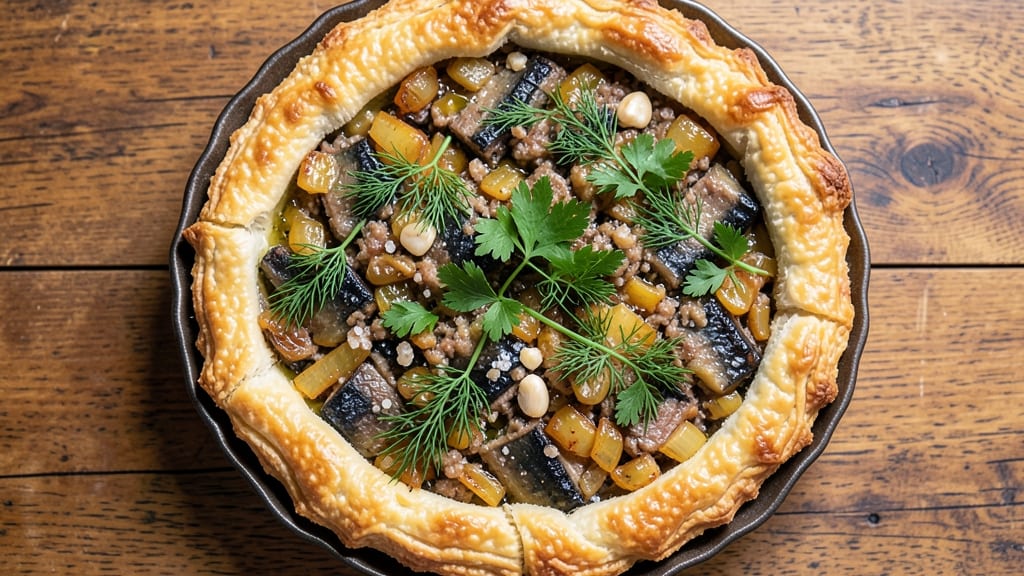
This sardine pie recipe transforms humble ingredients into a golden, flaky masterpiece with a savory filling that balances briny sardines, fresh herbs, and tender vegetables.
The secret lies in a crispy crust that encases the filling while maintaining its delicate texture—a technique I perfected after years of experimenting with Mediterranean baking traditions.
What makes this dish special is how it elevates simple ingredients into something restaurant-worthy, with every bite offering a harmonious blend of textures and flavors.
The crust, whether you choose puff pastry or shortcrust, forms the foundation of this pie, providing the perfect contrast to the rich filling. Inside, sardines mingle with onions, garlic, and herbs, creating a savory base that’s both comforting and sophisticated.
The key to achieving that crispy edge while keeping the center tender is precise baking—something this recipe guarantees with step-by-step instructions. This dish isn’t just a meal; it’s a celebration of coastal flavors, adaptable for pescatarians or even vegetarians with simple substitutions.
Imagine serving this pie at a dinner party, its golden crust glistening under the light, the aroma of garlic and herbs wafting through the air.
The first bite delivers a symphony of textures: the flaky crust gives way to a velvety filling, where the sardines add a subtle brininess that’s balanced by the freshness of the vegetables.
It’s the kind of dish that turns an ordinary meal into a memorable experience, proving that even the simplest ingredients can create something extraordinary.
Whether you’re a seasoned baker or a beginner, this recipe is designed to deliver foolproof results. The instructions walk you through every step, from preparing the filling to assembling and baking the pie, ensuring that you’ll achieve that perfect crispy crust and tender filling every time.
And with optional variations, you can tailor it to your tastes—whether you prefer a lighter crust or a heartier filling. Let’s get started on creating this savory masterpiece.
Ingredients for sardine pie
Simple Mediterranean ingredients create this golden, crispy masterpiece with briny sardines and herby filling.
| Ingredient | Amount | Notes |
|---|---|---|
| Puff Pastry Sheets 🥧 | 2 sheets | Store-bought or homemade, thawed if frozen |
| Canned Sardines in Olive Oil 🐟 | 4 cans | High-quality, drained of oil |
| Yellow Onion 🧅 | 1 whole | Finely diced, about 1 cup |
| Garlic Cloves 🧄 | 4 cloves | Minced, fresh preferred |
| Fresh Parsley 🌿 | ¼ cup | Chopped, stems removed |
| Fresh Dill 🌿 | ¼ cup | Chopped, stems removed |
| Lemon Zest 🍋 | 1 tbsp | From 1 organic lemon |
| Extra-Virgin Olive Oil 🫒 | ¼ cup | High-quality, fruity |
| Diamond Crystal Kosher Salt 🧂 | ½ tsp | Fine grain preferred |
| Freshly Ground Black Pepper 🌶️ | ¼ tsp | Freshly cracked |
| Heavy Cream 🥛 | ½ cup | Full-fat for richness |
| Large Egg 🥚 | 1 whole | For egg wash |
| All-Purpose Flour 🌾 | 1 tbsp | For dusting |
| Fresh Lemon Juice 🍋 | 1 tbsp | From same lemon as zest |
The sardines make or break this pie. Look for high-quality canned sardines in olive oil—avoid those packed in water or tomato sauce. Trader Joe's and Whole Foods carry excellent brands like Wild Planet or Italian Market. Freshness matters here: if the sardines smell overly fishy or have a sour note, skip them. The herbs? Fresh parsley and dill are non-negotiable for that bright Mediterranean flavor—dried just won't cut it. I always grab extra because they wilt fast once chopped. For the crust, pre-made puff pastry from the freezer aisle is your best bet—Pepperidge Farm or Dufour are reliable brands that deliver consistent results.
No fresh herbs? Dried parsley and dill at half the amount will work in a pinch, but it won't be the same. Short on sardines? Anchovies or smoked mackerel can substitute, but increase the lemon juice to balance the flavor. The heavy cream adds richness—half-and-half works too if you're watching calories. For a lighter version, swap it for Greek yogurt. The lemon zest and juice are crucial for brightness, so don't skip them. If you can't find organic lemons, regular ones work fine—just scrub the zest well. The olive oil should be extra-virgin—cheap oil will make the filling taste flat.
This pie reheats beautifully—350°F for 10-15 minutes until the crust is golden and crispy again. Store leftovers in an airtight container for up to 3 days in the fridge, though I rarely have any left that long. For make-ahead prep, assemble the pie and refrigerate it overnight—it actually tastes better the next day as the flavors meld. The crust freezes well too: wrap individual pies in foil and freeze for up to 2 months. Just thaw in the fridge before baking.
Why You'll Love This Recipe
- Here’s what sold me: this pie reheats beautifully for lunches all week. Slice it up, wrap it in foil, and boom—no sad desk lunches. My kids actually ask for leftovers, and that’s saying something after the third day of school sandwiches.
- I’ll be real: sardines are cheap, and puff pastry stretches further than you’d think. For under $10, I feed four people a meal that feels fancy. Plus, the leftovers? Even better cold the next day—perfect for when you’re too tired to cook.
Step-by-step instructions for sardine pies with crispy crusts
Here's how to craft these golden, flaky pies with a rich sardine filling that's bursting with Mediterranean flavor.
Prepare the Filling with Perfect Texture
In a medium bowl, drain the 4 cans of canned sardines in olive oil, reserving just 1 tablespoon of their oil. Using a fork or your fingers, gently break up the sardines into smaller pieces—you want them to stay intact but create a chunky texture in the filling. This prevents the filling from becoming too dense when baked.
Add the finely diced 1 whole yellow onion and minced 4 cloves garlic cloves to the bowl. Stir in the 0.25 cup chopped fresh parsley, 0.25 cup chopped fresh dill, and 1 tablespoon lemon zest. These herbs and citrus will brighten the rich sardine flavor and prevent the filling from tasting too heavy.
In a small separate bowl, whisk together the 0.5 cup heavy cream, 1 tablespoon all-purpose flour, 0.5 teaspoon diamond crystal kosher salt, and 0.25 teaspoon freshly ground black pepper. Slowly pour this mixture into the sardine bowl while stirring continuously. The flour will help thicken the filling slightly, ensuring it holds together beautifully when baked.
Finally, stir in the 1 tablespoon reserved sardine oil and 1 tablespoon fresh lemon juice. The acidity from the lemon juice will cut through the richness of the sardines and cream, balancing the entire filling. Taste and adjust seasoning if needed—this is your chance to ensure every bite is perfectly seasoned before it's encased in pastry.
Assemble the Pies with Precision
Preheat your oven to 375°F. This temperature is crucial for achieving that perfect balance of crispy crust and tender filling. Roll out one sheet of puff pastry on a lightly floured surface until it's about 12x10 inches—just large enough to create a bottom crust with some overhang for folding.
Carefully transfer the puff pastry to a parchment-lined baking sheet. Spoon approximately one-quarter of the sardine filling onto the center of the pastry, leaving about 1 inch of border around the edges. This ensures the filling stays contained and doesn't leak out during baking.
Roll out the second sheet of puff pastry in the same manner. Using a sharp knife or pizza cutter, cut the second sheet into four 3x4-inch rectangles—these will form the pie tops. Brush the edges of the bottom crust with the beaten 1 whole large egg (lightly beaten with a fork), then place one of the pastry rectangles on top of each filled section. Press gently around the edges to seal, creating a decorative crimp with your fingers or a fork.
Make a small slit in the center of each pie top to allow steam to escape during baking. This prevents the pies from puffing up too much and potentially bursting. The slits should be just large enough to let steam out but not so big that filling escapes.
Bake to Golden Perfection
Place the assembled pies in the preheated oven and bake for 25-30 minutes, until the crusts are deep golden brown and crispy. The filling should be bubbling slightly through the slits in the tops, indicating it's heated through and the flavors have melded together beautifully.
Here's the thing—don't open the oven door during the first 15 minutes of baking. The sudden temperature change can cause the crusts to lose their crispness. I know it's tempting to check, but trust the process. The pies will reveal their doneness through the window.
When the crusts are golden and the filling is heated through, remove the pies from the oven and let them cool on a wire rack for 5-10 minutes. This resting period allows the filling to set slightly, making it easier to slice and serve without losing any filling. The contrast of the crispy, flaky crust with the creamy, herby sardine filling is what makes these pies truly special.
Serve with Confidence
Slice each pie diagonally into wedges for easy serving. The crispy crust should shatter slightly with each bite, while the filling remains tender and flavorful. Serve immediately while the crust is still at its crispy best—these pies don't keep their texture well once cooled completely.
Pair with a simple green salad dressed with extra-virgin olive oil and a squeeze of lemon, or serve with crusty bread to soak up any remaining filling. The combination of textures and flavors—crispy crust, creamy filling, bright herbs—makes this a truly satisfying dish that's perfect for any occasion.
Pro Tips For Making Sardine Pie
- Preheat the Dish First: Slide your pie dish into a 400°F (200°C) oven for 5-7 minutes before adding the filling—this prevents soggy bottoms when the sardines release liquid. I learned this the hard way after my first attempt ended with a sad, greasy mess instead of a crisp golden crust.
- Drain and Pat the Sardines: Open the canned sardines and drain them thoroughly, then blot them dry with a paper towel to remove excess olive oil—too much fat makes the pastry greasy and hard to bake. Sounds tedious, but it guarantees a flaky, not greasy, finish.
- Sauté Onions Until Caramelized: Cook the onions low and slow until they’re deep golden, not just translucent—this adds sweetness that cuts through the fishy sharpness. I was skeptical until I tried it; the texture and flavor of the filling changed completely.
- Brush Pastry with Egg Wash Twice: Paint the puff pastry with egg wash before baking, then again right after adding the filling—this seals the edges and creates that signature shatteringly crisp top. Skip the second coat, and you’ll end up with a dull, limp crust.
Regional styles of these flavors
Mediterranean Coastal Style
In coastal regions like Greece and Turkey, sardine pies often feature a shortcrust pastry instead of puff pastry to create a rustic, hearty texture. The filling here is simpler—just sardines, onions, garlic, and a splash of white wine (about 2 tablespoons) to deglaze the pan.
I love adding 1 teaspoon of oregano and ½ teaspoon of smoked paprika for depth. These pies are typically baked in a round shape and served warm with a sprinkle of fresh parsley. 🌊
Scandinavian Open-Faced
Nordic countries like Sweden and Norway take a different approach with their "fiskpaj" (fish pie).
Instead of a top crust, they use puff pastry only for the base and top with a creamy sauce made from ½ cup sour cream, 1 tablespoon Dijon mustard, and a pinch of nutmeg.
The sardines are mixed with ½ cup finely chopped leeks and 2 tablespoons capers for a briny kick. Serve with a dollop of the sauce and extra fresh dill. ❄️
Portuguese Sardine Tart
Portugal’s "Pastel de Sardinha" is a beloved street food with a flaky puff pastry and a filling packed with sardines, onions, and a touch of Pimentão (Portuguese red pepper) for heat. The secret here is adding 1 tablespoon of breadcrumbs to the filling to absorb excess moisture.
Top with a crust of melted cheese (like Queijo da Serra) for extra richness. These are often baked in individual muffin tins for portable, handheld bites. 🇵🇹
Modern Fusion Twist
For a contemporary take, try a sweet-and-savory fusion by adding 1 tablespoon of honey and ½ teaspoon of cinnamon to the filling. The honey caramelizes beautifully, balancing the brininess of the sardines.
Top with a lattice crust (cutting strips of puff pastry and weaving them over the filling) for an elegant presentation. This works surprisingly well with a sparkling rosé or a crisp Belgian witbier for pairing. 🍯
Vegetarian Adaptation
Skip the sardines and use 1 cup of marinated artichoke hearts and ½ cup of sun-dried tomatoes for a vegetarian version. Add 1 tablespoon of capers and 2 tablespoons of white wine to mimic the briny depth.
The filling stays rich and flavorful while keeping the dish pescatarian-friendly. This works especially well with a shortcrust pastry for a rustic texture. 🌱
Nutrition facts
Frequently asked questions
Can I make these sardine pies without puff pastry?
For a rustic Mediterranean style, use shortcrust pastry—it creates a heartier texture that pairs perfectly with the savory filling. You can also try a phyllo crust for extra crispiness, or even a simple buttery biscuit dough if you're short on time. Just adjust baking times (shortcrust needs about 5-10 minutes longer at 375°F).
How do I prevent the filling from leaking during baking?
Leave a 1-inch border around the edges when spooning the filling, and seal the top crust edges tightly with a fork or your fingers. For extra insurance, chill the assembled pies in the fridge for 30 minutes before baking—this helps the filling set slightly. If you're worried, brush the top crust with a thin egg wash to create a barrier.
What's the best way to reheat leftover sardine pies?
Reheat at 350°F for 10-15 minutes until the crust is golden and crispy again. For best results, cover loosely with foil for the first 5 minutes to prevent drying, then uncover to restore crispness. Microwaving isn't recommended—it makes the crust soggy. Store leftovers in an airtight container for up to 3 days (if they last that long!).
Can I substitute canned sardines with fresh fish?
Fresh fish like cod or haddock works, but you'll need to adjust the recipe. Poach 12 oz of fish in 2 tablespoons olive oil with 1 teaspoon lemon juice until just cooked (8-10 minutes at 350°F), then flake it into the filling. Add 1 extra tablespoon of flour to thicken the mixture since fresh fish releases more moisture than canned sardines.
Why does my crust turn out soggy instead of crispy?
Soggy crusts usually happen from overfilling or insufficient baking time. Ensure your filling doesn't touch the crust edges, and bake until the crust is deep golden brown (not pale). Pre-baking the bottom crust for 3-5 minutes before adding filling can also help. Another tip: brush the bottom crust with 1 tablespoon olive oil before adding filling for extra crispness.